 Save
Save My grandmother once told me that truffle oil was liquid gold, and I didn't understand until a friend brought a bottle to dinner one night and shaved it over hot pasta. The aroma hit me before the taste did, filling the kitchen with something earthy and almost intoxicating. That's when I realized handmade egg pasta wasn't just about technique, it was about creating a vehicle for flavors this special. Now whenever I make this dish, I feel like I'm recreating that quiet magic from her kitchen.
I made this for my partner on an ordinary Thursday because it was raining and we needed something that felt like an occasion. Watching them twirl the strands on their fork and close their eyes at that first bite reminded me why cooking matters so much, it's not really about food at all.
Ingredients
- All-purpose flour (2 cups/250 g): This is your foundation, and it needs to be measured properly, so use a kitchen scale if you have one or spoon and level rather than scooping directly from the bag.
- Large eggs (3): Room temperature eggs blend more smoothly into the dough and create a silkier final texture than cold ones.
- Extra-virgin olive oil (1 tablespoon): This adds a gentle fruitiness and helps the dough come together, so don't skip it or substitute with something neutral.
- Truffle oil (1 tablespoon for dough, 2 teaspoons for finishing): Use a quality version since it's the star of this dish, and a little goes a long way in both flavor and aroma.
- Fine sea salt (1/2 teaspoon for dough, plus more to taste): Salt enhances gluten development during kneading, so add it early rather than trying to adjust at the end.
- Unsalted butter (3 tablespoons): Butter creates that silky coating, and using unsalted lets you control the final seasoning.
- Freshly grated Parmesan cheese (1/2 cup/50 g): Grate it yourself right before cooking, as pre-grated versions contain anti-caking agents that affect how it melts and distributes.
- Freshly ground black pepper: Fresh pepper has more bite and aromatics than the pre-ground kind sitting in your cabinet.
Tired of Takeout? 🥡
Get 10 meals you can make faster than delivery arrives. Seriously.
One email. No spam. Unsubscribe anytime.
Instructions
- Create your well:
- Mound your flour on a clean counter and use your fingers to create a shallow well in the center, like you're making a volcano. This gives the eggs somewhere to rest while you gradually incorporate the flour without creating a mess.
- Beat and incorporate:
- Crack your eggs into the well, add the oils and salt, then use a fork to whisk them together as if you're making scrambled eggs. Slowly pull flour from the sides of the mound into the center, working gradually so you don't break through and lose your mixture onto the counter.
- Knead until silky:
- Once a shaggy dough forms, get your hands in there and knead for 8 to 10 minutes until it becomes smooth and elastic, almost like an earlobe when you stretch it gently. This development creates the structure that makes fresh pasta tender but still with a slight bite.
- Rest and relax:
- Wrap the dough in plastic wrap and let it sit for 20 minutes at room temperature, which allows the gluten to relax and makes rolling much easier. This is a good time to pour yourself something to drink.
- Roll thin and cut:
- Divide the dough in half and run each portion through a pasta machine, starting on the widest setting and working down to the thinnest, or use a rolling pin if you prefer the meditative pace. Cut into ribbons about as wide as your finger for tagliatelle, or slightly narrower for fettuccine.
- Cook to al dente:
- Bring a large pot of generously salted water to a rolling boil, add the pasta, and cook for just 2 to 3 minutes, tasting at 2 minutes because homemade pasta cooks faster than you'd expect. Reserve that pasta water before draining, as its starch becomes your secret weapon for a silky sauce.
- Build the sauce:
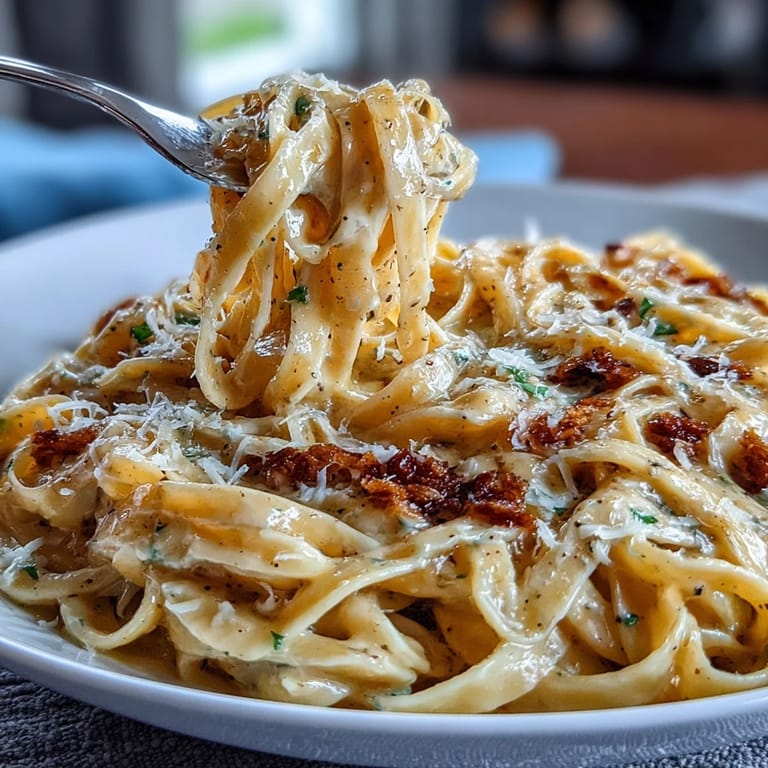
- Melt butter in a large skillet over medium heat, add the drained pasta and a splash of that reserved pasta water, then toss gently until the strands are coated in a glossy emulsion. The starch in the pasta water helps the butter cling to each strand instead of pooling at the bottom.
- Finish with aromatics:
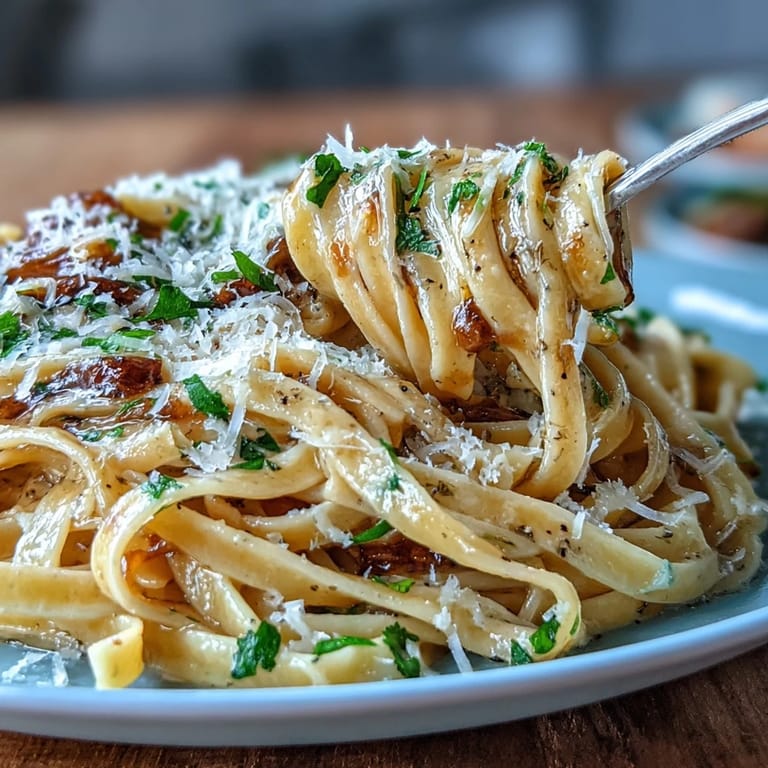
- Remove from heat, drizzle generously with truffle oil, sprinkle with freshly grated Parmesan, and toss again with a light hand so you don't crush the delicate pasta. Season with salt and black pepper to your taste, remembering that both the Parmesan and truffle oil bring saltiness already.
 Save
Save There's something almost ceremonial about making pasta by hand, the way your hands warm the dough and the rhythm of kneading becomes almost meditative. By the time you're rolling it thin and cutting ribbons, you've already invested something of yourself into the dish, and that matters when someone sits down to eat it.
The Art of Kneading
When you first start kneading, the dough will feel sticky and refuse to cooperate, but around minute five something shifts and suddenly it feels alive under your hands. Don't add extra flour trying to make it less sticky, just keep working it and trust the process. The dough becomes elastic and smooth, almost buttery, and that's when you know you've done it right.
Timing Your Sauce
The biggest mistake I made the first time was finishing the pasta and then wandering away to set the table, giving the butter time to cool and separate. Everything needs to happen quickly at the end, so have your skillet ready, your Parmesan grated, and your truffle oil near the stove. The moment the pasta comes out of the water, it's a race to coat everything while the heat is still working in your favor.
Elevating Your Ingredients
Fresh pasta with truffle oil is intentionally minimalist because each component is meant to shine, and adding too much is how you lose what makes it special. I learned this the hard way by tossing in sautéed mushrooms one night thinking I was improving things, only to realize I'd buried the delicate truffle aroma. Sometimes the best cooking is about knowing when to stop.
- If you want to add something, consider just a handful of fresh black truffle shavings or a small amount of white truffle oil instead of combining multiple rich flavors.
- A crisp wine pairing like Chardonnay or dry sparkling wine doesn't compete with the truffle, it becomes part of the conversation on your palate.
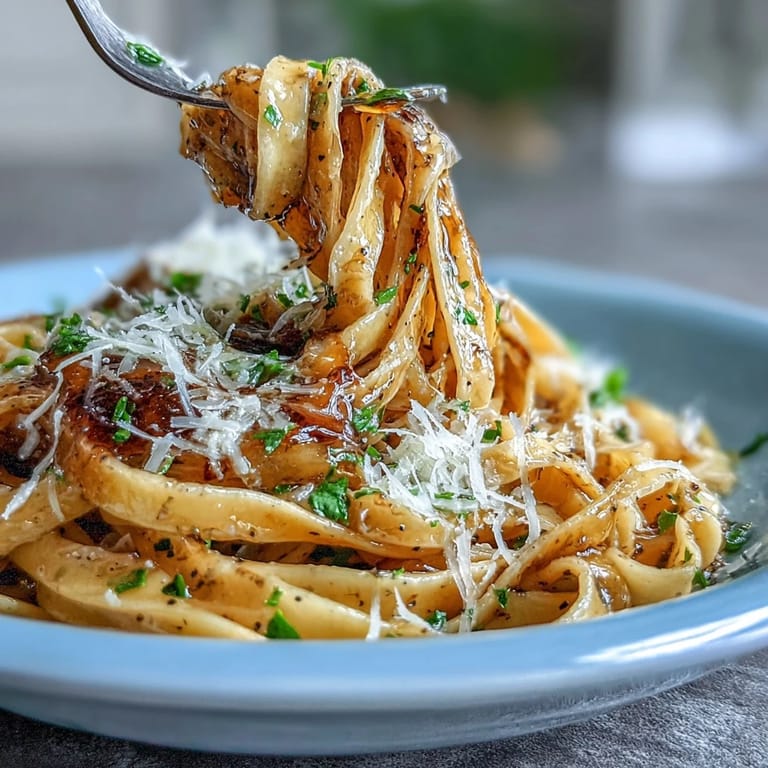
- Serve this dish on warm plates and eat it immediately, as pasta cools quickly and loses its silky texture the moment it sits still.
 Save
Save This pasta reminds me why cooking for people we care about still feels like an act of love in a world that's forgotten how to slow down. Make it when you want to say something without using words.
Recipe FAQ
- → What type of flour is best for making the pasta dough?
All-purpose flour works well to create a smooth yet sturdy dough that can be rolled thin and hold its shape during cooking.
- → How can I achieve the perfect texture for the fresh pasta?
Knead the dough until smooth and elastic, then roll it thin (1–2 mm) before cutting. Cook it briefly until al dente for the best mouthfeel.
- → What is the role of truffle oil in this dish?
Truffle oil infuses the pasta with a rich, aromatic flavor, elevating the simple ingredients to a luxurious experience.
- → Can I substitute Parmesan cheese with another cheese?
Yes, Pecorino Romano can be used for a slightly sharper flavor that complements the truffle and butter beautifully.
- → How do I prevent the pasta from sticking after cooking?
Reserve some pasta cooking water and toss the drained pasta in melted butter with a splash of this water to keep it coated and separate.
- → What wine pairs best with this dish?
A crisp Chardonnay or a dry sparkling wine enhances the rich, buttery flavors and aromatic truffle notes.