 Save
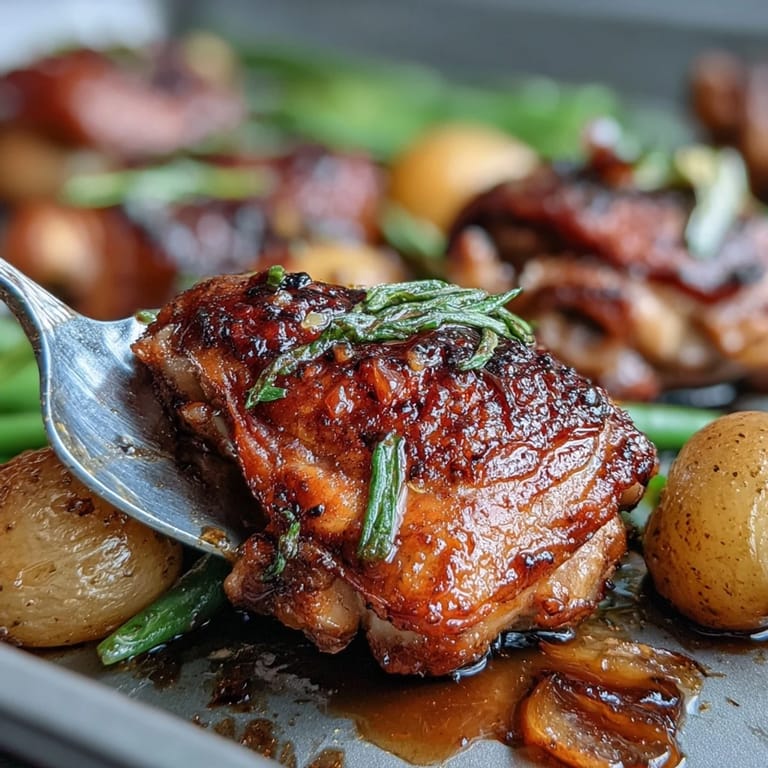
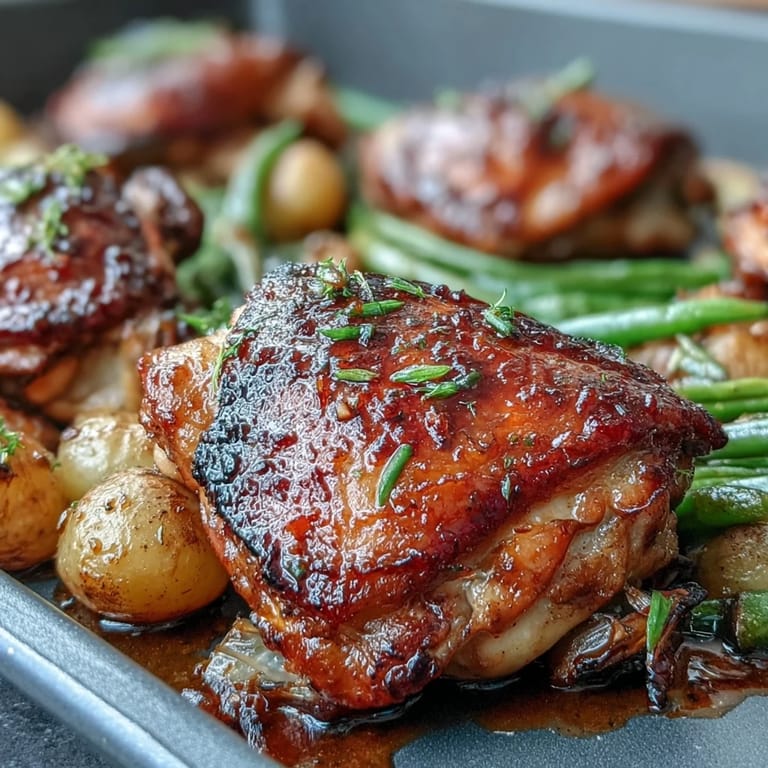
Save There's something about a sheet pan that makes weeknight cooking feel less like a chore and more like a small victory. I discovered this honey garlic chicken one Tuesday when I had exactly forty minutes, hungry people waiting, and zero patience for complicated steps. The beauty of it hit me the moment those chicken thighs went into the oven—one pan, sweet and savory glaze, vegetables doing their own thing beside it. The kitchen filled with this amazing smell of caramelizing honey and garlic, and suddenly dinner felt fancy without the fuss.
I made this for my sister's family last summer, and her youngest asked for seconds, which never happens with roasted vegetables. Watching him dip green beans in the pan sauce while his mom laughed made me realize this dish does something special—it brings people to the table without drama or pretension. That's when I knew I'd keep making it.
Ingredients
- Bone-in, skin-on chicken thighs (4, about 1.5 lbs): These are forgiving cuts that stay moist even if you're not a precision cook, and the skin crisps up beautifully when you give it half a chance.
- Baby potatoes (1 lb, halved): The smaller size means they roast through in the time it takes for chicken to cook, and halving them creates flat edges that get wonderfully golden.
- Green beans (8 oz, trimmed): Fresh beans stay bright and barely tender if you add them toward the end, which is the whole point.
- Honey (1/4 cup): Choose something decent here—it's the backbone of the glaze, and the heat will caramelize it into something almost smoky and complex.
- Low-sodium soy sauce (3 tbsp): The salt carries flavor, so don't skip it, and go gluten-free if anyone at your table needs it.
- Fresh lemon juice (2 tbsp): Squeezing it fresh makes a difference; bottled tastes thin by comparison.
- Garlic (4 cloves, minced): Mince it just before cooking so it stays bright and doesn't turn bitter in the oven.
- Dijon mustard (1 tsp): This small amount adds a subtle depth that keeps the sauce from tasting one-note sweet.
- Dried thyme (1/2 tsp or 1 tsp fresh): It's earthy enough to whisper in the background without overpowering anything else.
- Olive oil (2 tbsp total): Use a good one for flavor, but don't waste the expensive stuff—this isn't about that.
Tired of Takeout? 🥡
Get 10 meals you can make faster than delivery arrives. Seriously.
One email. No spam. Unsubscribe anytime.
Instructions
- Start with heat and prep:
- Preheat your oven to 425°F and line a large sheet pan with parchment or foil—this isn't laziness, it's wisdom about cleanup. Pat those chicken thighs really dry with paper towels, because moisture is the enemy of crispy skin.
- Make the glaze:
- Whisk honey, soy sauce, lemon juice, minced garlic, mustard, and thyme together in a small bowl until the honey loosens and everything becomes one glossy thing. Taste it quickly if you're the tasting type—you're looking for that balance of sweet, salty, and bright.
- Season and spread the potatoes:
- Toss halved baby potatoes with oil, salt, and pepper, then spread them cut-side down on your sheet pan. They'll start turning golden in those ten minutes while the chicken gets ready, which is the whole strategy here.
- Get the potatoes going:
- Roast for ten minutes until they're just beginning to color. This head start matters because chicken and potatoes don't cook at the same speed if you're not careful.
- Add the chicken:
- Rub chicken thighs with oil, salt, and pepper, then nestle them right among the roasted potatoes. Brush them with half the glaze—be generous, because this sauce is where the flavor lives.
- Roast and return:
- Back in the oven for fifteen minutes. You're not looking for anything specific yet, just letting the chicken skin start to set while everything heats through.
- Add the green beans:
- Toss beans with a tiny drizzle of oil and a pinch of salt, scatter them around everything, then brush that chicken one more time with the remaining glaze. This timing means the beans stay crisp instead of turning into mush.
- Finish cooking:
- Roast for ten to twelve more minutes until the chicken hits 165°F at the thickest part and vegetables are tender. If you want extra caramelization, broil for two or three minutes at the very end, but watch it like a hawk.
- Serve with the sauce:
- Spoon all those pan juices over everything because that's where half the flavor ended up, and it makes the whole dish feel intentional.
 Save
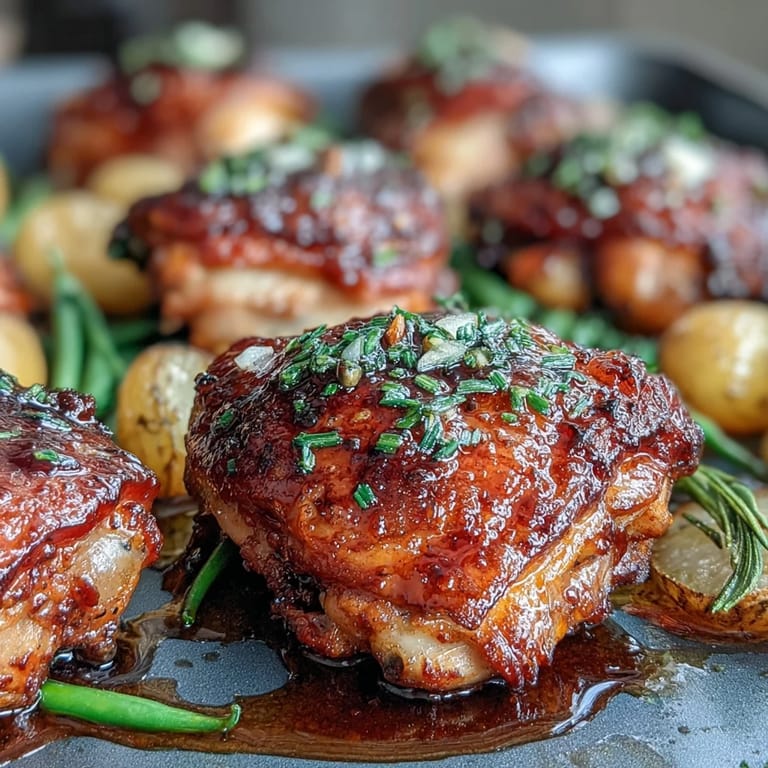
Save There's a moment right when you pull this from the oven when the steam rises and everything glistens with glaze, and you know instantly that dinner is going to be good. That's the moment that made me stop cooking from recipe blogs and start cooking from experience—when the dish itself tells you it worked.
Why Sheet Pan Meals Changed My Weeknight Life
I used to think roasting meant baking a single vegetable in a crowded oven while simultaneously making protein somewhere else, and I'm still not sure why I accepted that chaos. Then someone showed me that proteins and vegetables have no problem living together at high heat, and suddenly dinner became simple. The key is timing—potatoes first because they're dense, chicken next because it needs fifteen minutes, vegetables last because they're quick. Once you understand that rhythm, you stop needing recipes and start trusting your instincts.
Building Flavor in a Single Pan
The glaze is the whole story here, and understanding why it works changed how I season food in general. Honey adds sweetness and caramelization. Soy sauce brings salt and depth. Lemon juice cuts through both and keeps everything tasting bright instead of one-dimensional. Garlic becomes mellow and almost sweet as it roasts, so you can use more of it than you'd think. The mustard is barely noticeable except for what it adds underneath—a little confusion, a little sophistication.
Variations That Actually Work
I've made this with boneless thighs when I was short on time, and it works fine as long as you shave ten minutes off the cooking time and watch the thickest part instead of assuming. Asparagus instead of green beans is genuinely good, and broccoli works if you like yours slightly charred at the edges. Fresh parsley or green onions scattered on top at the last second are not optional if you want to look like you tried.
- Boneless chicken cooks faster, so check internal temperature early and don't just follow the timer like gospel.
- Asparagus can burn if you're not watching, so add it even later than the green beans if you're nervous.
- Everything tastes better with fresh herbs on top, so make it your last step before anyone takes a bite.
 Save
Save This is the dinner you make when you want something that tastes like you cared but doesn't require you to be a particularly skilled cook. It's proof that simple can be delicious.
Recipe FAQ
- → Can boneless chicken be used instead?
Yes, boneless chicken thighs or breasts can be substituted but adjust cooking time to prevent overcooking.
- → How to ensure potatoes are tender?
Halve baby potatoes and roast them first for 10 minutes before adding chicken and other ingredients.
- → Can I substitute vegetables?
Green beans can be swapped with asparagus or broccoli; just adjust roasting times accordingly.
- → Is the sauce suitable for gluten-free diets?
Use gluten-free soy sauce to make the honey garlic glaze gluten-free.
- → What is a good beverage pairing?
A crisp Sauvignon Blanc or light lager complements the sweet and savory flavors nicely.
- → Can I add fresh herbs?
A sprinkle of chopped fresh parsley or green onions added before serving brightens the dish.