 Save
Save My neighbor knocked on the door one October afternoon with a basket of butternut squash from her garden, and I realized I'd been buying the same sad soup mixes from cans for years without knowing what I was missing. That first pot simmering on my stove filled the kitchen with this warm, almost honeyed smell that made me stop and actually pay attention to what I was making. The maple syrup caught me off guard—not because it was sweet, but because it tasted honest, like the squash itself had been waiting for permission to be itself. I've made it dozens of times since, and somehow it never feels routine.
I made this soup for my in-laws the first time they visited our new place, and my mother-in-law asked for the recipe before she'd even finished her bowl—which, if you know her, is basically a marriage proposal. My father-in-law went back for seconds and added pumpkin seeds on top like he'd invented the idea himself. That's when I understood this soup had crossed some invisible line from being just something I made to being something people actually wanted.
Ingredients
- Butternut squash (1 large, about 1.2 kg / 2.5 lbs), peeled, seeded, and cubed: Use a sharp knife and cut it into roughly 2-inch cubes—roasting smaller pieces makes them caramelize faster.
- Yellow onion (1 medium), chopped: The sweetness of yellow onions balances the spice beautifully, so don't swap this for white.
- Garlic (2 cloves), minced: Fresh garlic matters here because you're only using a small amount and it needs to taste alive.
- Vegetable broth (1 liter / 4 cups): Use low-sodium if you can—it lets you control the salt level and the natural squash flavor shines through.
- Water (250 ml / 1 cup): This tempers the broth's saltiness and gives the squash room to be the star.
- Coconut milk or heavy cream (120 ml / 1/2 cup): Coconut milk keeps it vegan and adds a subtle tropical note; cream makes it luxurious and rich in a different way.
- Pure maple syrup (2 tbsp): Don't use pancake syrup—it tastes watered down and defeats the whole purpose of this ingredient.
- Ground nutmeg (1/4 tsp) and cinnamon (1/2 tsp): These spices are what make people wonder what's in your soup; they warm it from the inside out.
- Olive oil (2 tbsp total): Good olive oil matters for roasting and for the final taste, so use something you'd actually drink.
- Salt and freshly ground black pepper, to taste: Grind your pepper fresh each time—it's worth the extra 10 seconds.
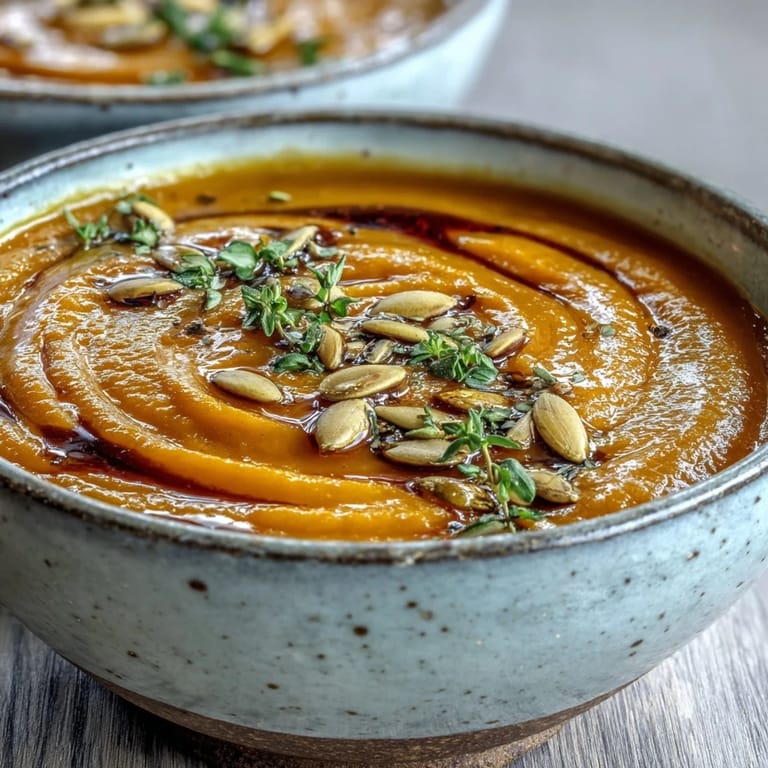
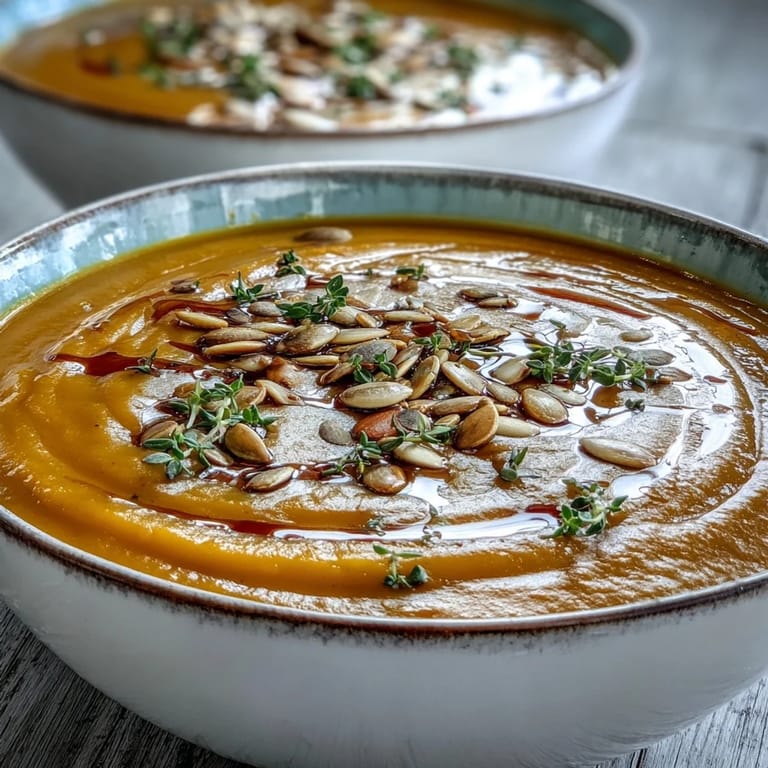
- Pumpkin seeds, maple syrup drizzle, fresh thyme (optional garnishes): These aren't afterthoughts; they're the difference between a bowl of soup and something people remember.
Tired of Takeout? 🥡
Get 10 meals you can make faster than delivery arrives. Seriously.
One email. No spam. Unsubscribe anytime.
Instructions
- Heat your oven and prep the squash:
- Preheat to 200°C (400°F) and while it warms up, cut your squash into cubes—the oven's heat will make this easier than you'd think. Don't stress about perfect sizes; just aim for consistency so everything roasts evenly.
- Get the squash golden and caramelized:
- Toss cubes with 1 tablespoon of olive oil, salt, and pepper on a baking sheet, then roast for 30–35 minutes, stirring halfway through. You're looking for edges that are burnished and slightly darkened—that's where the flavor lives.
- Build the base with onion and garlic:
- Heat 1 tablespoon olive oil in a large pot over medium heat, then add your chopped onion and let it soften for 4–5 minutes until it turns translucent. Add the minced garlic and cook for just 1 minute more—you want it fragrant, not burnt.
- Combine everything and simmer:
- Add your roasted squash to the pot along with vegetable broth, water, maple syrup, nutmeg, and cinnamon. Stir it all together, bring it to a boil, then drop the heat and let it simmer gently for 10 minutes so the flavors actually get to know each other.
- Blend until silky smooth:
- Using an immersion blender, purée the soup right in the pot until you've got a creamy, velvety texture with no visible chunks. If you're using a countertop blender, work in batches and hold the lid down with a kitchen towel because hot soup likes to escape.
- Finish with cream and season one more time:
- Stir in your coconut milk or heavy cream, then taste and adjust the salt and pepper to your preference. Sometimes it needs just a whisper more of cinnamon or a pinch of nutmeg—trust your instincts.
- Serve it warm with intention:
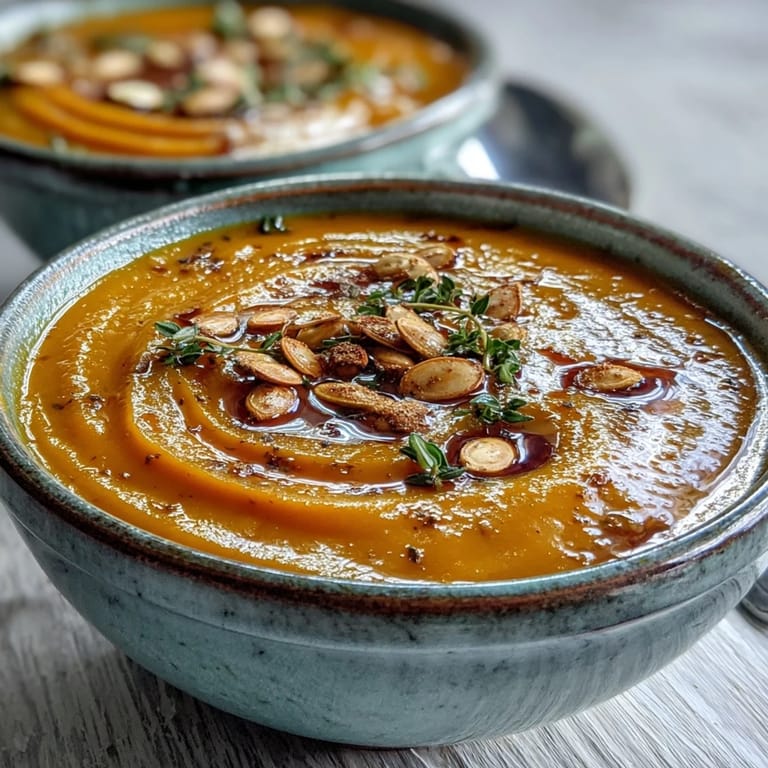
- Ladle into bowls, then scatter pumpkin seeds on top, add a small drizzle of maple syrup, and a few fresh thyme leaves if you have them. Let people see that you made something thoughtful.
 Save
Save There's something about serving a bowl of butternut squash soup that makes ordinary Wednesday nights feel like you've done something intentional. My kids used to push vegetables aside, but somehow this soup—maybe it's the sweetness, maybe it's the color—became the one thing they'd actually ask for.
The Power of Roasting
Roasting vegetables isn't just a cooking technique; it's a transformation. When you expose the squash to dry heat in the oven, the natural sugars concentrate and caramelize, creating this almost nutty depth that boiling could never achieve. The first time I understood this was when I made the mistake of trying to shortcut the recipe by steaming the squash instead—it tasted watery and one-dimensional, and I threw it out and started over. Now I treat roasting like a non-negotiable rule, not because the recipe says so, but because I've learned it's actually the heart of why this soup tastes good.
Balancing Sweetness and Spice
The maple syrup and the warm spices (nutmeg and cinnamon) are in conversation with each other, and getting the balance right is what separates a good soup from one that tastes like pumpkin pie in a bowl. I learned this the hard way by overseasoning one batch and ending up with something that tasted more like dessert than dinner. Now I add the spices as the recipe says, let everything simmer together, then taste before serving so I can adjust if needed. Everyone's palate is different—some people want more warmth from the spices, others prefer to let the squash sweetness take the lead.
Choosing Your Finish
The choice between coconut milk and heavy cream is genuinely personal, and there's no wrong answer—it's about what you want the soup to taste like and what your body needs on a given day. Coconut milk keeps things light and vegan-friendly while adding a subtle tropical undertone that plays beautifully with the cinnamon. Heavy cream, on the other hand, makes the soup feel luxurious and rich, rounding out every edge and making it feel almost indulgent. If you're serving guests, I've found it's worth asking ahead of time so you can make the version that fits their preferences.
- You can also use half-and-half or even Greek yogurt for a tangy brightness that's surprisingly good.
- Add a pinch of cayenne pepper at the end if you want a subtle heat that builds instead of hits.
- Toast your pumpkin seeds in a dry pan for 3–4 minutes just before serving to bring out their nuttiness.
 Save
Save This soup has become the thing I make when I want to prove to myself that simple ingredients can taste like something special. It's become the thing I make for people I care about, and somehow that matters.
Recipe FAQ
- → Can I make this ahead of time?
Yes, this reheats beautifully. Store in an airtight container in the refrigerator for up to 4 days. Reheat gently on the stovetop, adding a splash of broth or water if needed to thin.
- → Can I freeze this?
Absolutely. Cool completely, then transfer to freezer-safe containers. Freeze for up to 3 months. Thaw overnight in the refrigerator before reheating.
- → What can I use instead of coconut milk?
Heavy cream creates a richer finish, or use cashew cream for a dairy-free alternative. You can also omit it entirely for a lighter version.
- → Do I have to roast the squash first?
Roasting concentrates the natural sugars and adds caramelized depth. You can simmer raw cubes directly in the broth, but the flavor will be less complex.
- → How can I make it spicier?
Add a pinch of cayenne pepper, red pepper flakes, or fresh grated ginger when sautéing the onions. Adjust to your preferred heat level.
- → What goes well with this?
Crusty bread, grilled cheese sandwiches, or a simple green salad make excellent sides. The sweetness also pairs nicely with savory tarts or quiches.