 Save
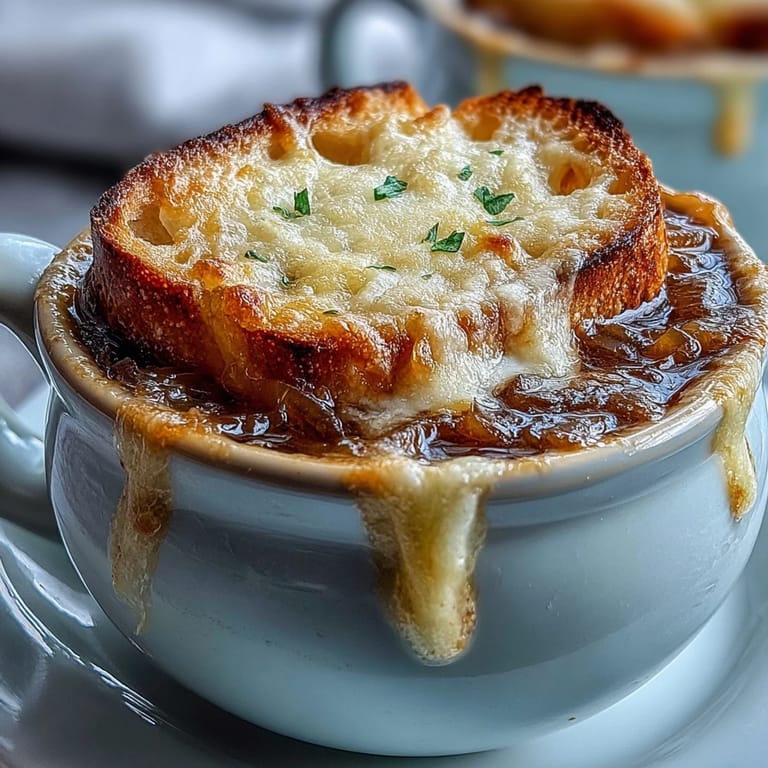
Save There's a particular Monday evening I won't forget, when my neighbor brought over a thermos of French onion soup that had been simmering since morning. The kitchen filled with this impossible aroma—sweet caramelized onions mixed with something deeper, richer, that made my stomach rumble before I'd even tasted it. She set it on the stove and topped each bowl with that crackling, golden cheese and I understood right then why people spend nearly two hours making soup. It wasn't just food; it was patience rewarded.
I made this for my parents on a cold November afternoon, and my dad actually put his spoon down mid-bite to ask what was in it. When I listed the ingredients—just onions, really, at the heart of it—he seemed almost offended that something so simple could taste so complete. That's when it clicked for me: French onion soup doesn't trick you into thinking it's fancy. It just proves that restraint and time can be more powerful than complexity.
Ingredients
- Yellow onions: Three large ones, thinly sliced, become the entire soul of this soup—don't skip the slicing step or rush the caramelization, as those deep golden layers are where the magic lives.
- Unsalted butter and olive oil: Together they prevent the onions from sticking and build a rich, savory base that pure butter alone cannot achieve.
- Garlic: Two minced cloves add a whisper of sharpness that prevents the sweetness from becoming cloying.
- Sugar: Just one teaspoon, added halfway through cooking, coaxes out the natural sweetness hiding in the onions without making anything taste dessert-like.
- All-purpose flour: Two tablespoons create a subtle thickening that gives the soup body and helps carry the flavors.
- Dry white wine: Half a cup deglazes the pot beautifully, lifting all those caramelized bits clinging to the bottom and adding brightness.
- Beef or vegetable stock: Five cups form the canvas; beef stock deepens the flavor while vegetable keeps things lighter and vegetarian-friendly.
- Fresh thyme and bay leaf: These herbs whisper in the background, adding herbal warmth without announcing themselves loudly.
- French baguette: Four slices, toasted until crispy, become the vehicle for soup and cheese—crucial structural element, not an afterthought.
- Gruyère cheese: One cup grated, it melts into that bubbly, golden crown that makes everyone's eyes light up when the bowl arrives at the table.
Tired of Takeout? 🥡
Get 10 meals you can make faster than delivery arrives. Seriously.
One email. No spam. Unsubscribe anytime.
Instructions
- Heat your base and start the onions:
- Warm butter and olive oil together over medium heat until they're shimmering but not smoking, then add your sliced onions all at once. Stir them to coat in the fat—this coating ensures they'll cook evenly and won't stick to the pot bottom.
- Embrace the slow caramelization:
- This takes 35 to 40 minutes and honestly, it's the most important part. Stir frequently, especially toward the end when the onions turn deep golden-brown and smell almost sweet enough to be dessert. About halfway through, sprinkle in the teaspoon of sugar and salt—this coaxes out moisture and helps the caramelization deepen rather than burn.
- Add garlic and build flavor:
- Once the onions reach that perfect deep caramel color, add your minced garlic and cook for just one minute until fragrant. You'll know it's ready when the kitchen smells savory and warm.
- Create the roux:
- Sprinkle flour over the onions and stir constantly for two minutes. This coats everything and prevents lumps later while adding a subtle richness that thickens the soup just enough.
- Deglaze and build depth:
- Pour in the white wine and use a wooden spoon to scrape the bottom of the pot, lifting all those caramelized bits clinging there. They're liquid gold and will dissolve into your broth, adding incredible depth.
- Simmer into soup:
- Add your stock, thyme, and bay leaf, then bring everything to a gentle simmer. Cook uncovered for 20 to 25 minutes, letting flavors meld and soften. Remove the herbs, taste, and adjust salt and pepper—this is your moment to make it exactly right.
- Toast the bread properly:
- While the soup simmers, preheat your broiler and brush baguette slices on both sides with olive oil. Toast them under the broiler for about one minute per side until they're golden and crispy—they'll add crucial texture and won't get soggy the moment they hit the broth.
- Assemble and broil:
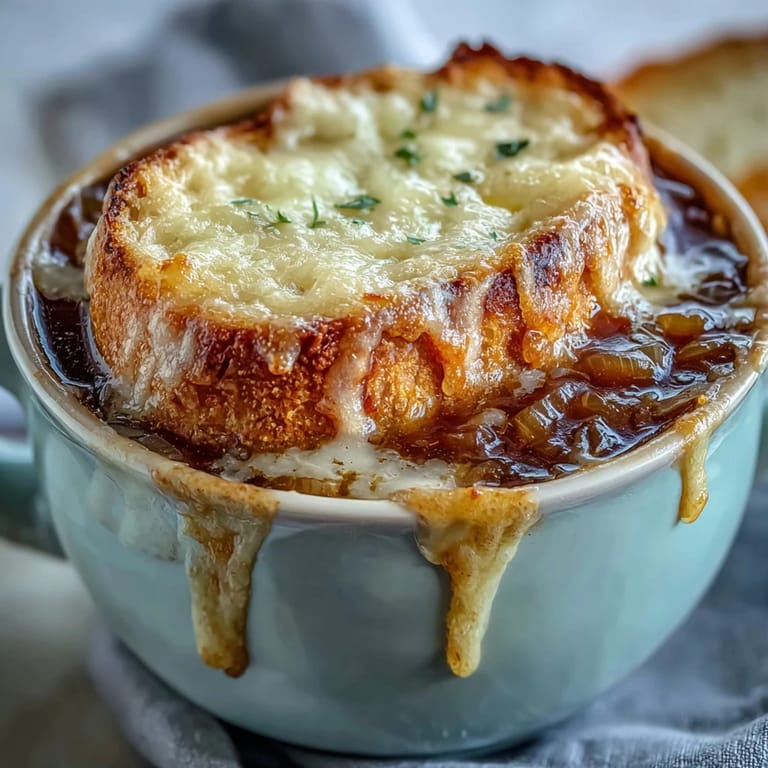
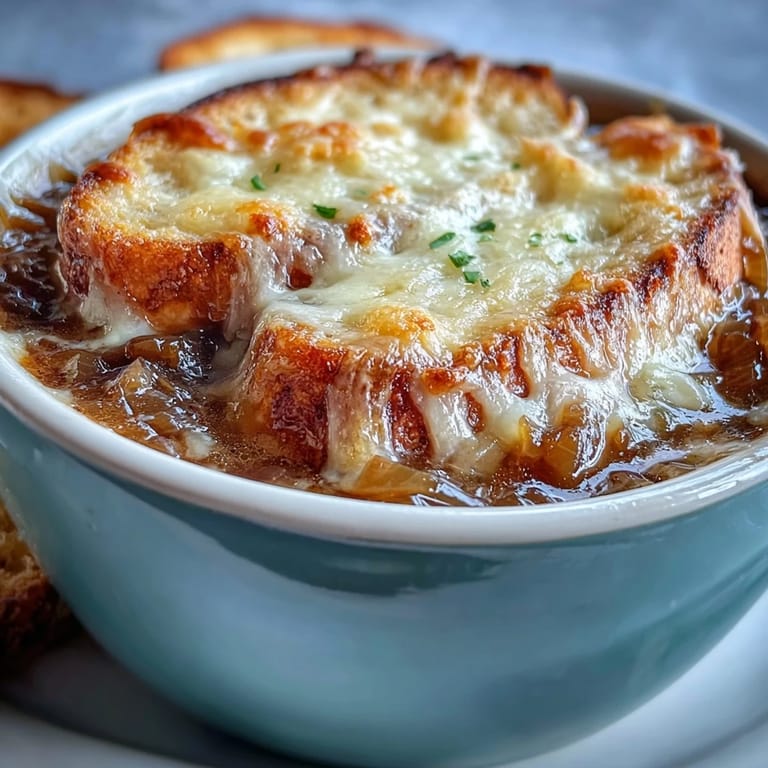
- Ladle hot soup into oven-safe bowls, top each with a toasted bread slice, then pile generous handfuls of grated Gruyère on top. Place the bowls on a baking sheet and broil for 2 to 3 minutes until the cheese bubbles, browns slightly, and becomes almost molten—then serve immediately while everything is still steaming.
 Save
Save My grandmother once told me that soup was the most honest food because you couldn't fake its depth—everything had to come from patience and love. Making French onion soup taught me exactly what she meant. There's no technique that shortcuts those 40 minutes of stirring, no ingredient that replaces time, just the honest promise that if you stay present with something simple, it becomes extraordinary.
The Art of Caramelization
Caramelization isn't actually cooking the onions—it's a patient transformation where water evaporates and natural sugars deepen and brown. I used to think I was caramelizing properly at 20 minutes when they were just soft and barely tan, but true caramelization takes time. The longer you cook them, the deeper and sweeter they become, developing layers of flavor that make your tongue search for what's creating that richness. Medium heat matters because high heat burns them; steady, gentle heat coaxes out their best self.
Why the Bread and Cheese Matter
This soup is technically complete without the bread and cheese topping, but serving it that way feels like buying a beautiful frame and forgetting the painting. The toasted bread adds textural contrast and prevents you from slurping when you've already caramelized for 40 minutes—it's the thing that makes eating soup feel intentional rather than rushed. The Gruyère, when it bubbles and browns slightly under the broiler, creates this tension between creamy melted cheese and the crispy edges, and suddenly you've transformed soup into something you'll think about for weeks.
Making It Your Own
The beauty of this recipe is that it's flexible while remaining true to itself. I've experimented with everything from adding a splash of brandy (which deepens the flavor almost dangerously) to swapping Gruyère for Emmental when that's what I had on hand. Each change feels less like compromise and more like discovering a new room in a familiar house.
- A pour of brandy or sherry adds a sophisticated warmth that makes the soup feel like a celebration rather than comfort food.
- Different cheeses shift the flavor slightly—Comté adds nuttiness, Emmental becomes milder and creamier, while Fontina brings a subtle sweetness.
- For vegetarians, vegetable stock works beautifully and lets the natural sweetness of the onions shine through without the beef's deeper note.
 Save
Save French onion soup is proof that the most memorable meals don't need to be complicated, just carefully considered and made with time as your main ingredient. The first time you serve this and watch someone's face when they taste it, you'll understand why people have been making it the same way for centuries.
Recipe FAQ
- → Why does caramelizing onions take so long?
Caramelization is a slow process that naturally converts the onions' sugars into deep, complex flavors. Rushing this step over high heat will burn rather than caramelize the onions, resulting in bitter flavors. The low-and-slow method yields that signature sweet, rich taste.
- → Can I make this ahead of time?
Absolutely. In fact, the flavor improves after resting in the refrigerator for 1-2 days. Store the soup without the bread and cheese topping. When ready to serve, reheat gently and complete the broiling step fresh.
- → What cheese works best for topping?
Gruyère is traditional and ideal because it melts beautifully with excellent flavor. Emmental and Comté are excellent French alternatives. For a different twist, try a mix of Gruyère and Parmesan for extra depth.
- → Can I use red onions instead of yellow?
Yellow onions are preferred because they develop the sweetest, most balanced flavor when caramelized. Red onions can be used but may result in a slightly different color and a bit sharper taste. Sweet onions work but caramelize even faster due to their higher sugar content.
- → Why add flour to the soup?
The flour serves two purposes: it helps thicken the broth slightly, giving the soup more body, and it creates a base for the cheese topping to cling to. Just 2 tablespoons cooked for a couple minutes provides the perfect texture without making the soup heavy or starchy.
- → What wine should I use?
A dry white wine like Sauvignon Blanc, Pinot Grigio, or a dry French white works beautifully. Avoid sweet wines as they'll alter the balance. If you prefer not to use wine, additional broth makes a fine substitute, though you'll miss some depth of flavor.