 Save
Save There's something almost magical about the way a butternut squash transforms in the oven—all that caramelized sweetness emerging from something that looked so ordinary on the counter. I discovered this soup on a particularly gray November afternoon when I had one lonely squash sitting in my pantry and absolutely no inspiration for dinner. What started as necessity became something I now make whenever the weather turns and I need that warm, velvety comfort that fills more than just your stomach.
I made this for my sister during her first week back after moving to the city, and she sat at my kitchen table with a spoon in one hand and her phone in the other, completely distracted until she took that first sip. She stopped mid-conversation, looked at the bowl, and just said, "Where did you learn to make this?" The honest answer was fumbling around on a random afternoon, but somehow that detail made it taste better to both of us.
Ingredients
- 1 large butternut squash (about 2 lbs), peeled, seeded, and cubed: The star of the show—roasting brings out its natural sweetness, and the size matters because too small and it dries out, too large and the center stays mushy.
- 1 medium yellow onion, chopped: This adds backbone to the sweetness, keeping everything from tasting like dessert soup.
- 2 garlic cloves, peeled: Just enough to whisper in the background, not shout.
- 1 medium carrot, peeled and chopped: A subtle sweetness builder that adds color depth to the final purée.
- 4 cups vegetable broth (gluten-free, if needed): Use something you actually like drinking, because it becomes the liquid foundation of your soup.
- 2 tbsp olive oil: The roasting essential—this is where the caramelization magic happens.
- 1 tsp salt: Don't skip this or oversalt; taste as you go because vegetables vary in their own salt content.
- 1/2 tsp black pepper: Fresh cracked makes a real difference here.
- 1/2 tsp ground nutmeg: The secret ingredient that makes people ask what that warm spice note is.
- 1/4 tsp cayenne pepper (optional): Just for those moments when you want a gentle heat.
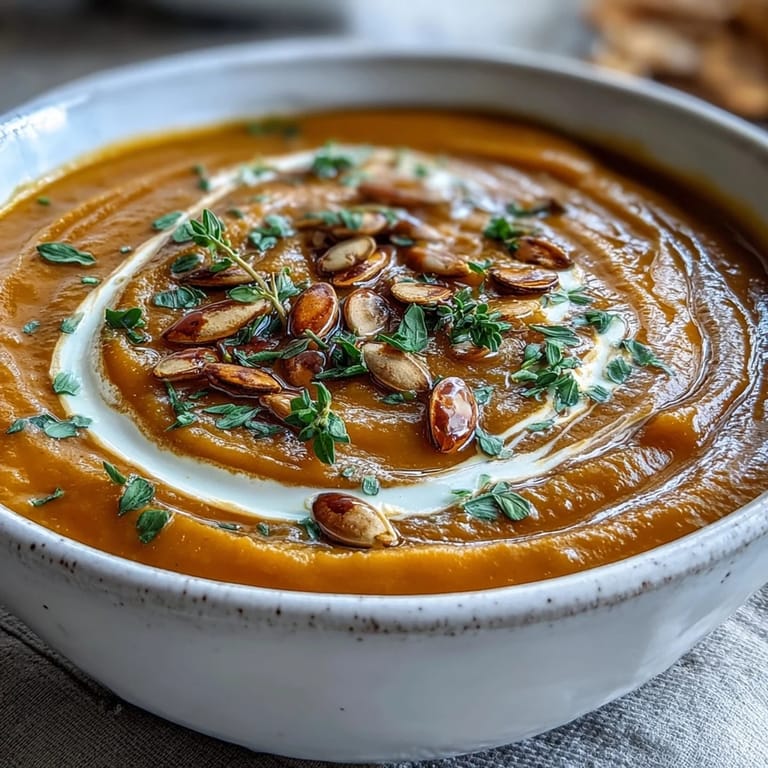
- 1/4 cup heavy cream or coconut cream (optional): Swirl it in if you want luxury, skip it if you prefer the soup to stand on its own.
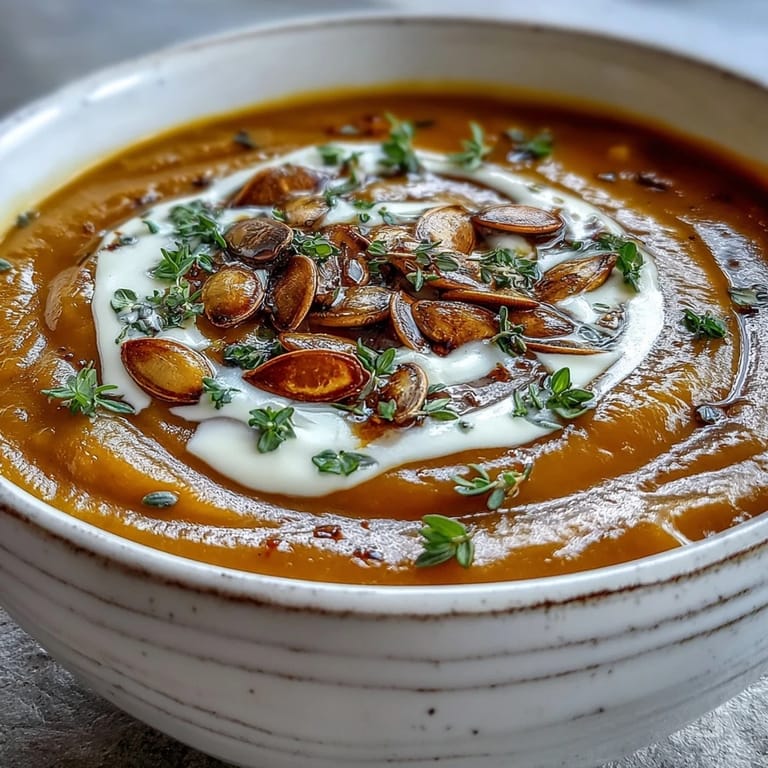
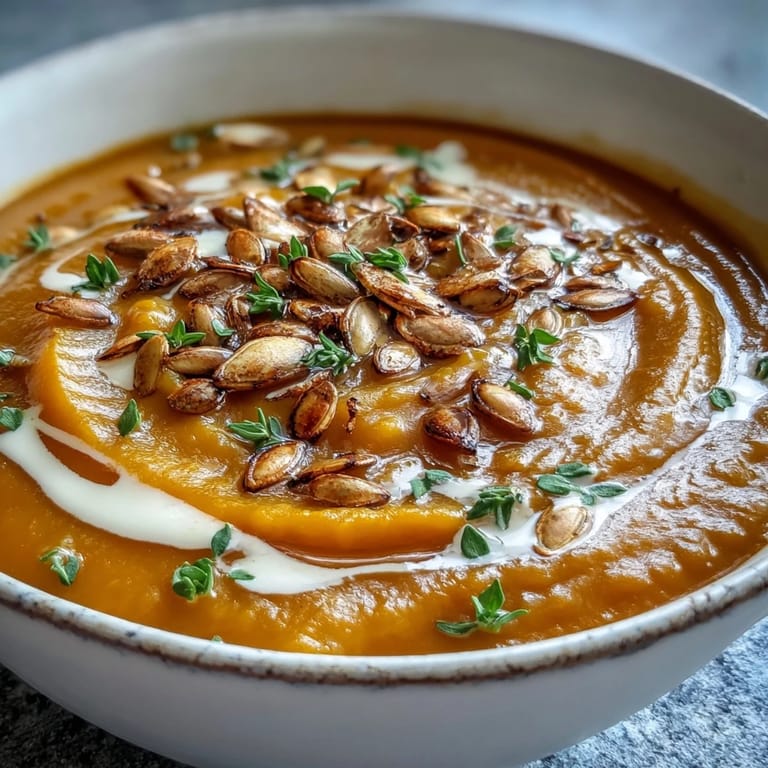
- Toasted pumpkin seeds and fresh thyme (optional): These transform the bowl from simple to intentional.
Tired of Takeout? 🥡
Get 10 meals you can make faster than delivery arrives. Seriously.
One email. No spam. Unsubscribe anytime.
Instructions
- Heat your oven and prep your vegetables:
- Get the oven to 400°F and while it's warming, cut up your squash (the hardest part, honestly—a sharp knife and patience are your friends here). Toss everything with that olive oil until every piece glistens.
- Roast until golden and tender:
- This is where patience pays off—thirty to thirty-five minutes, stirring once halfway through so nothing burns on the bottom. You'll know it's done when you can easily pierce a piece with a fork and it's starting to caramelize at the edges.
- Build the soup base:
- Transfer your roasted vegetables into a large pot, add the broth and all your seasonings, then let it simmer gently for about ten minutes so all those flavors get acquainted.
- Blend into silky smoothness:
- This is the moment the soup becomes itself—use an immersion blender right in the pot, or work in batches with a regular blender if that's what you have. Either way, blend until completely smooth and creamy.
- Taste, adjust, and finish:
- Add more salt, pepper, or nutmeg if it needs it—this is your moment to make it exactly right. Stir in cream if you're using it, then serve immediately while everything's still hot.
 Save
Save My neighbor smelled this simmering one evening and knocked on my door asking what I was making—we ended up sharing bowls and talking for two hours about nothing important, which is exactly what good soup does. It creates the kind of moment where the warmth of the bowl in your hands matters as much as what's inside it.
The Roasting Secret
Most people think butternut squash soup comes from boiling, but roasting is the real magic. The high heat caramelizes the natural sugars in the squash, creating a depth that tastes almost nutty and complex. When you roast the aromatics alongside it, they soften and sweeten too, building a flavor foundation that no amount of simmering can replicate. This is why the soup tastes like someone spent all afternoon on it when you've really only invested forty-five minutes.
Texture Matters More Than You Think
I've made this soup at least twenty times, and the texture varies depending on how much broth I use and how thoroughly I blend. Some days I want it thick enough to cling to the spoon, other days I prefer it pourable and elegant. Start with the full four cups of broth, then if you want it thicker, just blend longer or reduce it gently on the stove for a few minutes. The immersion blender gives you the most control because you can blend it to exactly the consistency you want.
Variations That Work
The beauty of this soup is how forgiving it is—it adapts to what you have on hand or what you're craving. I've added a small apple to the roasting tray when I wanted something slightly sweeter, used half coconut milk for a subtle richness, and even stirred in crispy sage at the end for an earthy twist. The foundation is solid enough that you can play around and still end up with something delicious every time.
- Try adding a splash of apple cider vinegar at the end for brightness that cuts through the richness.
- Roast some fresh thyme and rosemary alongside the vegetables if you want a more herbaceous flavor.
- Drizzle with good olive oil and cracked pepper instead of cream for a lighter, more rustic finish.
 Save
Save This soup has become my answer to almost everything—a rough day, a cold coming on, needing to impress someone with minimal effort, or just wanting to feel taken care of. It's the kind of recipe that gets better the more you make it because you learn its moods and how to make it exactly yours.
Recipe FAQ
- → Can I freeze butternut squash soup?
Yes, this soup freezes beautifully for up to 3 months. Allow it to cool completely before transferring to freezer-safe containers. Thaw overnight in the refrigerator and reheat gently on the stove, adding a splash of broth if needed.
- → How do I make the soup thicker?
For extra thickness, reduce the amount of broth or add a peeled potato during roasting. You can also simmer longer after blending to evaporate excess liquid. Adding cream or coconut cream at the end creates a richer, more substantial texture.
- → What can I serve with this soup?
Crusty bread, warm rolls, or grilled cheese sandwiches make perfect accompaniments. The soup also pairs wonderfully with a simple green salad with vinaigrette to cut through the richness.
- → Can I use frozen butternut squash?
Frozen cubed squash works in a pinch, though fresh squash yields better texture and flavor. If using frozen, thaw and drain excess moisture before roasting. You may need to adjust roasting time to prevent mushiness.
- → How spicy does the cayenne make it?
The optional cayenne adds just a gentle warmth that enhances the squash flavor without making it spicy. If serving heat-sensitive guests, start with 1/8 teaspoon. You can always add more at the end.
- → Why roast the vegetables first?
Roasting concentrates the natural sugars in butternut squash, creating deeper caramelized flavors you can't achieve by boiling alone. This extra step transforms an ordinary soup into something extraordinary with rich, complex undertones.