 Save
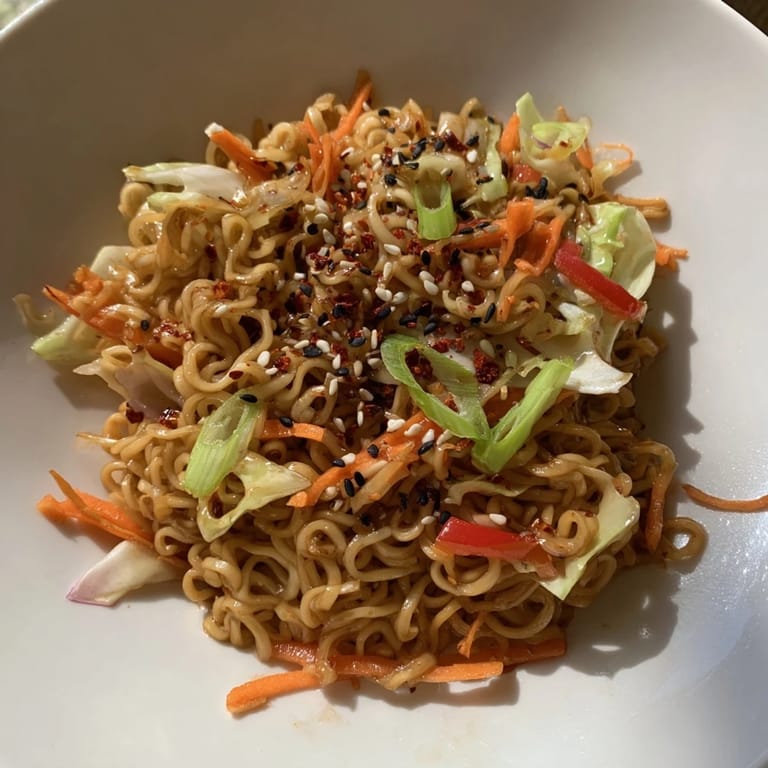
Save I discovered this recipe on a lazy Thursday night when my roommate was scrolling through TikTok and kept replaying the same video of noodles being tossed in a wok with this mesmerizing sizzle. The colors were so vibrant, the movement so satisfying, that I had to try it immediately. Twenty minutes later, standing in our tiny kitchen with steam rising and that intoxicating garlic-chili aroma filling every corner, I understood why it had millions of views. It wasn't just food—it was kitchen theater, and I was hooked.
I made this for a friend who claims they can't cook, and watching them successfully create something this delicious in their own kitchen was genuinely touching. They kept saying things like "I made this?" between bites, and that simple joy reminded me why home cooking matters so much more than the technical skills we think we need.
Ingredients
- Instant ramen noodles (2 packs): Always discard those flavor packets—they're designed for a different dish entirely, and tossing them lets you build something far more interesting.
- Shredded cabbage (1 cup): The unsung hero that stays crunchy even after tossing, giving you texture contrasts that matter.
- Carrot, julienned (1 medium): Julienne, not chunks—thin cuts cook in seconds and feel elegant when you bite into them.
- Green onions (2), sliced: Save half for garnish so you get fresh onion brightness in every bite.
- Red bell pepper (1/2 medium), thinly sliced: Thin slices equal faster cooking and a silky texture that melts into the sauce.
- Soy sauce (2 tablespoons): The backbone of umami that makes everything taste intentional.
- Sriracha or chili garlic sauce (1 tablespoon): Choose based on mood—sriracha for clean heat, chili garlic for more texture and depth.
- Oyster sauce (1 tablespoon): The secret ingredient that sounds fancy but costs almost nothing and transforms the entire flavor.
- Brown sugar (1 tablespoon): It rounds out the heat with subtle sweetness so the spice doesn't dominate.
- Sesame oil (2 teaspoons): Use good quality because this amount is small but mighty—it carries the whole dish.
- Rice vinegar (1 teaspoon): A tiny acid lift that prevents everything from tasting flat.
- Ground black pepper (1/4 teaspoon): Don't skip this—it adds complexity underneath all the other flavors.
- Garlic (2 cloves), minced: This is where the magic starts, so don't use pre-minced.
- Vegetable oil (1 tablespoon): High smoke point is essential so it stays neutral and doesn't burn.
- Toasted sesame seeds (1 teaspoon): The textural finish that makes people ask what makes it taste so good.
- Red pepper flakes (1/2 teaspoon, optional): Only if you want to bring the heat level up from spicy to dangerous.
Tired of Takeout? 🥡
Get 10 meals you can make faster than delivery arrives. Seriously.
One email. No spam. Unsubscribe anytime.
Instructions
- Cook the noodles just shy of done:
- Boil your ramen according to the package, but pull them out one minute early—they'll finish cooking in the pan with residual heat and sauce. Drain well and set aside, maybe toss them lightly with a tiny bit of oil so they don't stick into one clump.
- Mix your sauce in advance:
- Whisk everything together in a bowl while the noodles cook. This small act of prep means you won't be fumbling with bottles while your vegetables hit their prime cooking window.
- Bloom the garlic:
- Heat oil in a large skillet or wok over medium-high heat, then add garlic and listen for the sizzle. Thirty seconds of gentle cooking releases all those aromatic compounds without burning them into bitter regret.
- Quick sauté your vegetables:
- Add cabbage, carrot, and bell pepper all at once and keep moving them around. You want 2–3 minutes of heat just until they soften at the edges but still snap when you bite them.
- Bring it all together:
- Add the cooked noodles and your prepared sauce, then toss constantly for 1–2 minutes until every strand is glossy and warm. The heat will finish cooking the noodles slightly while coating everything evenly.
- Final touches and serve:
- Scatter green onions, sesame seeds, and red pepper flakes across the top, give it one more gentle toss, and eat it immediately while the noodles are still springy and the vegetables haven't gone soft.
 Save
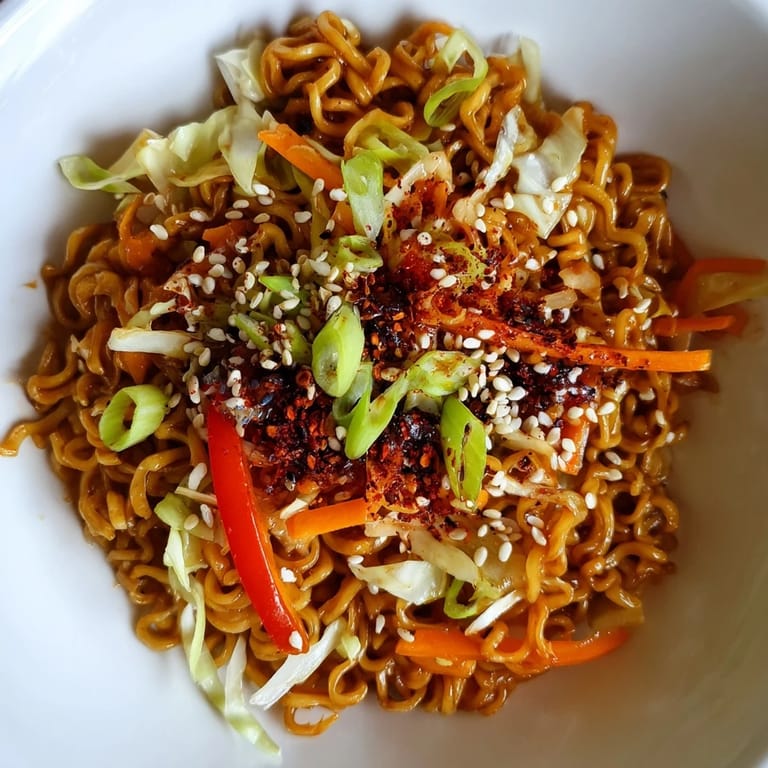
Save One morning, my partner took a bite and said, "This tastes like expensive takeout," which might be the highest compliment our kitchen has ever received. That's when I realized this recipe isn't just quick—it's a shortcut to the food memories and joy that usually requires skill or luck or both.
Why This Sauce Works
The genius of this sauce lies in layering different types of flavor intensity. Soy sauce and oyster sauce deliver umami depth, sriracha brings focused heat, brown sugar adds roundness, sesame oil contributes nutty warmth, and rice vinegar provides brightness that prevents everything from tasting heavy. Together they create complexity that tastes like you've been cooking for years when really you mixed them in a bowl for thirty seconds.
Vegetable Flexibility
The beauty of this stir-fry is that you're not locked into my vegetable choices. Broccoli, snap peas, mushrooms, bok choy, zucchini—whatever you have in your crisper drawer works perfectly. The only rule is to cut everything thin and roughly the same size so it cooks evenly. I've made versions with almost every vegetable combination imaginable, and I've never made one that disappointed.
Customizing Heat and Protein
This recipe shines because you can adjust it for anyone sitting at your table. Reduce the sriracha for people who fear spice, load it up for heat seekers. Add a fried egg on top for richness, stir in cooked chicken or shrimp for protein, crumble tofu into it if that's what you're in the mood for. The sauce is strong enough to carry whatever direction you push it.
- A soft-boiled egg with a runny yolk becomes an instant sauce multiplier that makes everything richer.
- If you make this vegan, swap oyster sauce for hoisin or mushroom-based sauce and use vegetable oil exclusively.
- Leftovers actually taste better the next day because the noodles have time to fully absorb the sauce flavor.
 Save
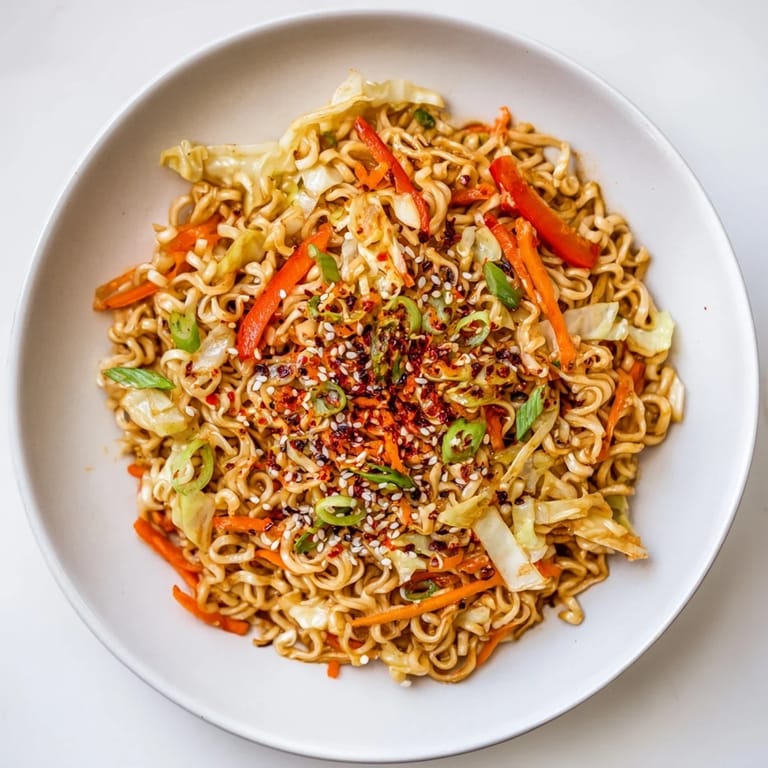
Save This dish has become my answer to "What should we eat?" when time is short but the hunger for something delicious is real. It reminds me that the best recipes are the ones you actually make.
Recipe FAQ
- → How do I get the noodles springy and not soggy?
Boil the noodles slightly less than package directions, about one minute shorter, then drain well. Stir frying quickly helps maintain their texture.
- → Can I use fresh noodles instead of instant?
Yes, fresh noodles work well and may reduce cooking time. Simply adjust boiling time to avoid overcooking and follow stir fry steps as usual.
- → What can I substitute for oyster sauce to keep it vegan?
Use vegan oyster sauce or hoisin sauce as a savory alternative that complements the spicy soy base without animal products.
- → How spicy is this dish and can it be adjusted?
The heat mainly comes from sriracha and optional red pepper flakes. Reduce or omit these for milder flavor or increase to suit your spice tolerance.
- → What vegetables work best in this stir fry?
Crisp vegetables like shredded cabbage, julienned carrots, and sliced bell peppers add texture and freshness. Feel free to add snap peas or broccoli for variety.
- → Is it possible to add protein to this dish?
Yes, add tofu, cooked chicken, shrimp, or a soft-boiled egg on top for extra protein and richness to enhance the meal.