 Save
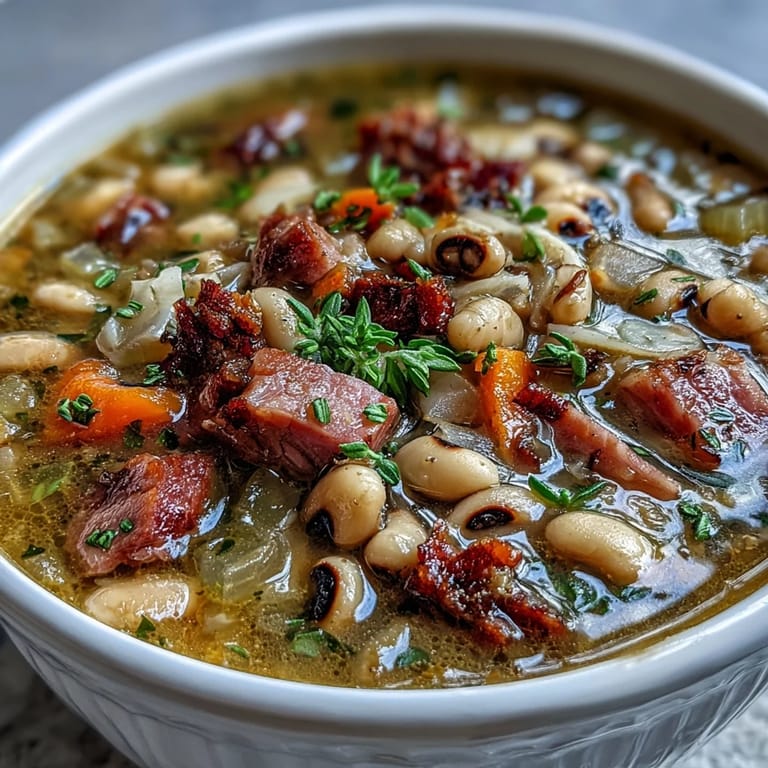
Save My grandmother didn't believe in fancy New Year's resolutions—she believed in a bowl of black-eyed peas, smoky ham, and the kind of soup that fills your kitchen with the smell of comfort before anyone even sits down to eat. Years later, I found myself standing in my own kitchen on December 31st, watching the broth turn golden as the ham released its flavor into the pot, and suddenly understood why she made this every single year. There's something about the ritual of it, the way the vegetables soften and the peas surrender their creaminess into the broth, that feels less like cooking and more like setting an intention.
I made this for the first time during a particularly cold January when three friends showed up at my door with complaints about the weather and empty stomachs. By the time they left two hours later, the pot was nearly empty and someone asked for the recipe written down before they walked out the door. That's when I knew this wasn't just soup—it was the kind of dish that makes people feel seen and cared for without you having to say a single word.
Ingredients
- Cooked ham, diced (2 cups): The backbone of this soup—choose quality ham because its flavor seeps into every spoonful, and if you can find a ham bone, hold onto it like treasure for the broth.
- Dried black-eyed peas (2 cups) or canned (3 cans): Dried peas need soaking overnight but reward you with better texture and deeper flavor, though canned works beautifully when time is short.
- Onion, carrots, and celery: This holy trinity is your flavor foundation—don't skip the sauté step because it transforms these humble vegetables into something that makes the whole pot sing.
- Garlic (3 cloves, minced): Add it after the vegetables soften so it doesn't burn and turn bitter, creating that aromatic moment that signals dinner is becoming dinner.
- Diced tomatoes (14.5 oz can, undrained): The acidity brightens the richness of the ham and adds a subtle sweetness that balances the earthiness of the peas.
- Chicken broth (6 cups) and water (2 cups): Use low-sodium broth so you can control the salt level as the soup simmers and reduces slightly.
- Bay leaf: Just one, tucked into the pot—it whispers flavor rather than shouts, adding depth that you can't quite identify but absolutely notice if it's missing.
- Smoked paprika, thyme, black pepper, salt, and cayenne: The seasonings create warmth and complexity; start conservative with the cayenne and add more if you like heat, because you can always turn it up but can't take it back.
Tired of Takeout? 🥡
Get 10 meals you can make faster than delivery arrives. Seriously.
One email. No spam. Unsubscribe anytime.
Instructions
- Prepare your peas overnight (if using dried):
- Rinse them under cold water and let them soak in plenty of cold water overnight in a bowl on your counter. The next day, drain and rinse again—this step matters because it reduces cooking time and makes the peas digest more easily.
- Build your flavor base:
- Heat a splash of oil in a large pot over medium heat, then add diced onion, carrots, and celery. Sauté for about 5 minutes until they soften and become fragrant, listening for that gentle sizzle that tells you the heat is just right.
- Wake up the aromatics:
- Stir in minced garlic and cook for 1 minute—you'll know it's ready when the kitchen smells like garlic is about to take over the world. Don't walk away here because garlic burns faster than you'd think.
- Introduce the ham:
- Add your diced ham and the ham bone if you have one, stirring to coat everything with oil. Let it cook for 2 minutes so the ham starts releasing its smoky essence into the pot.
- Combine everything and season:
- Add the black-eyed peas, diced tomatoes with their juices, chicken broth, water, bay leaf, and all your seasonings—paprika, thyme, black pepper, salt, and cayenne if you're feeling brave. Stir everything together so the flavors start getting acquainted.
- Bring to life and simmer:
- Turn the heat up to bring the whole pot to a boil, then immediately reduce to low and cover with a lid. Simmer for 1 hour if using dried peas (30 minutes if using canned) until the peas are creamy and tender, stirring occasionally and letting the house fill with that irresistible smell.
- Finish and adjust:
- Remove the ham bone if used, then taste carefully and adjust the seasoning—add more salt if needed, or a pinch more cayenne if it needs heat. Ladle into bowls and serve hot, optionally topped with chopped fresh parsley or green onions.
 Save
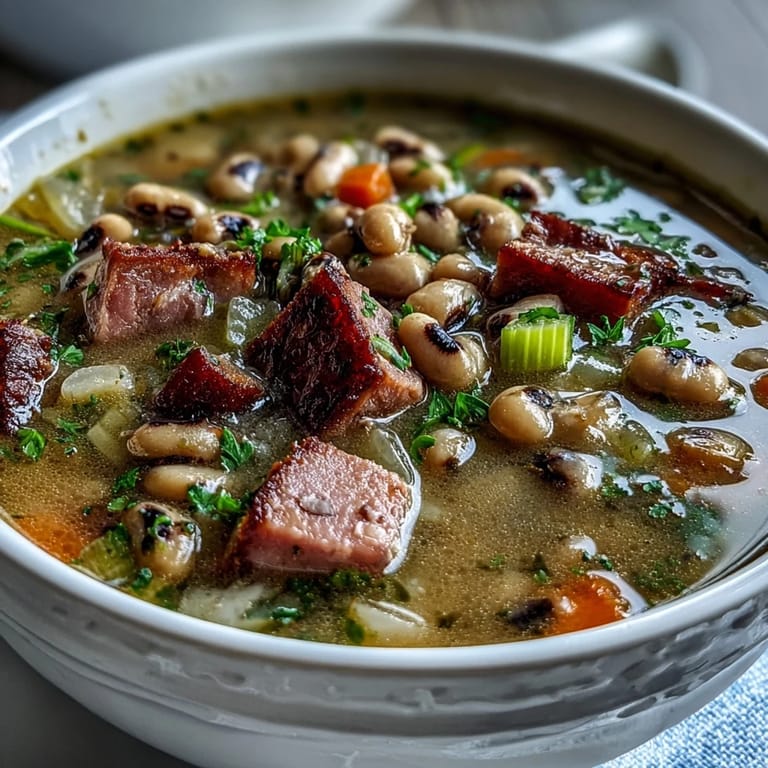
Save There's a moment in the cooking process when you lift the lid and the steam rises and you realize this isn't just food—it's a promise. A promise that you're taking care of people, that you're honoring tradition even if you're inventing your own version, and that good things can come from something as simple as combining ham, peas, and patience. That's when this soup becomes more than a recipe.
The Southern Tradition Behind This Soup
Black-eyed peas have been a Southern staple for generations, tied to New Year's traditions and the belief that eating them brings good fortune and prosperity for the year ahead. My grandmother told me the legend came from enslaved people who were forced to eat the peas while the slaveholders claimed the more desirable grains, and how the peas became a symbol of resilience, survival, and ultimately, freedom. Cooking this soup isn't just about the flavor—it's about understanding where the tradition comes from and honoring the people who transformed simple ingredients into something that sustained and comforted generations. Every bowl you serve carries that history forward.
Make It Your Own
This recipe is forgiving enough to handle variations based on what you have in your kitchen or what your body needs. Some years I've skipped the ham and loaded the pot with extra vegetables and vegetable broth for friends who eat plant-based, and honestly, it's just as satisfying when you lean into the smoked paprika and add an extra bay leaf for depth. The cayenne pepper is optional—I leave it out when I know people at the table prefer milder flavors, but add it without hesitation when I'm cooking just for myself on a cold night and want that little kick.
Storage and Making It Last
Leftover soup keeps beautifully in the refrigerator for up to 4 days, and actually tastes even better the next day after the flavors have had time to get friendly with each other. Freeze it in individual containers for up to 3 months, and you'll have moments throughout the season when you can thaw a bowl and feel that same warmth all over again.
- If the soup thickens too much when reheating, add a splash of broth or water and stir until it reaches the consistency you like.
- Cornbread on the side is non-negotiable—the slight sweetness balances the savory soup perfectly.
- Mash some of the cooked peas against the side of the pot if you prefer a thicker soup with more body.
 Save
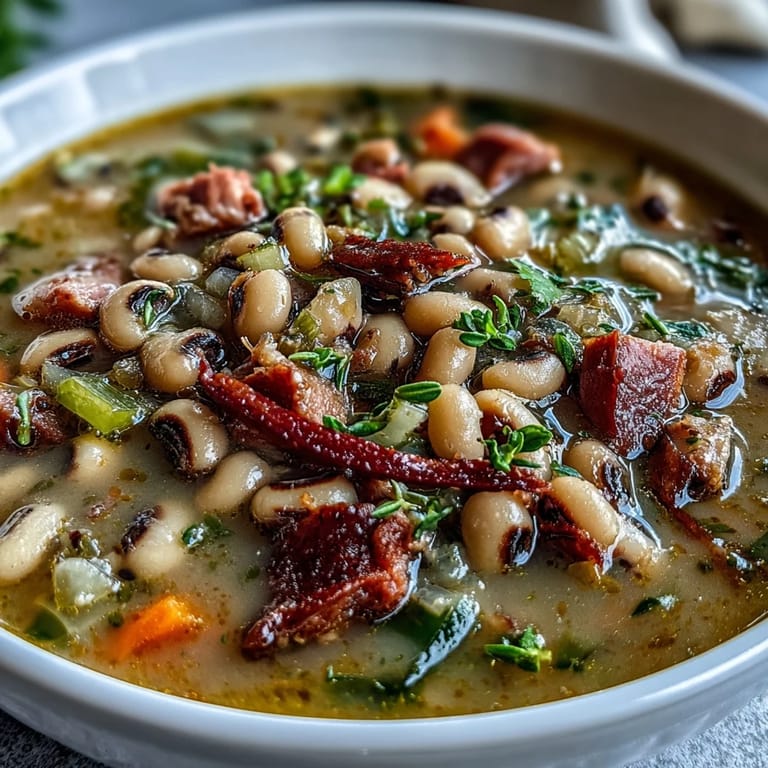
Save Make this soup when you need comfort, when you're starting something new, or when someone in your life needs to know they're cared for. It's the kind of dish that does the emotional work while you do the cooking.
Recipe FAQ
- → Can dried black-eyed peas be substituted with canned?
Yes, canned peas can be used for a quicker preparation. Adjust simmering time to 30 minutes as they are already softened.
- → What adds smoky flavor to this dish?
Diced ham and smoked paprika provide the distinctive smoky taste essential to this hearty dish.
- → Is it necessary to use the ham bone?
The ham bone is optional but enhances depth and richness during simmering. Remove before serving.
- → How can the soup be thickened?
Mash some cooked peas against the pot’s side to release starch, naturally thickening the broth.
- → Can this dish be made vegetarian?
Omit ham and use vegetable broth, adding smoked paprika to preserve a smoky undertone.
- → What dishes pair well alongside?
Cornbread complements this hearty soup, offering a perfect balance of textures and flavors.