 Save
Save I still remember the evening I first encountered a wine-stained cheese board at a friend's dinner party in Tuscany. The way the ruby-red hues had seeped into the goat cheese, how the wine jelly caught the candlelight—it felt less like appetizer preparation and more like edible art. That night, I realized a cheese board could tell a story, whisper of vineyards and long summer afternoons, all before a single bite was taken.
I made this board for my sister's engagement celebration, and watching grown adults light up when they saw the wine bottle rising from the center like a trophy—that's when I knew I'd created something special. Someone even asked if it was too beautiful to eat. It wasn't.
Ingredients
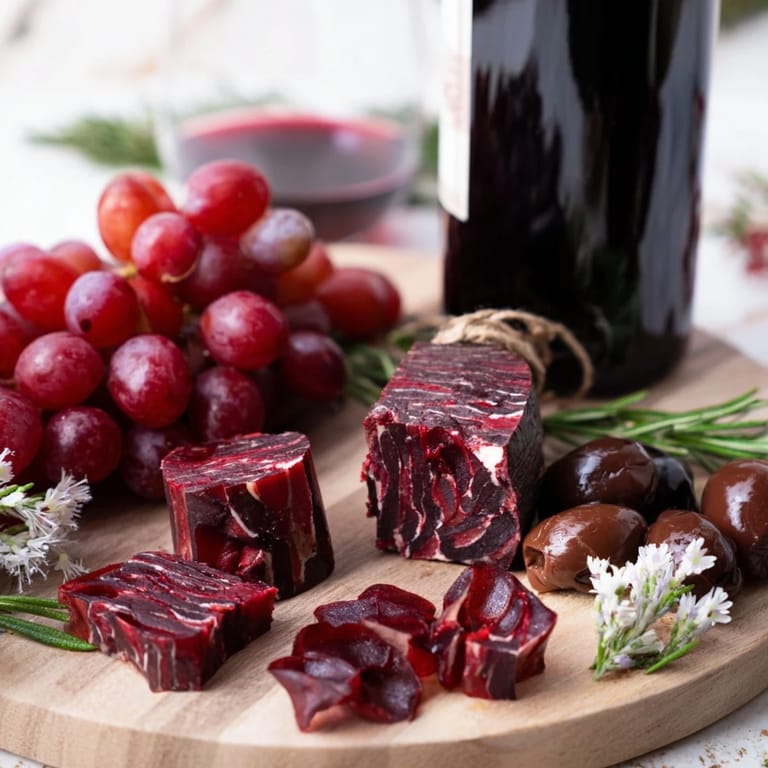
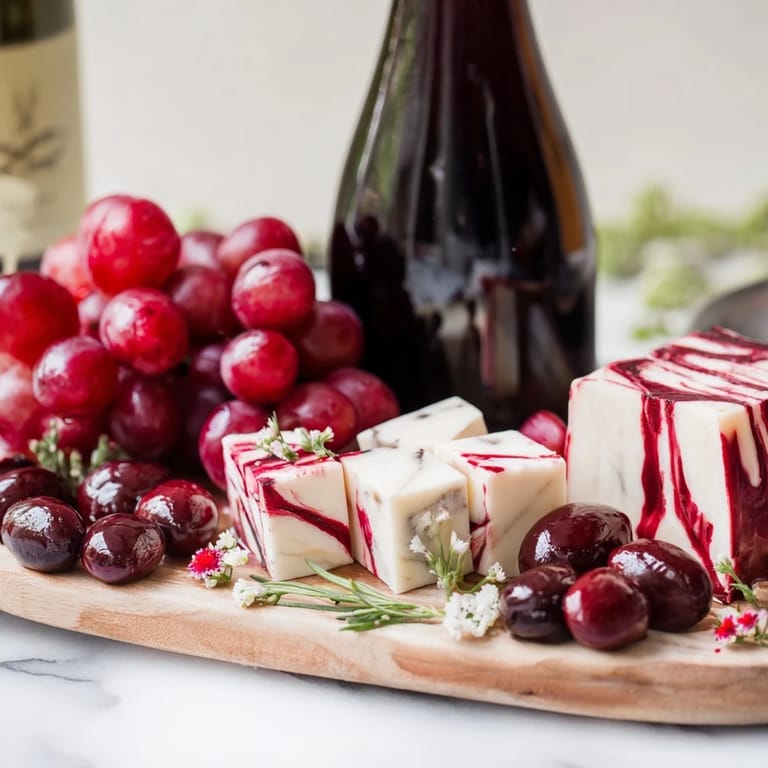
- Drunken goat cheese (200 g, sliced): This wine-soaked cheese is the soul of your board; its tangy creaminess becomes almost floral from the wine bath, so source the best you can find and let it sit at room temperature 10 minutes before serving
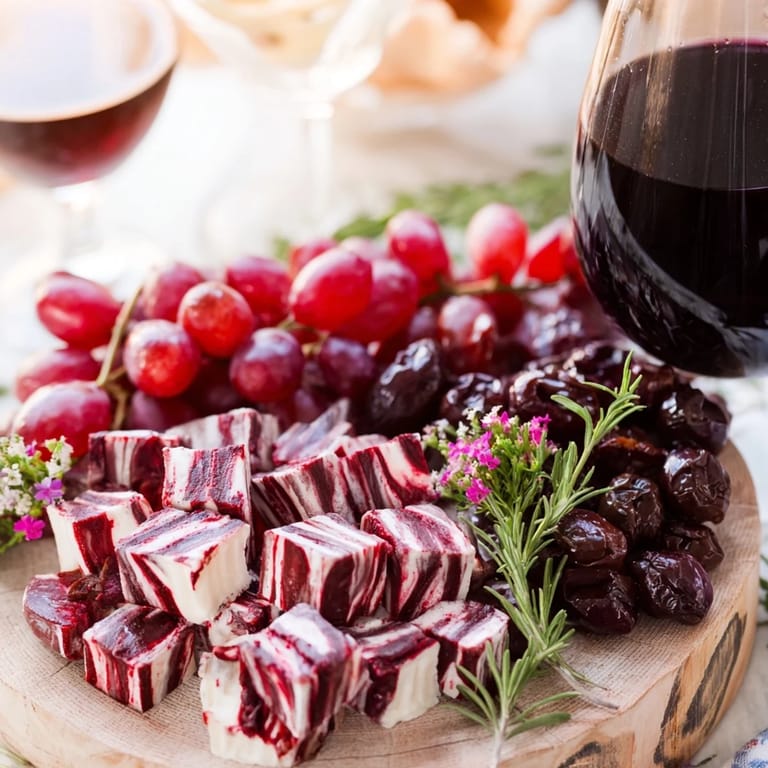
- Red Wine BellaVitano or similar wine-soaked hard cheese (150 g, cubed): The firm texture contrasts beautifully with soft cheeses and holds its shape for easy arrangement; ask your cheesemonger if they have other red wine-aged varieties like Ubriaco Rosso
- Red wine-cured salami (100 g, thinly sliced): The spice and saltiness anchor the sweetness of the wine elements; this is optional for vegetarians but adds crucial savory depth
- Prosciutto (80 g, torn into ribbons): Tear rather than slice for an elegant, organic look that catches light on the board
- Red wine jelly (1/2 cup): This glossy jewel of a condiment ties the whole board together visually and flavor-wise; it's the final touch that says you understood the theme
- Red wine-poached grapes (1/2 cup): These soft, wine-plump grapes are the secret garnish that makes people ask for your recipe; simmer seedless red grapes in 1 cup dry red wine with 2 tablespoons sugar and a cinnamon stick for 10 minutes, then cool completely
- Red wine-infused dried cherries (1/4 cup): Tart and chewy, they provide bursts of concentrated fruit flavor that linger on the palate
- Red wine-marinated olives (1/3 cup, kalamata or green): Buy marinated if you can, or soak Castelvetrano or kalamata olives in red wine for 2 hours; they become briny jewels
- Baguette (1 small, sliced): Toast lightly if you prefer crunch, but day-old bread soaks up the jelly beautifully without falling apart
- Red wine and rosemary crackers (1 cup): Look for gourmet versions or make your own by brushing crackers with red wine reduction and rosemary before baking
- Fresh rosemary sprigs: These aren't just garnish—they perfume the entire board and hint at the flavors within
- Edible flowers (optional): Pansies, violas, or nasturtiums add unexpected color and elegance without overwhelming the senses
Tired of Takeout? 🥡
Get 10 meals you can make faster than delivery arrives. Seriously.
One email. No spam. Unsubscribe anytime.
Instructions
- Create Your Wine Bottle Monument:
- Start with a clean, empty wine bottle (label removed or kept if it's decorative) and place it dead center on your wooden board. This becomes your anchor point, your statement piece. Step back and imagine the board radiating outward from this elegant centerline.
- Begin with the Cheeses:
- Arrange sliced drunken goat cheese and cubed red wine BellaVitano around the bottle's base in concentric circles or casual clusters. Let a few pieces lean against the bottle as if drawn to it—this creates dimension and visual movement that flat arrangements can never achieve.
- Layer in the Cured Meats:
- Fan out the salami slices in small piles between the cheeses, then scatter the prosciutto ribbons in airy clusters. Let them crinkle naturally rather than smoothing them down; that texture is your invitation to elegance.
- Add Your Wine Jelly Jewel:
- Pour the red wine jelly into a small ceramic or glass bowl—something that complements your board's color story—and nestle it among the cheeses where guests will find it but can't miss it. This becomes a focal point within your focal point.
- Scatter the Jeweled Accompaniments:
- Distribute the wine-poached grapes, infused dried cherries, and marinated olives in small clusters throughout the remaining spaces. Think of them as scattered rubies and garnets; irregular groupings of 5-7 pieces create visual interest far better than perfectly even spacing.
- Finish with Bread and Crackers:
- Arrange baguette slices and wine crackers in graceful arcs around the board's edges, creating natural pathways for guests to navigate. Lean some against the cheeses for height variation that makes your board feel less flat and more inviting.
- Crown with Herbs and Flowers:
- Tuck fresh rosemary sprigs throughout the arrangement, positioning them to create visual lines that guide the eye. If using edible flowers, scatter them last as a final flourish that catches the light and signals the care you've taken.
- Present with Purpose:
- Step back and look at your creation. Does it feel balanced? Can you see the wine bottle clearly? Are there enough negative spaces so it doesn't feel cluttered? Make final adjustments, then serve immediately while everything is at its intended temperature and the wines and cheeses are in perfect harmony.
 Save
Save I learned the power of this board when a skeptical guest—someone who "doesn't really do cheese"—stood before it in reverent silence for a full minute before asking what wine had been used. That's when I understood: this board isn't about what's on it. It's about what it represents. It's about taking time to make something beautiful for people you care about.
The Wine Connection
Every element on this board is bound by wine, not just as ingredient but as philosophy. The wine doesn't mask the cheeses and meats—it enhances them, adds dimension, creates a narrative thread that ties everything together. When you pair this board with a glass of Pinot Noir or Merlot, you're not just serving appetizers; you're creating an experience where each component speaks to the other. The wine in the glass mirrors the wine in the cheese, the wine in the jelly, the wine in the grapes, and suddenly your guests understand that they're tasting a complete thought, a coherent vision rather than a random collection.
Building Your Own Version
This board thrives on substitution and personalization. Can't find drunken goat cheese? Ask your cheesemonger what red wine-aged cheeses they have in stock—there are dozens of them, each with subtle variations in flavor and texture. Don't have wine-poached grapes? Dried figs plumped in red wine work beautifully. The architecture matters more than the exact ingredients. What matters is that each component has been kissed by wine in some way, that you've thought about the progression of flavors, that you understand the board as an edible story rather than a shopping list brought to life.
Vegetarian and Dietary Considerations
If you're building this for vegetarians or meat-averse guests, remove the salami and prosciutto without hesitation and add extra cheese instead—perhaps a creamy fresh cheese and a pungent aged one. Add roasted nuts for textural contrast: candied walnuts or marcona almonds work beautifully, especially if you've tossed them in a light red wine reduction and let them dry slightly. Add roasted beets or sun-dried tomatoes for additional color and sweetness. A vegetarian version is not a lesser version; it's simply a different conversation about what wine, cheese, and time can create together.
- Add candied walnuts or marcona almonds for textural contrast and richness
- Include fresh herbs like thyme or tarragon for aromatic depth that compensates for the absence of cured meats
- Use a mixture of soft and hard cheeses to create complexity and visual interest across your board
 Save
Save This board has taught me that entertaining isn't about complexity—it's about intention. In 20 minutes, you create something that tells a story and makes people feel celebrated. Serve it with confidence and watch how it transforms a simple moment into something people will remember.
Recipe FAQ
- → How do I make the red wine-poached grapes?
Simmer seedless red grapes in dry red wine with sugar and a cinnamon stick for 10 minutes, then cool before adding to the board.
- → Can the board be made vegetarian?
Yes, simply omit the cured meats and add extra cheeses or roasted nuts for a satisfying vegetarian option.
- → What cheeses work best stained with red wine?
Soft and hard cheeses like drunken goat and BellaVitano absorb red wine flavors beautifully, offering a rich taste and appealing color.
- → How should the board be arranged for best presentation?
Arrange cheeses and meats around a central empty wine bottle, with accompaniments nestled in between, then garnish with rosemary and edible flowers.
- → What types of wine pair well with this board?
Fruity, medium-bodied reds such as Pinot Noir or Merlot complement the infused flavors perfectly.