 Save
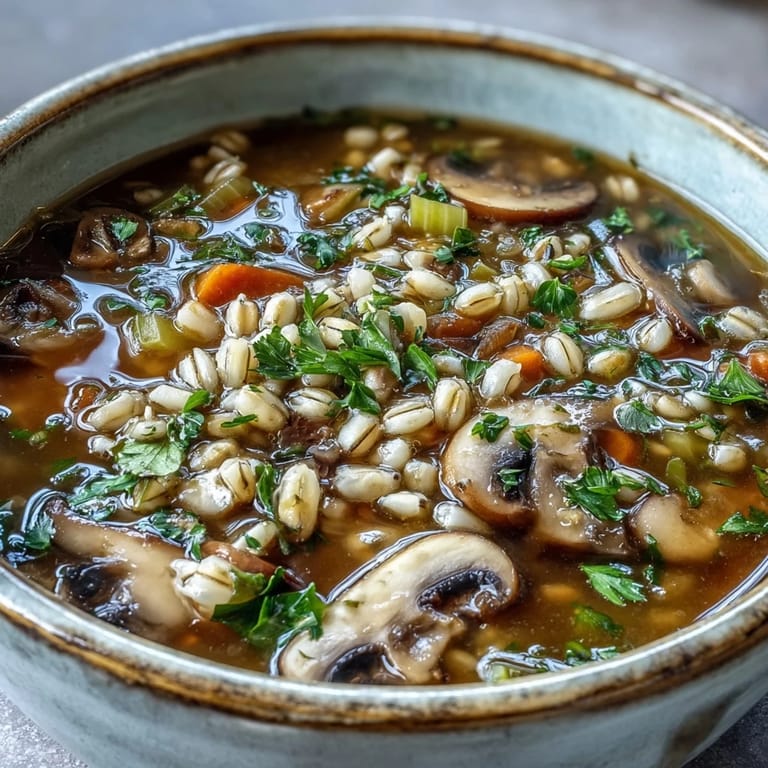
Save There's something about the aroma of mushrooms sautéing in olive oil that stops me mid-conversation every single time. A few years back, my neighbor brought over a thermos of mushroom barley soup on a particularly gray Tuesday, and I remember being struck by how something so simple—dried shiitakes, pearl barley, humble root vegetables—could taste so deeply satisfying. It wasn't fancy or Instagram-worthy, but it was the kind of soup that made you understand why delis have kept this recipe alive for generations.
I made this soup last January when my sister was going through a rough patch, and she showed up at my door unannounced. Instead of pretending everything was fine over coffee, we just sat in my kitchen while this soup simmered, and somehow the warmth and the smell of it made space for actual conversation. She told me later that soup was the first thing that week that felt like comfort.
Ingredients
- Dried shiitake mushrooms (1 oz): These are the backbone of the soup's rich, savory character—don't skip them for regular dried mushrooms, as shiitakes have an earthy depth that other varieties can't match.
- White mushrooms, sliced (8 oz): Fresh mushrooms add moisture, texture, and brightness that balances the concentrated flavor of the dried ones.
- Pearl barley, rinsed (3/4 cup): Rinsing removes excess starch and prevents the soup from becoming gluey, while the barley itself becomes tender and slightly creamy during cooking.
- Olive oil (2 tbsp): This is your foundation for building flavor—use decent quality oil, not the cheapest bottle, because it carries the sauté.
- Onion, carrots, and celery (1 onion, 2 carrots, 2 stalks): This is your aromatic holy trinity, the quiet work that gives the soup body and sweetness without any single vegetable dominating.
- Garlic cloves, minced (3): Added after the softer vegetables to prevent burning, garlic brightens everything without becoming bitter or sharp.
- Low-sodium vegetable broth (8 cups): Low-sodium matters here because you're controlling the salt level throughout cooking, and store-bought broth can be aggressively salty.
- Bay leaves (2) and dried herbs (thyme and parsley, 1 tsp each): These simmer throughout cooking and infuse the entire pot with subtle, sophisticated flavor that feels like someone spent hours developing it.
- Salt and black pepper: Taste as you go near the end—this is your final adjustment tool, and it makes the difference between good soup and one people remember.
- Fresh parsley for garnish (2 tbsp, optional): A small handful of fresh herbs scattered on top adds brightness and visual life to each bowl.
Tired of Takeout? 🥡
Get 10 meals you can make faster than delivery arrives. Seriously.
One email. No spam. Unsubscribe anytime.
Instructions
- Awaken the dried mushrooms:
- Pour boiling water over the dried shiitakes and let them steep for 20 minutes—you'll watch them soften and the water will turn dark amber. Drain and slice them, then strain that soaking liquid through cheesecloth or a fine sieve to catch any grit, because that liquid is liquid gold for your soup's flavor.
- Build your flavor base:
- Heat olive oil in a large pot over medium heat and add your diced onion, carrots, and celery. Let them soften for about 5 minutes, stirring occasionally, until the kitchen fills with that foundational aroma.
- Bring in the garlic:
- After the vegetables have softened slightly, add your minced garlic and cook for just 1 minute—you want it fragrant but not browned, which would turn bitter.
- Introduce the mushrooms:
- Add both the fresh sliced mushrooms and your cooked shiitakes, and let them cook for about 5 minutes. You'll see them release their juices and the whole pot will smell intensely earthy and rich.
- Combine all the elements:
- Stir in the rinsed pearl barley, then pour in the reserved mushroom soaking liquid and all 8 cups of broth. Add your bay leaves, thyme, and parsley, then season with salt and pepper to taste.
- Let it become soup:
- Bring the pot to a boil, then drop the heat to low, cover it, and simmer for 50 to 60 minutes. The barley will gradually soften, the flavors will meld, and you'll have actual soup instead of just vegetables in broth.
- Finish and serve:
- Fish out the bay leaves, taste and adjust seasoning if needed, then ladle into bowls. A small handful of fresh parsley on top adds that final touch of brightness.
 Save
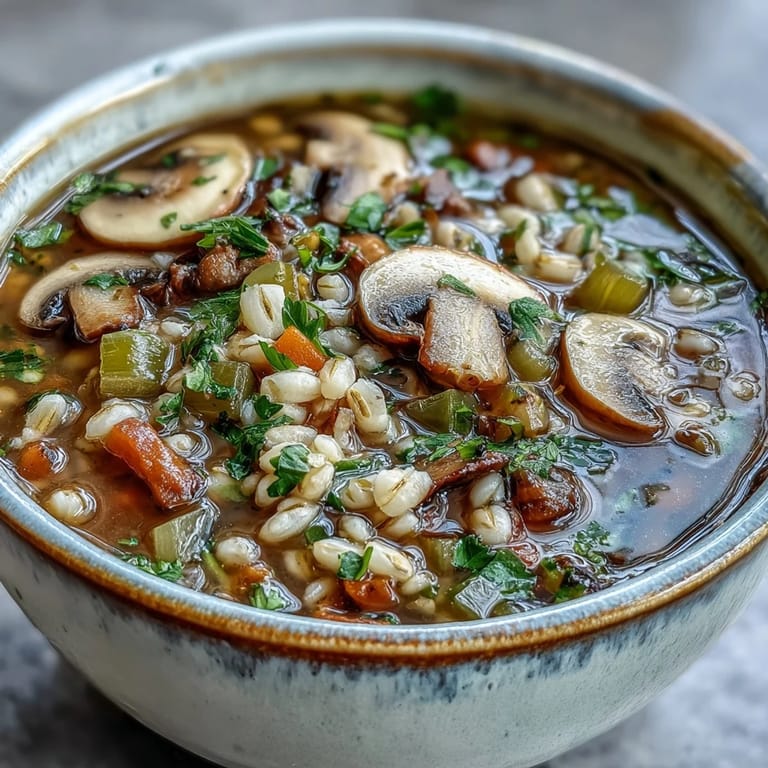
Save I've served this soup to people recovering from colds, to friends who needed feeding after difficult days, and to family members who just wanted something that felt homemade and real. There's something about mushroom barley soup that signals care without any fuss.
Why This Soup Works
The genius of this soup is its restraint. There's no cream, no meat stock, no complicated techniques—just good ingredients treated with respect. The dried shiitakes do the heavy lifting flavor-wise, while the fresh mushrooms and pearl barley add texture and body. It's the kind of soup that tastes better the next day because the flavors have had time to really know each other.
Storage and Reheating
This soup keeps beautifully in the refrigerator for up to four days, and it freezes well for up to three months. When you reheat it, remember that the barley has already softened and will continue absorbing liquid, so add broth or water gradually until you reach the consistency you want. I like to reheat it slowly on the stovetop rather than the microwave because it allows the flavors to warm through gently without any hot spots.
Variations and Adaptations
While the basic recipe is perfect as written, it's also surprisingly flexible depending on what's in your pantry or what your mood calls for. Some people add diced potatoes or parsnips for extra heartiness, and others use chicken broth instead of vegetable broth if they're not vegetarian. The bay leaves and dried herbs are the constants—those are what make it taste like deli soup—but everything else can shift based on your preferences.
- If you want a creamier texture without dairy, blend a cup of cooked barley separately and stir it back in for body without heaviness.
- Serve it with rye bread or dark pumpernickel for the full deli experience, or just a simple crusty bread if that's what you have.
- Fresh dill added at the very end brings a completely different but equally delicious flavor profile if you want to make it again with a different character.
 Save
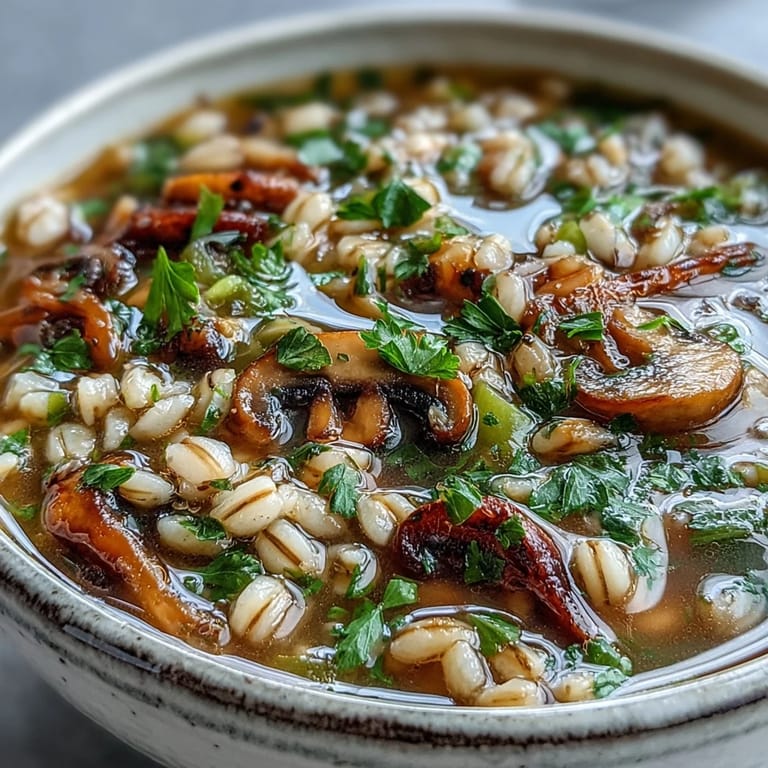
Save This soup is the kind of thing that reminds you why cooking matters—not because it's complicated or impressive, but because it nourishes people in a way that takeout simply can't. Make a big pot on a Sunday afternoon and you'll have comfort ready to go all week.
Recipe FAQ
- → Can I make this soup ahead of time?
Yes, this soup actually improves overnight as flavors meld. Store in the refrigerator for up to 4 days, knowing it will thicken—simply add extra broth or water when reheating to reach desired consistency.
- → Is pearl barley the same as quick barley?
No, pearl barley requires 50-60 minutes of simmering to become tender. Quick barley has been pre-cooked and dried, reducing cooking time to about 10-15 minutes, but it won't provide the same satisfying texture.
- → Can I freeze this soup?
This soup freezes well for up to 3 months. Leave a bit of headspace in containers since liquids expand when frozen. Thaw overnight in the refrigerator before reheating.
- → What can I serve with mushroom barley soup?
Rye bread or crusty sourdough makes the perfect accompaniment for soaking up the flavorful broth. A simple green salad with vinaigrette balances the hearty nature of this soup.
- → Can I use other types of mushrooms?
Absolutely. Cremini, portobello, or wild mushrooms like porcini can substitute or complement the white mushrooms. Adjust quantities based on mushroom size and intensity of flavor.