 Save
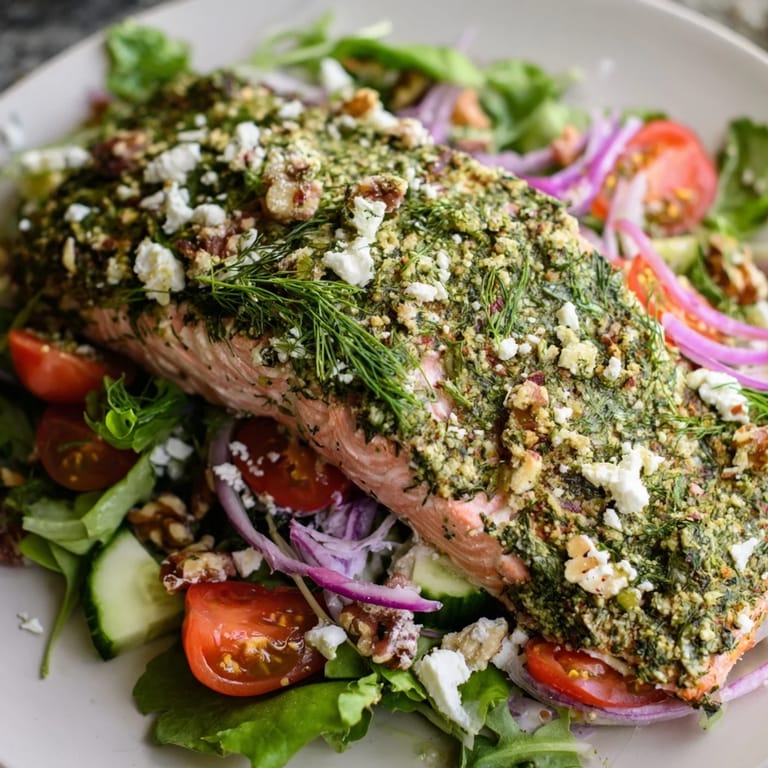
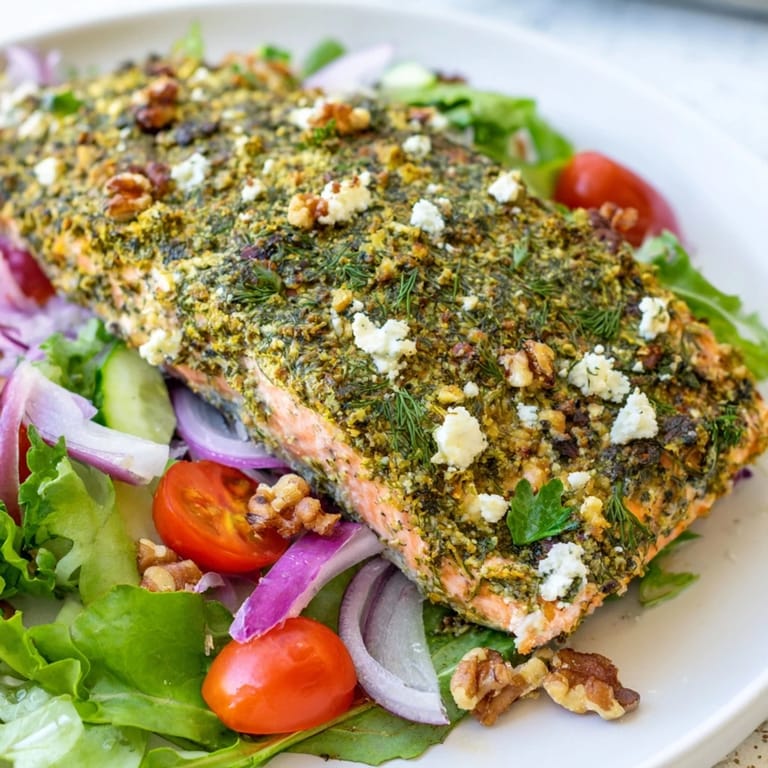
Save There's something about the way herb-crusted salmon fills a kitchen with warmth that makes you pause mid-afternoon. I discovered this particular combination on a Tuesday when I had exactly what I needed but felt uninspired—fresh salmon, a handful of herbs going soft in the crisper, and a vague craving for something bright. Thirty-five minutes later, I had a plate that felt restaurant-quality yet entirely unrushed. It became my go-to when I wanted to impress without the stress, or simply when I wanted to feed myself something that tasted like I'd actually tried.
I made this for my sister one evening when she'd had a long week, and watching her face when that warm salmon hit the cold greens reminded me why I love cooking at all. She barely said anything until halfway through, then just laughed and said it was exactly what she needed—no explanation necessary. That's when I knew this recipe had staying power.
Ingredients
- Salmon fillets: Skinless fillets about 150 grams each work best because they cook evenly and won't curl up on you, plus they're easier to plate gracefully.
- Olive oil: The carrier for your herb paste, so use something you actually enjoy tasting—not the cheapest bottle you can find.
- Fresh herbs (parsley, dill, chives): These three together create a flavor that's bright without being grassy, and each one brings something different to the party.
- Dijon mustard: A small amount acts like a flavor amplifier and helps the herb mixture stick to the salmon without sliding off.
- Garlic powder: A quiet background note that doesn't try to overpower but adds a savory depth that feels intentional.
- Mixed salad greens: Choose greens with personality—arugula brings a peppery bite, spinach adds earthiness, romaine gives you substance and crunch.
- Cherry tomatoes: Halved so they release just a tiny bit of juice that mingles with the vinaigrette.
- Cucumber and red onion: Raw vegetables that stay crisp and provide textural contrast to the warm salmon.
- Walnuts or almonds: Optional but honestly worth the addition because they give you something to chew on besides greens.
- Feta cheese: Crumbled feta adds a salty, tangy note that plays beautifully against the rich salmon.
- Vinaigrette base: Extra-virgin oil, white wine vinegar, honey, and mustard create a dressing that's balanced enough to taste like someone thought about it but simple enough to make every single time.
Tired of Takeout? 🥡
Get 10 meals you can make faster than delivery arrives. Seriously.
One email. No spam. Unsubscribe anytime.
Instructions
- Get your oven ready and set the stage:
- Preheat to 200°C and line a baking sheet with parchment paper so your salmon doesn't stick and cleanup is almost embarrassingly easy. This is the moment everything else hinges on.
- Mix your herb paste into a cohesive coating:
- Combine olive oil, mustard, lemon juice, and all your fresh herbs in a small bowl, stirring until it looks like a thick, fragrant paste. Taste it on your finger—it should make you want more.
- Coat your salmon generously and evenly:
- Place fillets on the sheet and spread the herb mixture across the top of each one, pressing gently so it adheres. You're building a flavorful crust that will toast in the oven.
- Bake until the salmon is just cooked through:
- Twelve to fifteen minutes at 200°C is usually perfect—you want the flesh to flake easily when tested with a fork but still feel tender inside. Start checking at the twelve-minute mark because ovens are liars about their temperature.
- Build your salad while the salmon cooks:
- In a large bowl, combine your greens, halved tomatoes, cucumber slices, red onion, nuts, and cheese if using. This is the calm part where you can actually think.
- Whisk your vinaigrette into something balanced:
- In a small bowl, whisk together the oil, vinegar, honey, and mustard until it emulsifies slightly, then taste and adjust your salt and pepper. It should taste bright and slightly sweet, not aggressively sour.
- Dress the salad and plate with intention:
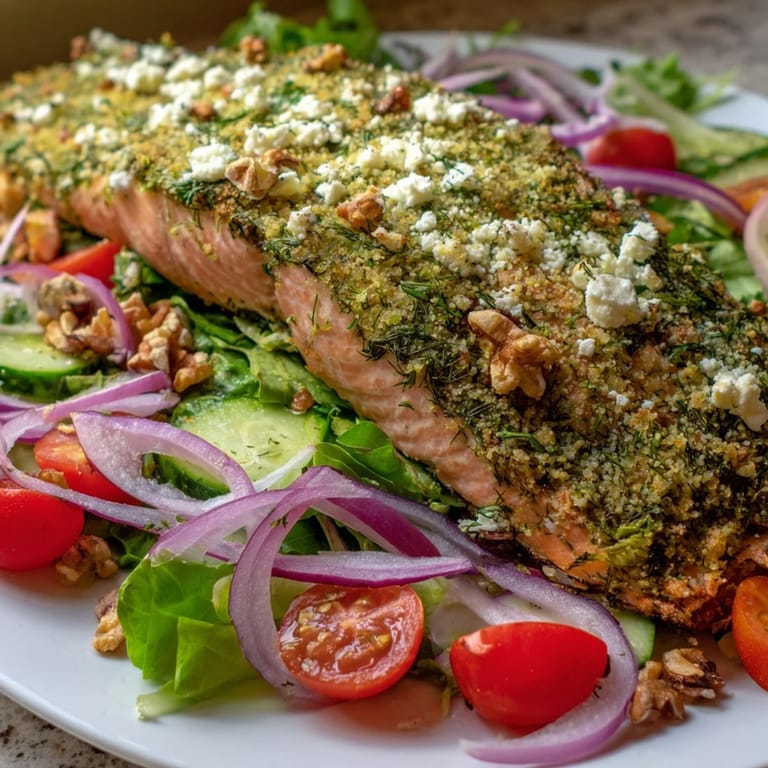
- Gently toss the greens with vinaigrette, then divide among four plates and top each with a warm herb-crusted salmon fillet. Serve immediately so the contrast between warm and cool stays vivid.
 Save
Save The first time someone told me they'd made this for a date night and it actually impressed them made me genuinely happy. There's something to a recipe that bridges the gap between looking effortless and tasting like you meant it.
Why This Works as a Complete Meal
The salmon provides protein and that satisfying, buttery richness that makes you feel nourished, while the salad underneath keeps everything light enough that you don't feel weighted down afterward. The contrast between the warm herb crust and the cool, crisp greens is part of the appeal—it's not accident that this tastes interesting, it's intentional design.
How to Customize Without Losing the Point
I've swapped in trout when salmon wasn't calling to me, and it works beautifully with the herb crust. Add sliced avocado if you want richness, cooked quinoa if you want substance, or crumbled goat cheese instead of feta if you're feeling different. The skeleton of the recipe stays sturdy enough to handle these swaps.
The Small Details That Matter Most
Let your salmon come to room temperature for ten minutes before baking so it cooks evenly from edge to center. Fresh herbs really do make a difference here—dried herbs would just taste dusty by comparison. The Dijon mustard in both the salmon crust and the vinaigrette creates a cohesive flavor thread that ties the whole plate together in a way that feels sophisticated but tastes like home cooking.
- Use a sharp knife when chopping herbs so you're cutting rather than bruising them, which preserves their bright flavor.
- Pat your salmon dry before coating it so the herb mixture actually adheres instead of sliding around on moisture.
- Make extra vinaigrette because you'll want it, and it keeps in the fridge for several days when you inevitably get hungry for something similar.
 Save
Save This meal has saved countless weeknights and impressed people on occasions when I actually wanted to try. It's the kind of recipe that sits quietly in your repertoire until you need it, and then you remember exactly why you loved it.
Recipe FAQ
- → How is the salmon prepared before baking?
The salmon is coated with a herb paste made from olive oil, Dijon mustard, lemon juice, parsley, dill, chives, garlic powder, salt, and pepper to infuse flavor during baking.
- → What salad greens work best with this dish?
A mix of arugula, spinach, and romaine adds a range of textures and flavors that complement the warm salmon well.
- → Can I substitute the salmon with another fish?
Yes, firm fish like trout can be used as a substitute while maintaining similar texture and flavor balance.
- → What does the vinaigrette consist of?
The vinaigrette is made from extra-virgin olive oil, white wine vinegar or lemon juice, honey or maple syrup, Dijon mustard, salt, and pepper for a bright and balanced dressing.
- → Are there optional ingredients to enhance the salad?
Toasted walnuts or almonds add crunch, while feta cheese offers a creamy contrast—both optional but recommended for extra depth.
- → What cooking time ensures perfectly flaky salmon?
Bake the fillets at 200°C (400°F) for 12 to 15 minutes until the fish flakes easily with a fork.