 Save
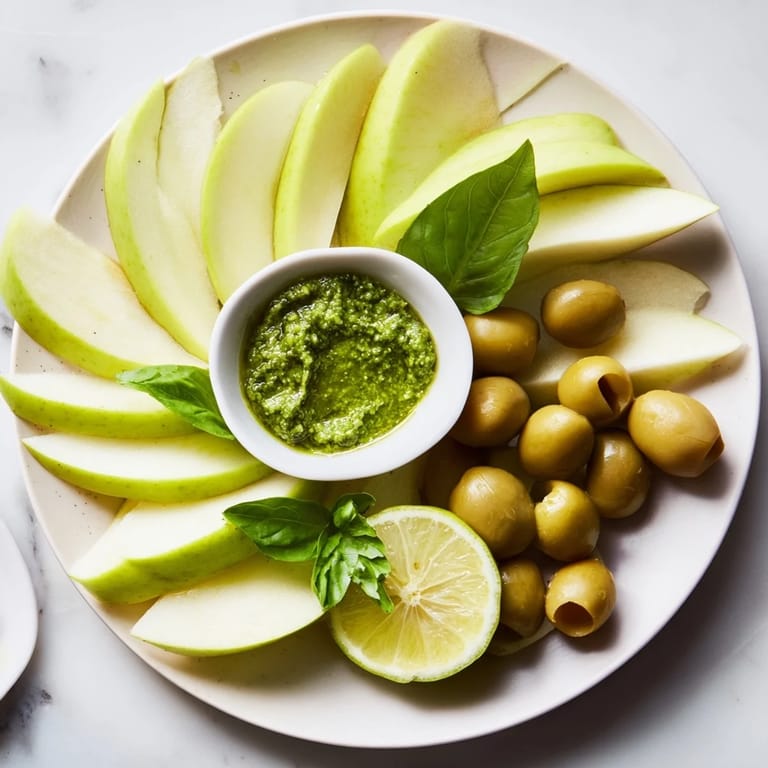
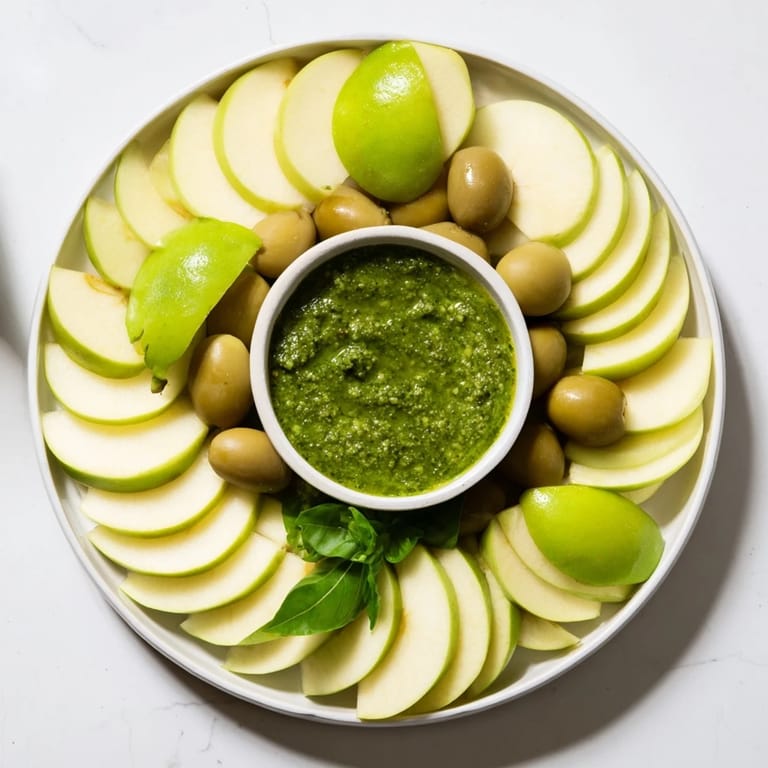
Save I discovered the magic of a single-color snack board at a dinner party where the host had arranged everything in shades of white—and it struck me that you could do the same with any color. That night, walking home, I passed a market display of Castelvetrano olives catching the afternoon light, and suddenly I could see it: a board entirely in green. The next time friends came over, I assembled this Emerald City board, and watching people's faces light up at the unexpected cohesion made me realize how a simple visual trick can transform ordinary snacks into something that feels intentional and special.
I made this for my sister's book club, and three people asked me for the recipe before they'd even sat down. What they didn't realize was that there was no recipe to give—just a color, some things I had on hand, and the confidence that simplicity done with intention reads as sophistication. By the end of the evening, only the pesto bowl showed any sign of being touched, while the apples and olives had disappeared.
Ingredients
- Granny Smith apples: Their tartness is essential here, and the pale green skin becomes part of your color story; slice them just before assembly so they stay crisp and bright.
- Limes: Fresh and heavy in your hand, they bring acid that prevents the apples from browning and adds a pop of flavor with every bite.
- Pesto: Basil or arugula both work beautifully, and honestly, store-bought saves you time without sacrificing the vibrant green that makes this board sing.
- Green olives: Castelvetrano olives are buttery and mild, but any green variety you find will work; the briny note is what ties everything together.
Tired of Takeout? 🥡
Get 10 meals you can make faster than delivery arrives. Seriously.
One email. No spam. Unsubscribe anytime.
Instructions
- Prep your produce:
- Wash and thoroughly dry the apples and limes so they don't slip on the board and so the colors stay true and unblemished.
- Arrange the foundation:
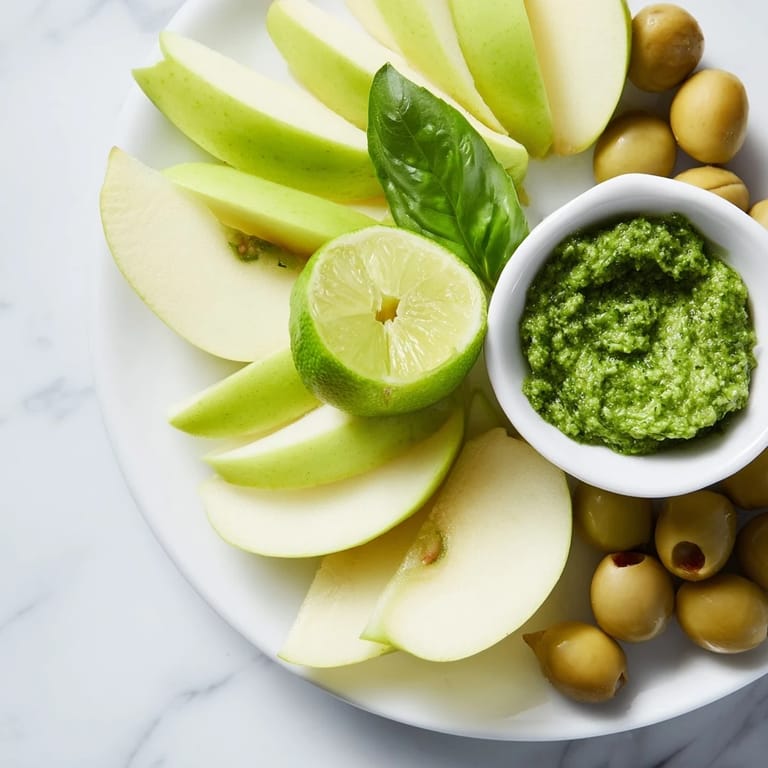
- Slice the apples thin and lay them across your serving board in overlapping rows, like you're creating a pattern; they should cover about half the space.
- Add lime brightness:
- Slice the limes into rounds or wedges and tuck them between and around the apple slices, letting them nestle into the gaps and break up the monotony.
- Bring in the dip:
- Spoon the pesto into a small bowl and set it somewhere on the board where it won't tip but will stay visible; this is your anchor point, the thing that tells people what to do.
- Fill the spaces:
- Scatter the green olives across everything, using them like you're filling in a puzzle; they add texture and weight to the board's composition.
- Serve at once:
- Bring it straight to the table while the apples are still crisp and the colors are at their most vivid.
 Save
Save The moment that made me love this board came when my nephew, who is picky about everything, reached for an olive, then an apple, then some pesto, and made a little flavor discovery right there at the table. He didn't know he was learning about balance and texture; he just knew it tasted good.
The Visual Power of Constraint
There's something liberating about limiting your palette to a single color. Instead of wondering what goes with what, you ask yourself: is it green enough? The constraint becomes the guide, and your choices become clearer. I've found that when you remove the question of how things look together, you have space to focus on how they taste together, and that's where the real magic happens.
Why This Works as a Board
A board like this lives in that sweet spot between snack and appetizer, which means it works for almost any occasion. It doesn't require heating or chilling or any real cooking skill. Everyone can eat what appeals to them without waiting for anything else, and there's no pressure to finish everything—the goal is grazing, not consumption. It's also naturally vegetarian and gluten-free, which means fewer questions at the table.
Variations and Additions
Once you understand the framework, the board becomes a playground. I've added cucumber slices for extra crunch, tossed in some candied green tomatoes for sweetness, and even laid down a base of green goddess dip instead of pesto. The point isn't to follow this exactly but to see how a single color can hold together flavors that might otherwise feel random.
- Fresh herbs like dill or tarragon scattered across the top add aroma and sophistication.
- A small mound of green peppercorns or capers brings a sharp, surprising note that people remember.
- Serve it with crusty bread or green crackers if you want something to spread the pesto on, but honestly, the board stands on its own.
 Save
Save This board taught me that entertaining doesn't have to be complicated to feel thoughtful. Sometimes the simplest idea, executed with care, is what people remember.
Recipe FAQ
- → How can I keep apple slices from browning?
Lightly brushing apple slices with lime juice before assembling helps prevent discoloration and keeps them fresh.
- → What type of pesto works best here?
Basil or arugula pesto provide the best vibrant green color and complement the fresh ingredients well.
- → Can I add other green ingredients for variety?
Yes, cucumber slices or sugar snap peas add extra crunch and enhance the board’s green theme.
- → What olives are ideal to use?
Green olives like Castelvetrano or Manzanilla are perfect for their mild briny flavor and pleasant texture.
- → How should I serve this snack board?
Serve immediately to maintain freshness and vibrant colors. Pair with crisp white wine or sparkling water flavored with lime for a refreshing touch.