 Save
Save I'll never forget the first time I arranged a cheese board by color instead of flavor. It was for a dinner party where I wanted to impress, and I remembered seeing a striking red-and-gold platter at a gallery opening that had stayed with me for months. I decided to recreate that visual drama in my kitchen, pairing deep wine-soaked cheeses with roasted golden peppers, and when my guests walked in, their eyes lit up before they even tasted anything. That moment taught me that food is theater, and sometimes the most memorable meals are the ones that make you pause and simply look before you eat.
I made this for my sister's engagement party, and it became the thing everyone photographed instead of the expensive catering. She pulled me aside later and said she loved that it felt personal, like I'd made something just for celebrating her. That's when I realized this platter works because it's not just food—it's a statement that says you care enough to make something beautiful.
Ingredients
- Fresh sweet cherries: Choose plump ones that glisten with juice; they're your showstoppers in the red section and add a delicate sweetness that balances the wine-soaked cheese
- Wine-soaked cheese (Drunken Goat or Merlot BellaVitano): This is what makes the red block sing—the wine-stained edges and complex flavor are worth seeking out at a good cheese counter
- Dried cranberries: They keep their bright color and add a tart punch that prevents the red section from feeling one-dimensional
- Red grapes and pomegranate seeds: The grapes provide juicy pops, while pomegranate seeds are tiny flavor jewels that look like edible rubies
- Roasted yellow bell peppers: Roasting them yourself is the secret—the sweet, charred flavor beats jarred peppers by miles, and the effort shows
- Aged cheddar or gouda: Go for something with real character; the gold section needs a cheese that holds its own against the bright vegetables
- Gold leaf–topped crackers: If you can't find them premade, brush regular water crackers with a tiny bit of olive oil and apply edible gold leaf yourself—it's easier than it looks
- Golden raisins and yellow cherry tomatoes: These are the understated heroes that round out the gold section with natural sweetness and brightness
- Edible gold leaf (optional): A luxury touch that makes the whole thing feel celebratory; it's completely edible and adds nothing but glamour
- Fresh basil or microgreens: Don't skip this final garnish—the green breaks up the red and gold and tastes wonderful with everything
Tired of Takeout? 🥡
Get 10 meals you can make faster than delivery arrives. Seriously.
One email. No spam. Unsubscribe anytime.
Instructions
- Roast your peppers until they blush:
- Heat your oven to 220°C (425°F). Place whole yellow peppers directly on a baking sheet and let them roast for 10 to 12 minutes, turning them occasionally so they char evenly. You want the skins to blister and blacken slightly—that's where the sweetness develops. Once they're blistered, transfer them to a covered bowl and let them steam for 5 minutes. The steam makes the skins slip off like silk. Peel them gently, remove the seeds, slice into strips, and toss with olive oil and black pepper. Let them cool completely—warm peppers will wilt your platter.
- Gild your crackers if you're feeling fancy:
- If you're using edible gold leaf, follow the package instructions carefully. Usually it means brushing the cracker with the thinnest touch of oil or a food-safe adhesive, then carefully laying the delicate gold leaf on top. Work slowly—gold leaf is fragile and will stick to your fingers if you rush. This step can be done up to an hour ahead.
- Build your color blocks with intention:
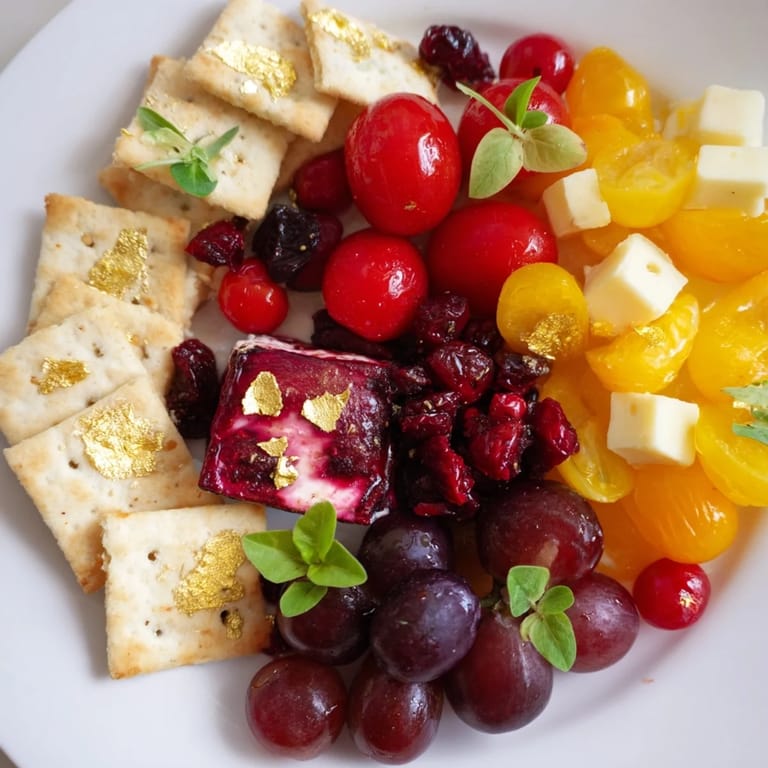
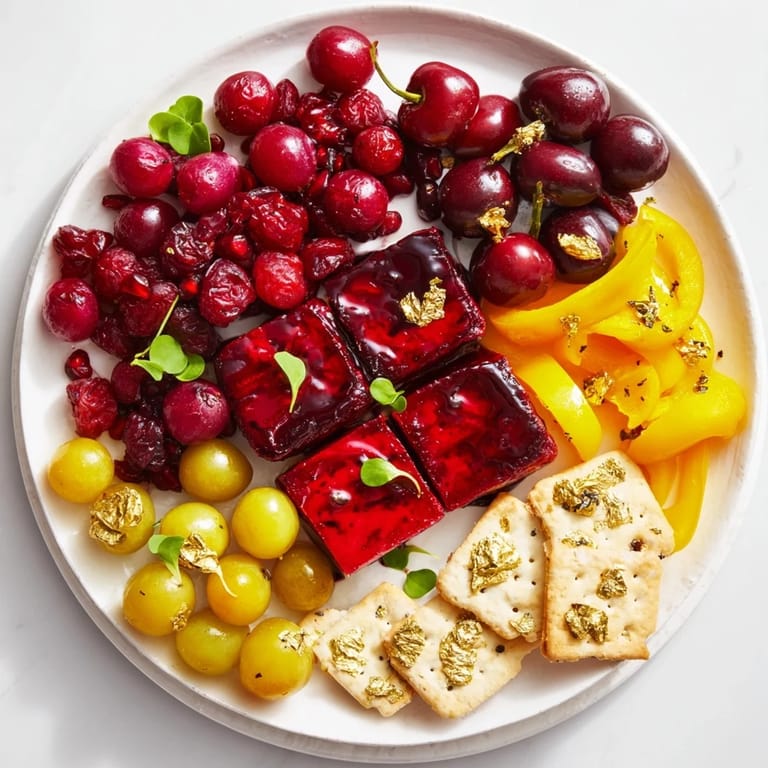
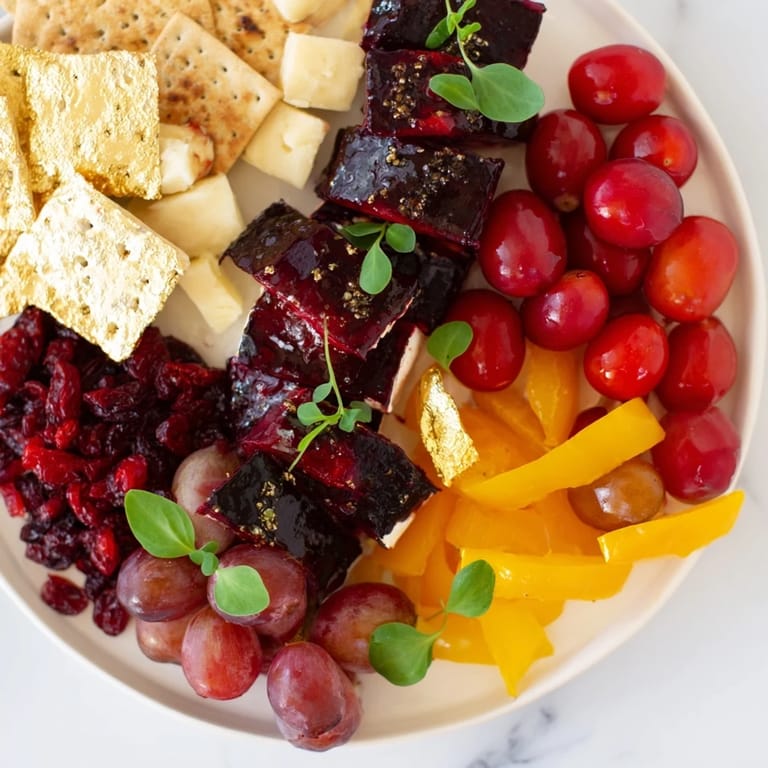
- On your serving platter, imagine a line down the middle. On one side, create a tight, generous cluster of all the red elements: cherries, wine-soaked cheese slices, cranberries, grape halves, and pomegranate seeds. Pack them close together so the colors deepen. On the opposite side, arrange the gold block: roasted pepper strips, cheese cubes, gilded crackers, golden raisins, and yellow tomato halves. The contrast should be striking—like two opposing armies of flavor meeting in the middle.
- Finish with green and serve immediately:
- Scatter fresh basil leaves or microgreens across the top, letting them bridge the two color blocks. Serve right away while the peppers are cool and the crackers still have a snap to them. Encourage your guests to mix flavors—a cherry with cheese, a roasted pepper with a cracker, a pomegranate seed with golden raisins. The fun is in the discovery.
 Save
Save My friend Marcus asked for the recipe after that dinner, and when I handed him the ingredient list, he said, 'You made something so beautiful out of things that just exist.' That stuck with me. Food doesn't have to be complicated to be meaningful—sometimes it just needs intention and color.
Color as Flavor
I've learned that when you arrange food by color this deliberately, something happens to how people eat it. They slow down. They notice. A red-and-gold platter forces you to think about composition, and that thoughtfulness somehow makes the flavors taste better. The deep reds bring earthiness and richness, while the golds offer brightness and hope. Together, they create a tension on the plate that keeps your palate interested all the way through.
Timing the Assembly
The secret to this platter is understanding that everything that needs cooking should be done well in advance. Your peppers can cool for an hour or more. Your crackers can be gilded early in the day. What you do last—and only last—is the final arrangement and garnish. This way, when your guests arrive, you're not scrambling in the kitchen. You're calm, present, and ready to watch their faces light up.
Making It Your Own
The beauty of this concept is that it works with whatever produce is at its peak. In autumn, swap the yellow peppers for roasted orange squash, and add pomegranate for the reds. In winter, use persimmons and dried apricots for the golds, and radicchio with pomegranate for the reds. The framework stays the same—high contrast, tight arrangement, fresh garnish—but you become the artist deciding what colors matter this season.
- If gold leaf feels too precious, a sprinkle of turmeric or saffron threads gives the same sense of occasion
- A small bowl of honeycomb drizzled with honey placed between the two color blocks adds another layer of luxury without disrupting the visual
- This platter is entirely vegan if you swap the cheeses for plant-based versions and double-check that your crackers are egg-free
 Save
Save Food at its best is a conversation starter and a moment maker. This platter is both.
Recipe FAQ
- → How are the yellow peppers prepared?
Roast whole yellow bell peppers until skins blister, steam, peel, remove seeds, then slice and drizzle with olive oil and black pepper.
- → What types of cheeses are used in the platter?
The platter includes wine-soaked cheeses like Drunken Goat or Merlot BellaVitano and aged cheddars or gouda in gold sections.
- → Can the gold leaf crackers be substituted?
Yes, you can replace gold leaf with turmeric or saffron threads to maintain vibrant visual appeal.
- → Are there vegetarian options included?
Yes, the dish uses vegetarian-friendly items including fruits, roasted peppers, cheeses, and crackers; plant-based substitutes can be used for a vegan version.
- → What garnish complements the flavor and appearance?
Fresh basil or microgreens add color contrast and a fresh herbaceous note to the platter.
- → How should the platter be served for best enjoyment?
Serve immediately encouraging guests to mix contrasting colors and flavors for a dynamic tasting experience.