 Save
Save There's something about a grilled cheese sandwich that stops time in a kitchen. Years ago, I was tasked with making lunch for friends who had spent the morning helping me paint my apartment, and I wanted to offer something better than the usual. I caramelized some onions slowly, almost meditatively, while they dried and laughed in the next room, and by the time those onions turned deep golden and sweet, the whole place smelled like a French bistro. Gruyère melted into those onions like it was always meant to be there, and when everyone bit into those sandwiches, something shifted—they weren't just hungry anymore, they were impressed.
I made this for my sister on a cold Sunday when she showed up unannounced between moves, carrying her whole life in her car. We sat on my kitchen counter with these warm, oozing sandwiches and talked about everything—the good decisions and the ones we weren't sure about yet. She told me later that moment, more than anything else that day, made her feel like things were going to be okay.
Ingredients
- Yellow onions: Two medium ones, thinly sliced—the thinner you slice them, the more evenly they caramelize, and even cooking matters more than you'd think.
- Unsalted butter: Two tablespoons for the onions and two more softened for spreading; it's the foundation of everything golden and good here.
- Kosher salt and freshly ground black pepper: Don't skip the fresh pepper—it wakes up the whole dish.
- Sugar and balsamic vinegar: Both optional, but they're the secret weapons that deepen the onions from merely cooked to genuinely caramelized.
- Rustic sourdough or country bread: Sturdy bread that can handle the moisture and weight of the filling without falling apart.
- Gruyère cheese: About 150 grams grated; it melts silkily and adds a sophistication that regular cheese can't quite match.
Tired of Takeout? 🥡
Get 10 meals you can make faster than delivery arrives. Seriously.
One email. No spam. Unsubscribe anytime.
Instructions
- Caramelize the onions slowly and patiently:
- Melt butter over medium-low heat, add your sliced onions with salt and pepper, then let them sit and cook for 25 to 30 minutes, stirring only occasionally. You're not rushing—you're coaxing out their natural sugars until they're deep golden and concentrated.
- Finish with a touch of sweetness:
- Stir in the sugar and balsamic vinegar if you're using them, cook for another 2 to 3 minutes, then set aside. This moment is when they stop being caramelized onions and become something unforgettable.
- Build your sandwiches with intention:
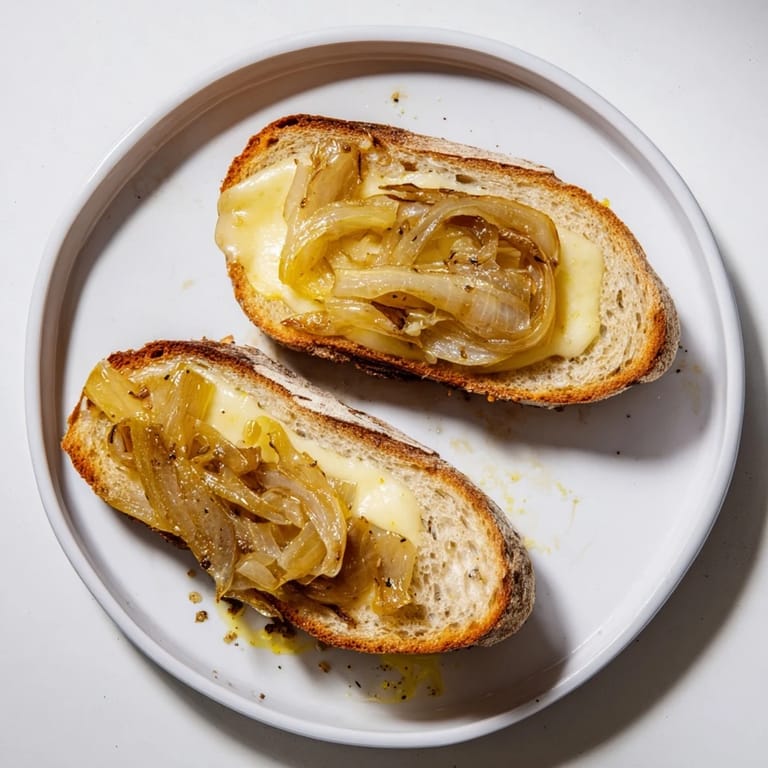
- Spread softened butter on one side of each bread slice, then lay two slices butter-side down on your work surface. Layer half the Gruyère on each, then spoon the caramelized onions generously over the cheese, then finish with the remaining Gruyère.
- Cook until the cheese melts and the bread turns golden:
- Heat your skillet over medium heat, place the sandwiches in, and cook 3 to 4 minutes per side, pressing gently so the cheese melts evenly into every crevice. If the bread is browning too fast, lower the heat—patience here too.
 Save
Save I once made these for a quiet evening with someone I was still figuring out, and we ended up talking until the plates were empty and the light outside had gone soft. That sandwich became part of a memory neither of us forgot.
Why Caramelization Changes Everything
The magic of caramelized onions isn't just flavor—it's transformation. When onions cook low and slow, their natural sugars break down and recombine into hundreds of new flavor compounds that taste sweet, savory, and complex all at once. This is why trying to rush them with high heat never works the same way; you need time and patience to coax out that depth. Once you've tasted what patience can do to an onion, you'll find yourself caramelizing them for other dishes too, just because the result justifies the wait.
Bread Matters More Than You Think
The bread is your vehicle for everything else, and it deserves respect. Rustic sourdough or country bread holds up to the moisture and weight of melted cheese and onions without getting soggy, and it develops a beautiful golden crust that contrasts with the creamy center. White bread will fall apart, and thin-sliced sandwich bread will never crisp the way you want. I learned this by making that mistake once, and I've been loyal to substantial bread ever since.
The Final Details That Matter
This sandwich is simple, but simplicity demands precision. Every element has to be at its best, from the butter spread all the way to the cheese melt.
- Fresh thyme leaves stirred into the caramelized onions in the last minute will add a whisper of earthiness that makes people ask what your secret is.
- If Gruyère isn't available, Emmental or good Swiss cheese will work beautifully in its place.
- Serve these immediately while the cheese is still flowing and the bread is still warm enough to matter.
 Save
Save This sandwich is proof that the best meals don't need to be complicated, just made with care and real ingredients. Make it for someone you want to feed well.
Recipe FAQ
- → How do you caramelize onions properly?
Cook thinly sliced onions slowly over medium-low heat with butter, stirring occasionally for 25–30 minutes until deeply golden and sweet.
- → What makes Gruyère cheese suitable for melting?
Gruyère has a smooth texture and slightly nutty flavor that melts evenly, creating a creamy layer between the bread slices.
- → Can I use other types of bread for this dish?
Rustic sourdough or country breads work best due to their sturdy texture, but other thick, crusty breads can be used as alternatives.
- → What is the best way to achieve a crisp crust on the toast?
Spread softened butter on the bread slices and cook in a skillet over medium heat, pressing gently until golden brown on both sides.
- → Are there suggested flavor additions to enhance the dish?
Fresh thyme leaves in the onions add aromatic depth, and swapping Gruyère with Emmental or Swiss cheese provides mild variation.
- → How can this dish be served for a complete meal?
Pair with a crisp green salad or a bowl of tomato soup to balance the rich, savory flavors in the toast.