 Save
Save I'll never forget the moment I first understood that elegance doesn't require complexity. It was at a gallery opening where a friend served this stunning black and white appetizer platter, and I watched guests pause mid-conversation to admire it before eating. The simplicity of the ingredients—just two colors, arranged with intention—created something so visually striking that it became the conversation starter. That night, I realized that sometimes the most sophisticated dishes are the ones that let beauty speak for itself.
I made this for my sister's engagement party, and watching her guests actually photograph the platter before eating it told me everything. One guest mentioned it was the most elegant thing she'd seen at a celebration, and I realized that presentation can be just as important as taste—maybe more so when you're creating a memory.
Ingredients
- Black olives (Kalamata or Niçoise), 100 g pitted: These are your drama—briny, intense, and the darkest notes on your board. I learned to pit them myself rather than buy pre-pitted because they stay firmer and hold their shape better when arranged.
- Dark rye bread, 8 slices: This is your textural anchor and geometric foundation. Cut into shapes before plating so the edges stay crisp and defined.
- Black sesame seeds, 1 tablespoon: A subtle nod to sophistication that adds texture without overwhelming. These tiny seeds catch light beautifully.
- Black mission figs, 8 halved (optional): The secret sweet note that keeps people reaching for more. They bridge the gap between savory and elegant in a way that feels natural.
- Fresh mozzarella balls (bocconcini or ciliegine), 200 g drained: The creamy counterpoint that makes this platter feel luxurious. Draining them thoroughly prevents weeping that disrupts your patterns.
- Fresh mozzarella slices, 8 thin slices from a large ball: These create geometric shapes and let you play with negative space on your board. Slice just before serving to keep them from drying.
- Vanilla bean, 1 with seeds scraped: This is the secret ingredient that elevates everything—just the aroma tells people this isn't a casual appetizer. I use it sparingly, as a final artistic touch.
- White sesame seeds, 1 tablespoon: These provide contrast against the dark bread and add a gentle crunch that wakes up each bite.
- Blanched almonds, 16 peeled: The minimalist white accent that speaks of intentionality. Their shape and placement matter as much as their flavor.
- Extra virgin olive oil, 2 tablespoons: The final touch that brings everything together, adding shine and richness. Use something you'd actually taste on its own.
- Flaky sea salt, to taste: The one seasoning that matters. Flake it by hand so you can see it landing—it's as much visual as it is flavor.
- Freshly cracked black pepper (optional): Only if you want to push the black-and-white theme further. Sometimes restraint is more elegant.
Tired of Takeout? 🥡
Get 10 meals you can make faster than delivery arrives. Seriously.
One email. No spam. Unsubscribe anytime.
Instructions
- Create your geometric foundation:
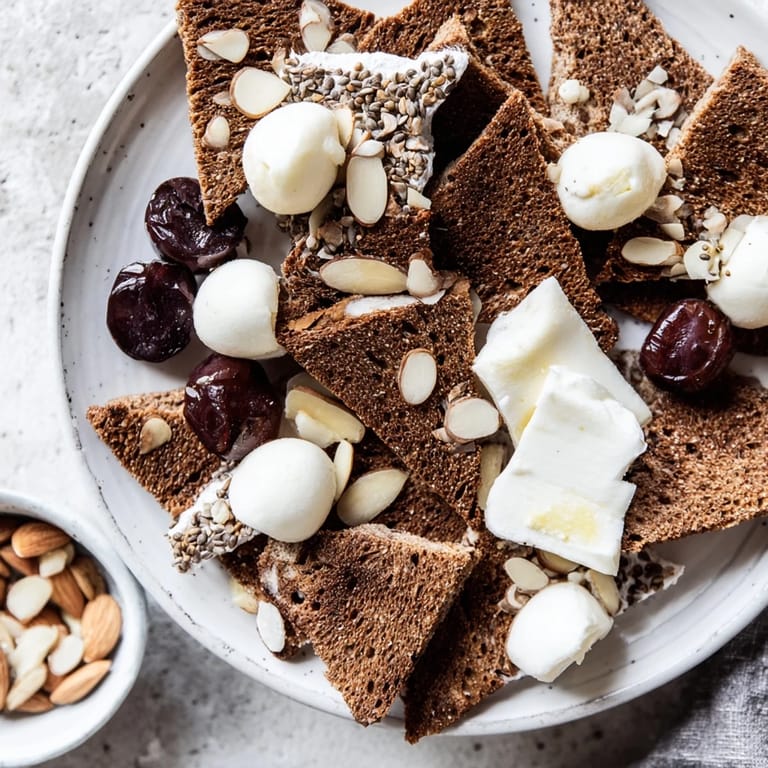
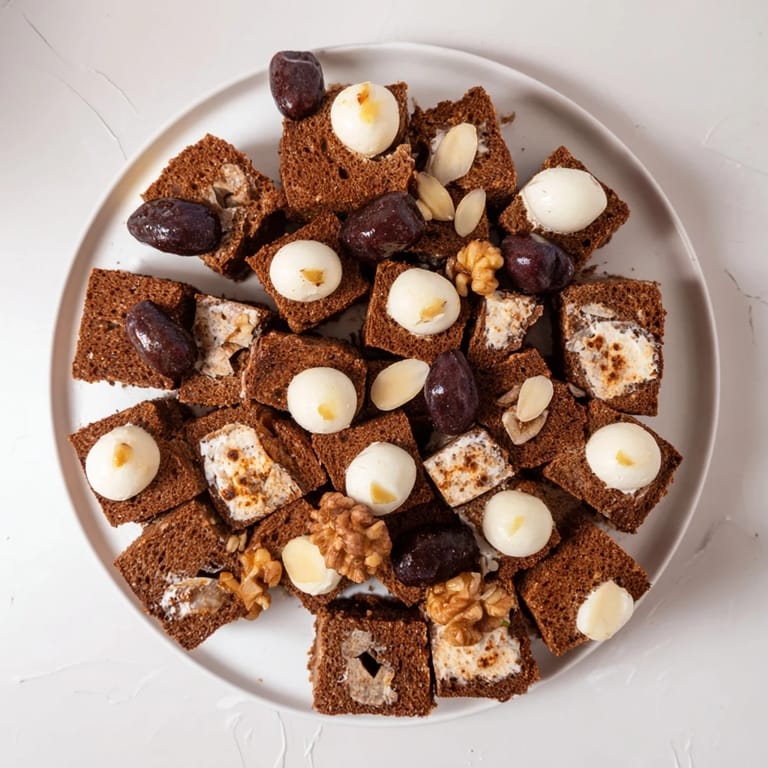
- Take your dark rye bread and, using a sharp knife, cut each slice into squares, triangles, or rectangles—whichever shape appeals to you. The key is making each cut decisive and clean. Arrange these pieces on your large platter in alternating rows or patterns, like you're composing a painting. Leave some breathing room between pieces; this negative space is part of the design.
- Establish the black and white dialogue:
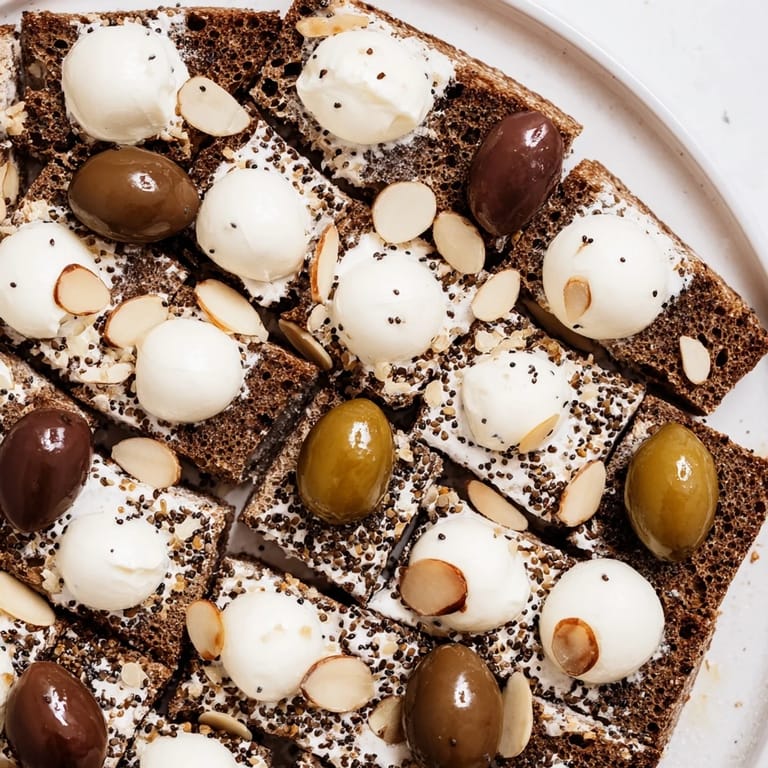
- Now place your black olives and fresh mozzarella balls in alternating lines or circles across the bread. Step back frequently and look at your work from above—this is when you'll see if the contrast is striking enough. The arrangement should feel intentional, not random.
- Layer with mozzarella slices:
- Slice your large fresh mozzarella ball into thin, even pieces. Arrange these alongside the rye bread in geometric shapes—triangles, stripes, or concentric circles. The white against the dark bread creates an almost architectural quality to the platter.
- Add textural dimension with sesame seeds:
- Sprinkle black sesame seeds over the white mozzarella and white sesame seeds over the rye bread. This isn't about coverage; it's about creating visual texture and showing off the contrast. Be generous but deliberate.
- Introduce the sweet note:
- If you're using the black mission figs, halve them and place them strategically across the platter. They add both color depth and a subtle sweetness that makes people notice something they can't quite name.
- Position the almonds with intention:
- Place your blanched almonds in minimalist clusters or clean lines. These white, elongated shapes create a sense of order and refinement. Think of them as the punctuation marks on your edible canvas.
- Crown with oil and seasoning:
- Drizzle your best extra virgin olive oil over the cheese and bread, letting it catch the light. Then use a light hand with flaky sea salt, sprinkling it so you can actually see each crystal landing. This moment transforms everything from ingredients into art.
- The vanilla moment:
- Using the tip of a sharp knife, gently scrape the seeds from your vanilla bean and dot them artistically across the mozzarella slices. This is your final flourish—the aromatic surprise that makes people lean in and ask what you did to make it smell like an elegant evening.
- Time the finale perfectly:
- Serve immediately to maintain the crispness of the bread and the freshness of the cheese. If you must wait, cover loosely and refrigerate for up to one hour, but no longer—this is a dish that peaks right after assembly.
 Save
Save What struck me most about serving this platter was that it gave people permission to slow down and look. In a world of noise, this simple arrangement of black and white created a moment of quiet appreciation. It became less about the food and more about the intention behind it—and that, I learned, is what elegance really means.
The Art of Arrangement
I've come to understand that plating is a form of communication. When you arrange a board with intention, you're telling your guests that you care about their experience before they even take their first bite. This platter works because the simplicity of color forces you to think about balance, rhythm, and space—the same principles that make any composition beautiful. The geometric patterns aren't arbitrary; they're a visual language that says 'I thought about this.'
Pairing and Presentation
The elegance of this platter deepens when paired with the right beverages. A dry sparkling wine cuts through the richness of the cheese and plays beautifully against the briny olives. A crisp Sauvignon Blanc brings out the subtle sweetness of the figs and the vanilla's aromatic whisper. I've also found that this platter works beautifully as a centerpiece—it's so visually striking that it can sit on your coffee table or bar during cocktail hour, inviting people to graze as conversation flows.
Beyond the Classic
Once you master the basic black and white composition, you'll start seeing variations everywhere. Some additions I've experimented with include thin slices of daikon radish for extra white crunch, or black garlic for deeper umami complexity. For those avoiding gluten, a quality gluten-free dark bread maintains the visual integrity while opening the platter to more guests. The vanilla bean is my optional wildcard—sometimes I omit it for a purely savory experience, other times it's the ingredient that makes someone ask for your secret. The beauty of this format is that it invites you to play within the constraints of the color palette.
- Experiment with different shaped cuts—the geometry becomes part of the story
- Make this platter no more than an hour before serving to keep everything at its crispest
- Always taste your olive oil and salt before they go on the board—these final touches should be the best versions of themselves
 Save
Save This platter taught me that sometimes the most memorable meals aren't the ones with the longest ingredient lists or complicated techniques—they're the ones made with intention and shared with people you care about. Every time you make it, it becomes a little more your own.