 Save
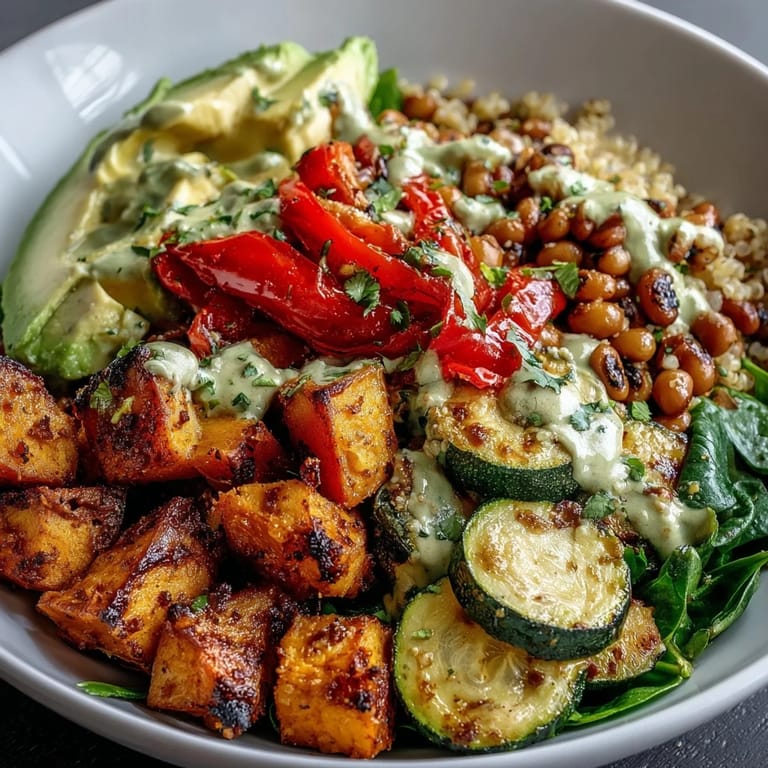
Save My kitchen smelled like roasting sweet potatoes the afternoon I first assembled this bowl, and honestly, I wasn't expecting much—just throwing together leftovers and pantry staples into something coherent. But when I drizzled that creamy tahini dressing over the warm quinoa and crispy vegetables, something clicked. The textures, the colors, the way each spoonful felt genuinely nourishing rather than restrictive. It became the meal I started craving on weeknights, not because it was virtuous, but because it actually tasted alive.
I made this for a friend who'd just started exploring plant-based eating, and I remember watching her expression shift as she took the first bite. She kept pausing between forkfuls, noticing things—the slight crunch of the red onion, how the warm peas contrasted with cool avocado, the way that garlic-tahini sauce tied everything together. She asked for the recipe before finishing her bowl, which felt like the highest compliment.
Ingredients
- Quinoa or brown rice: Quinoa cooks faster and has a lighter texture, but brown rice gives you a earthier, more substantial base if you prefer that.
- Sweet potato: The natural sweetness balances the earthiness of the beans and cuts through the creamy dressing beautifully.
- Red bell pepper: Choose one that feels heavy for its size—those tend to be juicier and sweeter when roasted.
- Black-eyed peas: If you're using canned, rinse them thoroughly to remove excess sodium and that tinny taste.
- Tahini: Stir the jar well before measuring—the oil separates, and you want that fat incorporated for the smoothest dressing.
- Lemon juice: Fresh is non-negotiable here; bottled changes the entire character of the dressing.
- Smoked paprika: Don't skip this or substitute it with regular paprika—that smoky note transforms ordinary roasted vegetables into something memorable.
Tired of Takeout? 🥡
Get 10 meals you can make faster than delivery arrives. Seriously.
One email. No spam. Unsubscribe anytime.
Instructions
- Heat your oven and prep your vegetables:
- Get that oven to 425°F and while it preheats, dice and slice your vegetables so they're relatively uniform in size—this helps them roast evenly. Toss everything with olive oil and seasonings, making sure each piece gets coated.
- Get the vegetables roasting:
- Spread them in a single layer on your baking sheet and slide it in. Set a timer for 12 minutes so you remember to stir halfway through—this prevents any sticking and ensures golden, caramelized edges rather than steamed vegetables.
- Start your grain simultaneously:
- While the oven works, rinse your quinoa under cold water until the water runs clear—this removes the natural bitter coating. Bring it to a boil, then immediately lower the heat, cover, and let it simmer undisturbed.
- Warm the black-eyed peas gently:
- In a small skillet, toast the cumin and garlic powder for about 30 seconds to wake up their flavors, then add your beans and let them heat through slowly. This makes them taste intentional rather than like an afterthought.
- Build your dressing:
- Whisk tahini, lemon juice, maple syrup, and minced garlic together, adding water gradually until you reach that pourable consistency—it should coat a spoon but still flow. Taste and adjust the salt or lemon juice as needed.
- Assemble with intention:
- Start with your warm grain as the base, then layer in your vegetables while they're still warm so the heat slightly softens the raw greens you're adding. Top with the beans, fresh greens, avocado, and herbs, then drizzle generously with that tahini sauce.
 Save
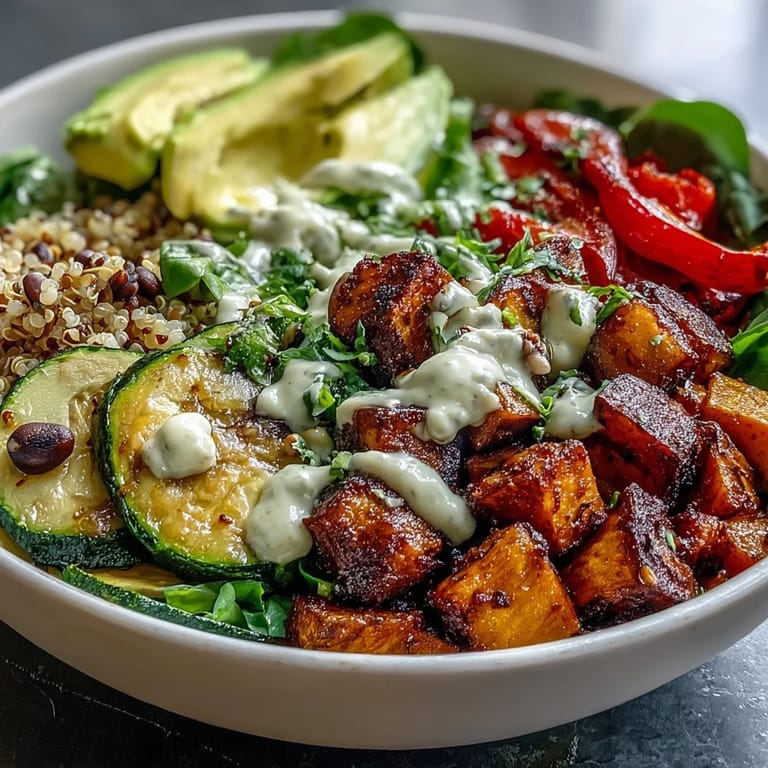
Save There's something almost meditative about building these bowls—the deliberate layering, the color progression from earthy grains to jewel-toned vegetables to that creamy sauce. It stopped feeling like cooking at some point and started feeling like arranging something beautiful that happened to be nourishing. I think that's when meals become rituals instead of just fuel.
Why Roasting Changes Everything
Raw vegetables have their place, but there's a specific alchemy that happens when you roast them at high heat. The sugars caramelize, the edges char slightly, and the flavors concentrate into something almost sweet. That red onion transforms from sharp and aggressive into something mellow and almost honeyed. I learned this the hard way by attempting to make this bowl with raw vegetables on a day when I was rushing, and it was fine, but it wasn't the same—it tasted like a health obligation rather than something genuinely delicious.
The Tahini Dressing as a Game-Changer
This dressing is what elevates this from a nice vegetable bowl to something you'll actually crave. Tahini gets a reputation for being heavy, but when you balance it with bright lemon juice and a touch of maple syrup, it becomes this silky, sophisticated sauce that ties all the disparate elements together. I've started making double batches because it's equally good on grain salads, roasted vegetables, or even as a dip for crispy vegetables at snack time.
Customizing Your Bowl for Seasons and Preferences
The beauty of this formula is its flexibility—you're never locked into one version. In summer, I swap the sweet potato for baby potatoes and add fresh corn; in winter, I lean into root vegetables like parsnips and beets. The structure stays the same, but the specifics adapt to what's available and what I'm actually craving.
- Keep a jar of tahini dressing in your fridge and this bowl becomes infinitely easier to assemble on nights when you have no energy.
- If you want more protein, layer in crispy tofu or tempeh alongside the beans without changing anything else.
- Roasted chickpeas or pumpkin seeds add a satisfying crunch if your vegetables are coming out too soft.
 Save
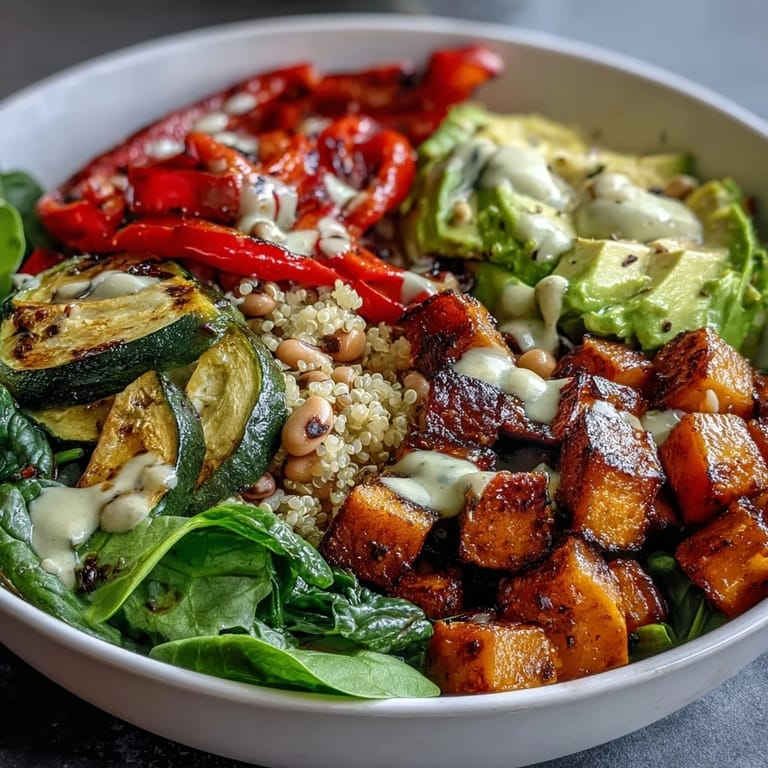
Save This bowl taught me that plant-based eating doesn't require deprivation or complicated techniques—just good ingredients treated with respect and enough flavor to make you want to come back. That's the whole story right there.
Recipe FAQ
- → Can I use dried black-eyed peas instead of canned?
Yes, soak dried black-eyed peas overnight and simmer for 45-60 minutes until tender. One cup dried yields about three cups cooked.
- → What other grains work well in this bowl?
Brown rice, farro, wheat berries, or millet make excellent alternatives to quinoa. Adjust cooking time accordingly for each grain.
- → How long does this keep in the refrigerator?
Components store well for 4-5 days in airtight containers. Keep dressing separate and add fresh greens just before serving.
- → Can I make this nut-free?
Substitute sunflower seed butter or avocado-cashew cream for tahini to accommodate sesame allergies while maintaining creamy texture.
- → What vegetables can I substitute for roasting?
Butternut squash, Brussels sprouts, carrots, cauliflower, or eggplant work wonderfully. Adjust roasting time based on vegetable density.
- → Is this bowl protein-rich enough for a main meal?
Yes, black-eyed peas and quinoa provide complete protein. Adding hemp seeds, roasted chickpeas, or nuts can boost protein further if desired.