 Save
Save The first time I shaped a turkey out of dough, my hands felt clumsy and uncertain, like I was sculpting something that had no right to exist. But as the oval body took form and the small round head perched on top, something clicked—this wasn't just bread anymore, it was a celebration waiting to rise. My kitchen filled with that unmistakable tang of sourdough, and I realized I'd stumbled onto something that would make people smile before they even tasted it. That loaf became the centerpiece of a chaotic holiday dinner where nobody wanted to slice into it, which is exactly the kind of problem every baker dreams of.
I made this for a potluck once and watched three different people photograph it before anyone touched anything else on the table. One guest's kid asked if it was edible, which somehow made the whole thing funnier and more satisfying. It turned a simple bread into a conversation starter, proof that sometimes the best dishes are the ones that make people pause and really look at their food.
Ingredients
- Bread flour (500 g): The backbone of structure and chew; use a good quality one because your sourdough will taste every bit of it.
- Water (350 g): Room temperature is key—cold water slows your fermentation timeline, and warm water can tire out your starter.
- Active sourdough starter (100 g at 100% hydration): This is your living ingredient; make sure it's bubbly and doubled before you use it, fed 4–8 hours prior.
- Fine sea salt (10 g): Hold back from adding it to the very first mix because salt will fight the starter initially, so the order matters.
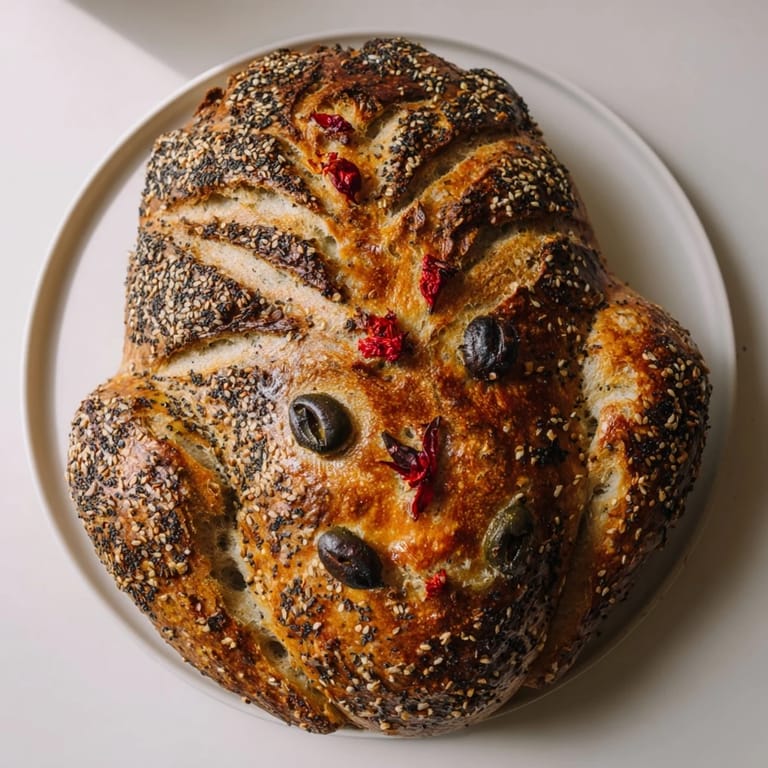
- Black olives or peppercorns: These become the eyes and add a playful detail that makes the whole thing feel intentional.
- Red bell pepper or dough scraps: The wattle is small but transforms the turkey from abstract to unmistakable.
- Egg wash (optional): Skip this entirely for vegan and brush with aquafaba or plant milk instead—the shine comes either way.
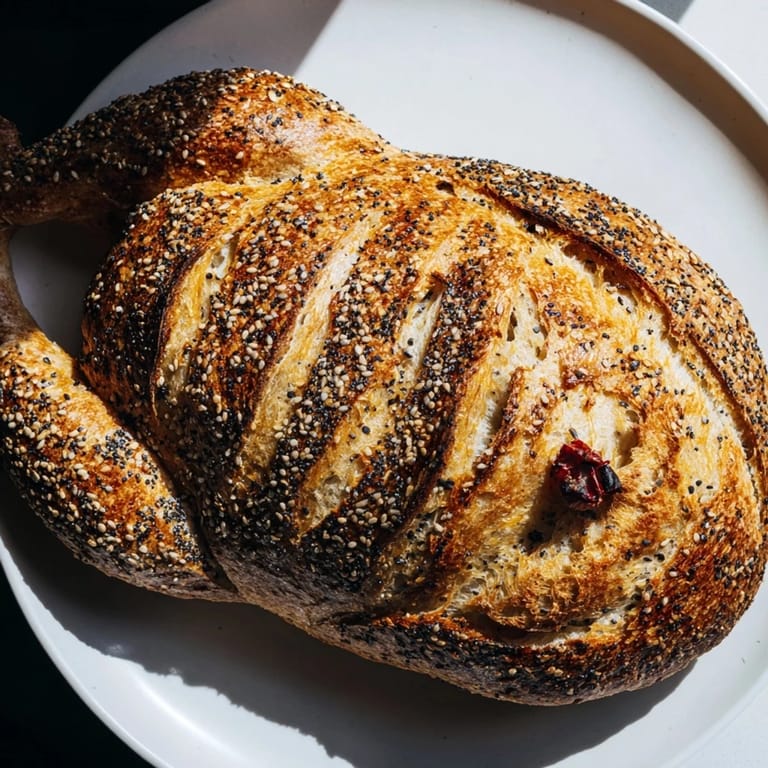
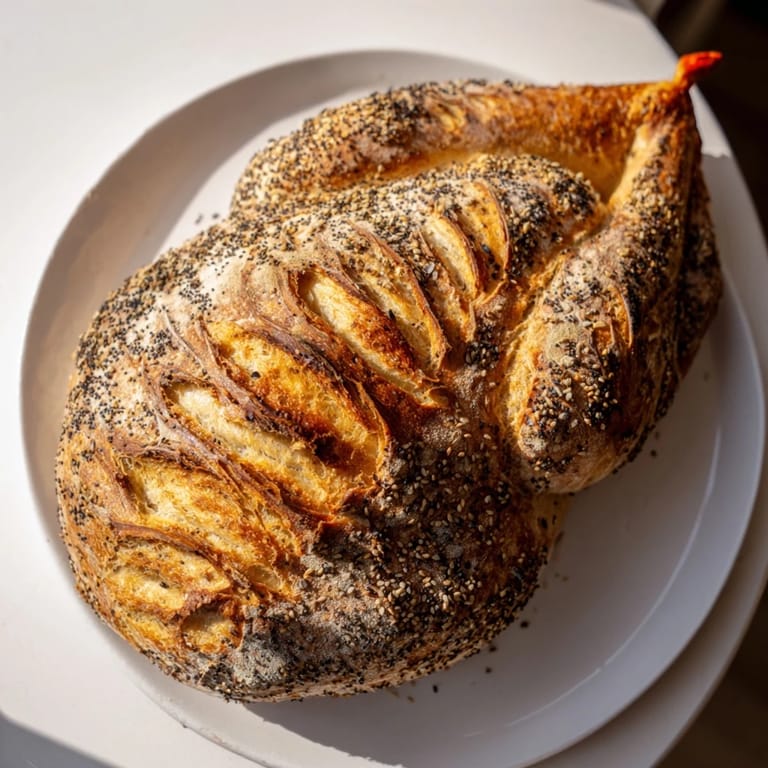
- Seeds for topping: Poppy, sesame, or flax scattered across the feathers catch light and mimic real feathering.
Tired of Takeout? 🥡
Get 10 meals you can make faster than delivery arrives. Seriously.
One email. No spam. Unsubscribe anytime.
Instructions
- Mix flour and water, then wait:
- Combine 500 g flour and 350 g room-temperature water in a large bowl, stirring until shaggy and fully moistened. Cover it and let it rest for 30–45 minutes without disturbing—this autolyse step lets the flour fully hydrate and makes everything easier to handle later.
- Add the living part:
- Stir in your 100 g active starter and 10 g salt until no dry flour remains and the mixture feels cohesive. This is where your dough actually comes alive.
- Stretch and fold your way to strength:
- Over the next 2 hours, perform 3–4 sets of stretch and folds (grab one side of the dough, stretch it up and fold it over the center, rotate the bowl, repeat) spaced 30 minutes apart. You're building gluten structure without aggressive kneading.
- Let it bulk ferment:
- Cover the bowl and let it sit at room temperature (21–23°C / 70–74°F) for 5–7 hours until the dough roughly doubles, feels airy, and shows bubbles on the surface. Timing depends on your kitchen temperature, so trust what you see more than the clock.
- Shape the turkey:
- Turn the dough onto a lightly floured surface and gently coax it into three pieces: one large oval for the body, one small round for the head, and several teardrop shapes for tail feathers and wings. Don't deflate it aggressively—you want to keep the air you've worked for.
- Assemble and add character:
- Place the oval body on parchment paper, brush a tiny bit of water where the head should sit, and nestle the round on top. Arrange your feather shapes around the body, use a sharp knife or bread lame to score feather patterns, then add olive slices for eyes and a small wattle of red pepper or dough under the head.
- Final proof:
- Cover loosely and let it rest at room temperature for 1–2 hours until it's slightly puffy but still has some spring left. You want it proof enough to bake well but not so much that it collapses when you open the oven.
- Preheat with purpose:
- Get your oven to 230°C (450°F) with a baking stone or steel inside for at least 30 minutes. A properly heated stone makes the difference between a timid loaf and an impressive one.
- Optional shine:
- Brush the entire turkey lightly with egg wash (or plant milk for vegan) and scatter your chosen seeds across the feather sections for visual texture and a little crunch.
- Bake with steam, then dry:
- Carefully slide your parchment and turkey onto the preheated stone. Bake for 20 minutes with steam (toss a handful of ice cubes on the oven floor or use a steam pan), then lower the heat to 200°C (400°F) and bake for another 20 minutes until deeply golden and it sounds hollow when tapped on the bottom.
- Cool completely:
- Transfer to a wire rack and let it cool all the way down before slicing or serving, even though every instinct will scream to cut into it immediately. The crumb sets as it cools and won't be gummy.
 Save
Save I still remember the moment someone broke off a feather, took a bite, and their eyes genuinely widened—not because it was shocking, but because the flavor matched what the beauty promised. That's when I understood that this bread works because it marries two languages: the playful visual story and the serious, honest sourdough underneath.
Building Strength Without Aggression
The stretch and fold method might seem fussy the first time you do it, but it's actually gentler on your dough than traditional kneading and gives you more control. Each fold is a small conversation with the dough, letting you feel how the gluten is developing without overworking it. I learned this by accident when I forgot to knead a batch and got better results anyway—now it's my preferred method for any sourdough.
Fermentation is Your Timeline
Temperature and humidity will shift your fermentation time by hours, which is why I ignore exact timers and watch the dough instead. A cold kitchen might need 8 hours for bulk ferment while a warm one does it in 5. The dough will tell you when it's ready by looking puffy and showing visible bubbles and maybe a few cracks on the surface. Your patience here pays off in flavor and structure that a rushed timeline can never deliver.
Shaping Bread Like You Mean It
The shaping is where this becomes fun instead of stressful, and there's no one right way to make your turkey look—make it chunky, make it elegant, make it slightly lopsided. I've seen versions with elaborate scored feathers and versions that are almost abstract, and the best ones are always the ones where the baker clearly enjoyed the process. Use a sharp knife or bread lame because dull tools drag and deflate, and don't worry if your turkey looks a little rough before it proofs—it rounds out and softens as it ferments.
- Wet your fingers lightly when attaching pieces so they seal properly without tearing the surface.
- Score your feathers deeply enough to show up after baking but not so deep that you cut all the way through.
- Leave enough space between pieces so they can expand without crowding each other.
 Save
Save This bread sits at the sweet spot where technique meets joy, where the effort feels worth it the moment someone walks into your kitchen and smells it. Make it for a holiday table, make it for a potluck, or honestly just make it because you want to spend an afternoon building something beautiful that tastes like it took real care.
Recipe FAQ
- → How is the turkey shape achieved?
The dough is shaped into an oval for the body, a small round for the head, and teardrop forms for feathers and wings, then assembled on parchment before proofing.
- → What gives the loaf its tangy flavor?
The use of an active sourdough starter combined with long fermentation develops the loaf's characteristic tangy crumb.
- → Can this loaf be made vegan?
Yes, simply omit the egg wash and use plant milk or skip brushing for a vegan-friendly finish.
- → What is the best way to bake this loaf?
Preheat a baking stone or steel, bake first with steam at high temperature, then lower heat to finish for a crisp, golden crust.
- → How do decorative seed accents enhance the bread?
Seeds like poppy, sesame, or flax add visual interest and subtle nutty flavors to the loaf’s 'feathers.'