 Save
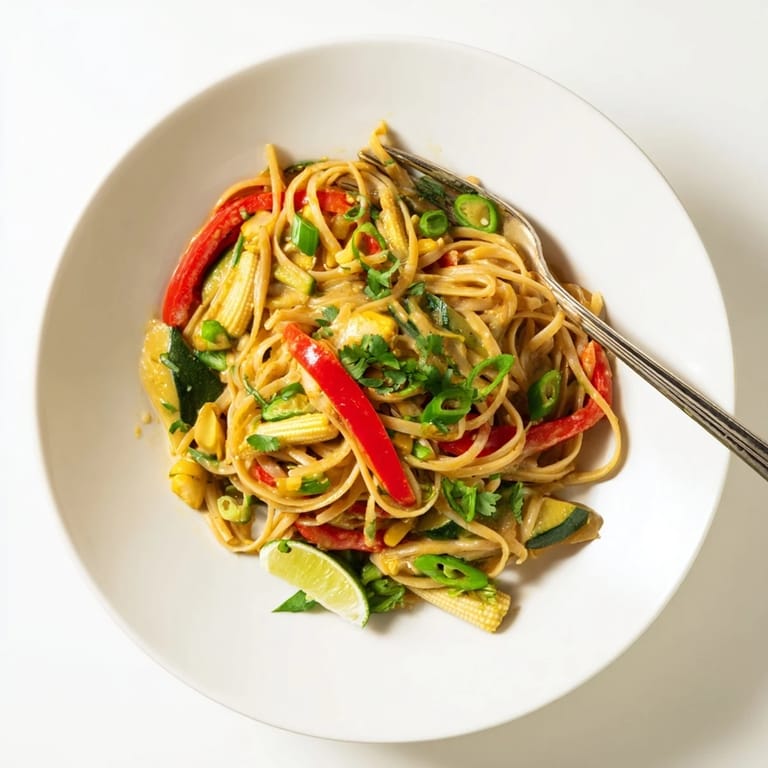
Save I discovered this dish entirely by accident one rainy Tuesday when I had a craving for something warm and comforting but found myself stuck between two food loves. My pantry had a can of coconut milk from a failed curry attempt, and my pasta drawer was calling my name. Instead of picking one, I wondered what would happen if I stopped choosing and made them dance together. The first spoonful was electric—creamy, aromatic, with that unmistakable Thai green curry warmth wrapped around tender linguine. It felt like both worlds had finally agreed on something.
My roommate came home from work to find the kitchen smelling like a Thai market had somehow relocated to our apartment. She took one bite, closed her eyes, and asked me to make it again the next week. That's when I knew I'd stumbled onto something worth keeping. Now it's the dish I make when I want to impress without the stress of a three-course meal.
Ingredients
- Linguine or spaghetti (350 g): The long strands catch the sauce in a way short pasta never could—think of them as little flavor vehicles.
- Red bell pepper: This is your brightness, the crisp counterpoint to all that creamy richness.
- Zucchini: It soaks up sauce like a sponge and softens just enough to feel velvety.
- Snap peas: They stay snappy if you don't abandon them in the skillet, giving texture that matters.
- Baby corn: This is the ingredient that makes people ask what you did differently—don't skip it.
- Spring onions: Add these at the end for a sharp, fresh bite that cuts through the richness.
- Thai green curry paste: The soul of the dish; trust a quality brand or make your own if you're feeling ambitious.
- Coconut milk (full fat): Light coconut milk will make you sad—use the real stuff and thank me later.
- Vegetable oil: A neutral base so the curry paste can bloom properly.
- Soy sauce: Just a touch of umami to deepen everything.
- Brown sugar: It rounds out the heat and balances the lime's acidity.
- Fresh ginger: Grate it just before cooking so you catch its essence at peak intensity.
- Lime juice: The final flourish that makes everything sing.
- Fresh cilantro: If you're one of those people who tastes soap, skip it—I won't judge.
Tired of Takeout? 🥡
Get 10 meals you can make faster than delivery arrives. Seriously.
One email. No spam. Unsubscribe anytime.
Instructions
- Toast the curry paste:
- Heat oil in a large skillet over medium heat, then add the curry paste and ginger. Let them sizzle for a minute or two until the kitchen smells like a Bangkok street market—you'll know it when you smell it.
- Build the sauce base:
- Pour in the coconut milk slowly, stirring to meld it with the paste. Add soy sauce and sugar, then let it bubble gently while you steal a taste on a spoon to see where you are flavor-wise.
- Cook the pasta:
- In a separate pot, boil salted water and cook your pasta until it's just tender enough to bite but still has a whisper of resistance. This matters because it'll keep cooking in the sauce.
- Wilt the vegetables:
- Slide the bell pepper, zucchini, snap peas, and baby corn into the curry sauce and let them cook until they're soft but still have their shape. Don't walk away—watch them transform.
- Marry the pasta and sauce:
- Drain your pasta (saving that starchy water), then add it to the skillet with some of the pasta water. Toss everything together and let it simmer for a couple of minutes so the pasta absorbs the coconut-curry magic.
- Finish with brightness:
- Stir in the spring onions, lime juice, and cilantro at the very end. Taste, adjust, and be honest with yourself about whether you need more lime or more heat.
 Save
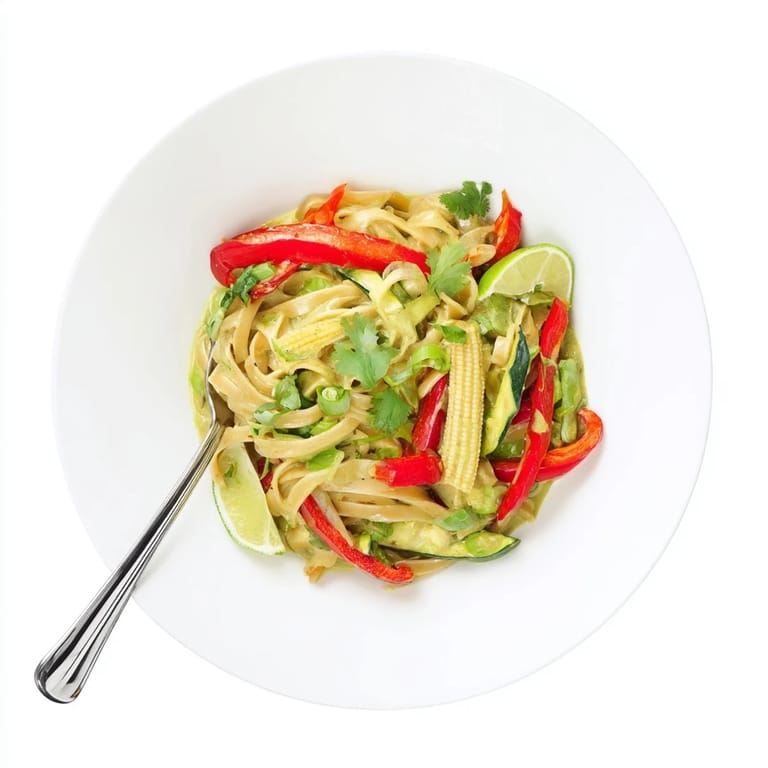
Save There's something about a dish that doesn't follow the rules but somehow makes perfect sense that stays with you. This one became a meditation on trust—trusting that Italian and Thai could be friends, trusting that coconut and pasta belonged together, trusting the process even when it sounded ridiculous on paper.
Vegetable Swaps That Work
Once you master the base, this dish becomes a canvas for whatever vegetables need rescuing from your crisper drawer. I've thrown in broccoli florets, thin-sliced carrots, snow peas, and even slices of eggplant—anything with enough texture to hold up to a few minutes of simmering works beautifully. The only rule is: don't use something soggy to begin with, because the sauce will make it more so.
Protein Additions
If you want to turn this into a more substantial meal, you have options. Shrimp cooks fast enough that you can add it during the vegetable stage—it'll be done before you finish tossing everything together. Chunks of chicken breast work too, though you'll want to cook them separately first so they don't end up overcooked. Tofu, pressed and cubed, soaks up the sauce like it was born to do this.
Balancing the Flavors
This dish thrives on balance, and everyone's palate is different, so tasting as you go matters more than following any rule. If it feels too heavy, lime is your friend—fresh citrus cuts through richness instantly. If the heat is overwhelming you, a touch more brown sugar softens the edges. If it tastes flat, you might need another pinch of soy sauce or even a small drizzle of oil to carry the flavors forward.
- Start with less curry paste than you think you need—you can always add more.
- A sliced red chili on top adds visual drama and heat for those who want it without forcing it on everyone.
- Roasted cashews scattered over everything at the end give you something to look forward to with each bite.
 Save
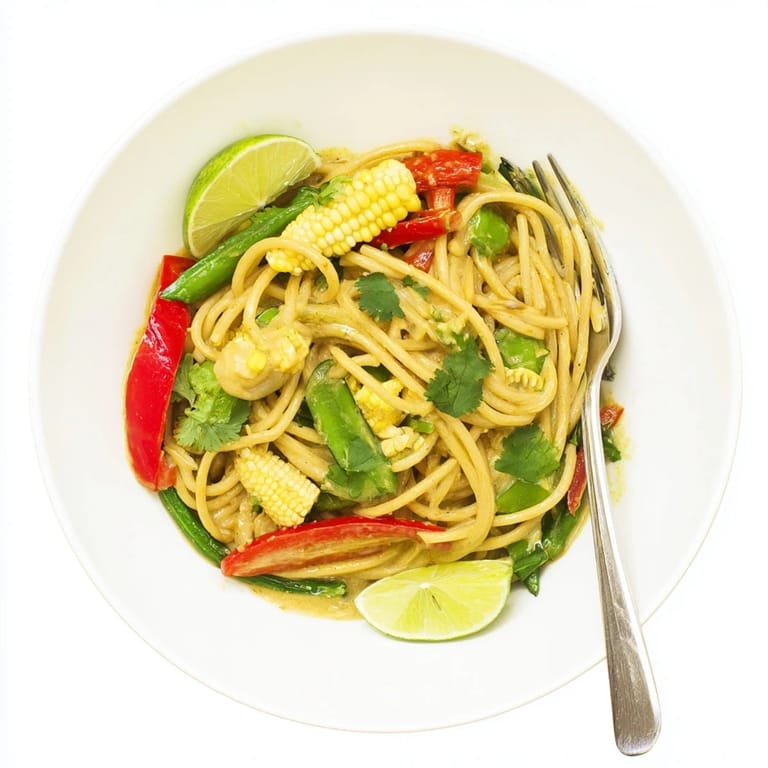
Save This is the kind of dish that reminds you why cooking is worth the small mess and the attention it requires. It's become my anchor recipe, the one I reach for when I want to feel competent and creative at the same time.
Recipe FAQ
- → What type of pasta works best?
Linguine or spaghetti are ideal as they hold the sauce well while balancing the dish's textures.
- → Can the spice level be adjusted?
Yes, adjust the amount of green curry paste to increase or decrease the heat according to your preference.
- → Is it possible to make this vegan?
Use curry paste without shrimp or fish sauce and choose plant-based ingredients to ensure vegan-friendly preparation.
- → How to keep vegetables crisp yet tender?
Cook vegetables just until softened, about 5-6 minutes, to maintain their crunch while integrating flavors.
- → What garnishes complement this dish?
Lime wedges, extra cilantro, sliced red chili, and roasted cashews or peanuts add fresh, spicy, and crunchy elements.
- → Can protein be added?
Incorporate cooked chicken, shrimp, or tofu to boost protein content without altering the core flavors.