 Save
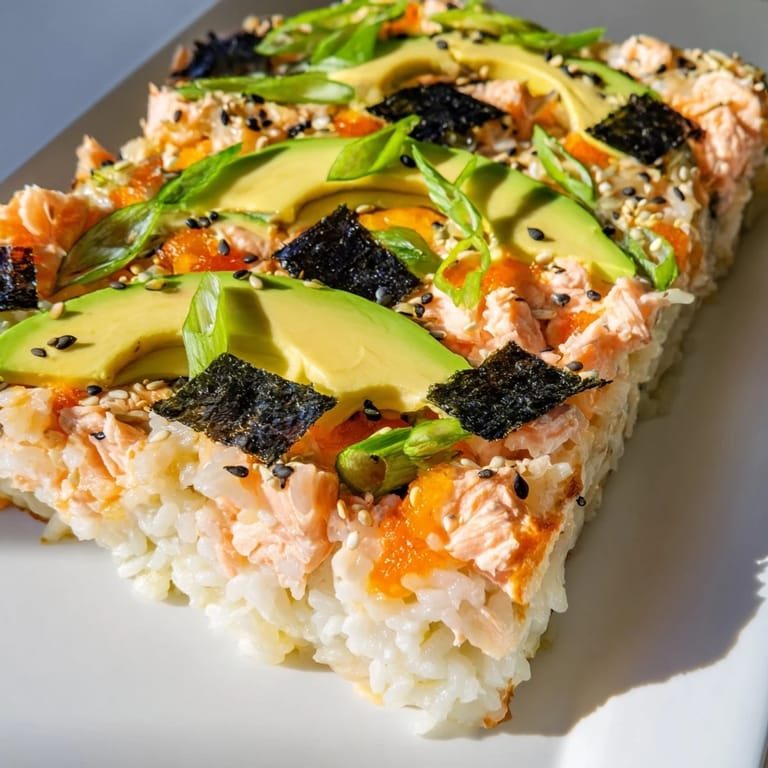
Save My friend texted me a photo of sushi bake at a trendy restaurant, and I stared at it for a solid minute thinking, this is just... deconstructed sushi in a dish. Why am I paying thirty dollars for this? That evening, I raided my fridge, threw together layers of seasoned rice, flaked salmon, and creamy avocado, shoved it in the oven, and discovered something magical: the warmth brings out flavors that cold sushi somehow misses. Now it's the dish I make when I want sushi comfort without the precision.
I made this for my sister's dinner party on a Wednesday night when everyone was exhausted from work, and watching their faces light up the moment they tasted it made me realize food doesn't need to be complicated to feel thoughtful. She asked for the recipe before dessert even hit the table, which felt like the highest compliment a home cook can receive.
Ingredients
- Sushi rice: The foundation that holds everything together; rinsing it removes excess starch so it stays light, not gluey.
- Rice vinegar, sugar, and salt: This trio seasons the rice with that distinctive sushi flavor, but don't skip the step of letting hot rice absorb these seasonings.
- Salmon fillet: Fresh is ideal, but honestly, quality frozen salmon thawed properly works beautifully and costs less.
- Soy sauce and sesame oil: These coat the salmon in umami before it bakes, deepening its flavor in a way plain salt never could.
- Cream cheese and Kewpie mayo: Kewpie sounds fancy but it's just richer and tangier than regular mayo, making the salmon mixture luxuriously creamy.
- Sriracha: Optional but recommended; it adds heat and complexity that brightens the whole dish.
- Avocado: Always add this right before serving so it stays bright green and doesn't turn gray.
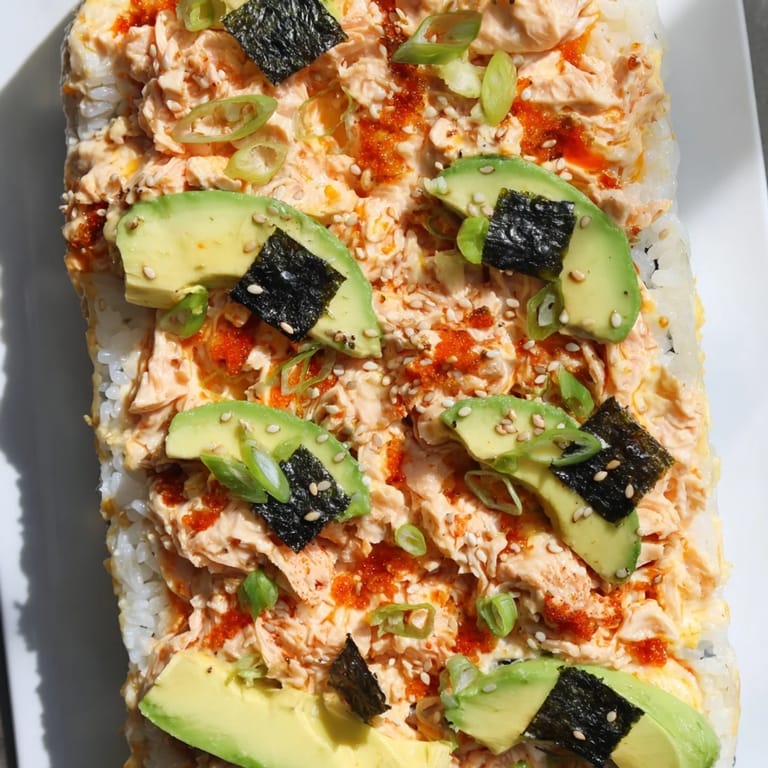
- Nori: Those crispy seaweed squares are your textural contrast; they stay crunchy even on top of warm rice, which is the whole magic.
- Sesame seeds and spring onions: These aren't just garnish; they're the final note that makes you think, yes, this tastes like sushi.
Tired of Takeout? 🥡
Get 10 meals you can make faster than delivery arrives. Seriously.
One email. No spam. Unsubscribe anytime.
Instructions
- Prepare the rice foundation:
- Rinse the sushi rice until the water runs clear, then cook it with two and a half cups of water. While it's still warm, stir in the rice vinegar mixture and spread it evenly into your baking dish like you're tucking it in to sleep.
- Bake the salmon:
- Brush that fillet with soy sauce and sesame oil, then slide it into a 400°F oven for about 12 to 15 minutes until it flakes easily. You'll know it's done when it releases its aroma and the edges just start to turn opaque.
- Make the creamy layer:
- Fold flaked salmon into a mixture of softened cream cheese, mayo, and a squeeze of lemon juice until it's smooth and cloud-like. Taste it; if it feels flat, a little sriracha wakes everything up.
- Assemble and warm:
- Spread that salmon mixture over your rice layer and bake everything together for just 10 minutes until it's warm and the edges are golden. This second bake brings all the layers together.
- Finish with fresh toppings:
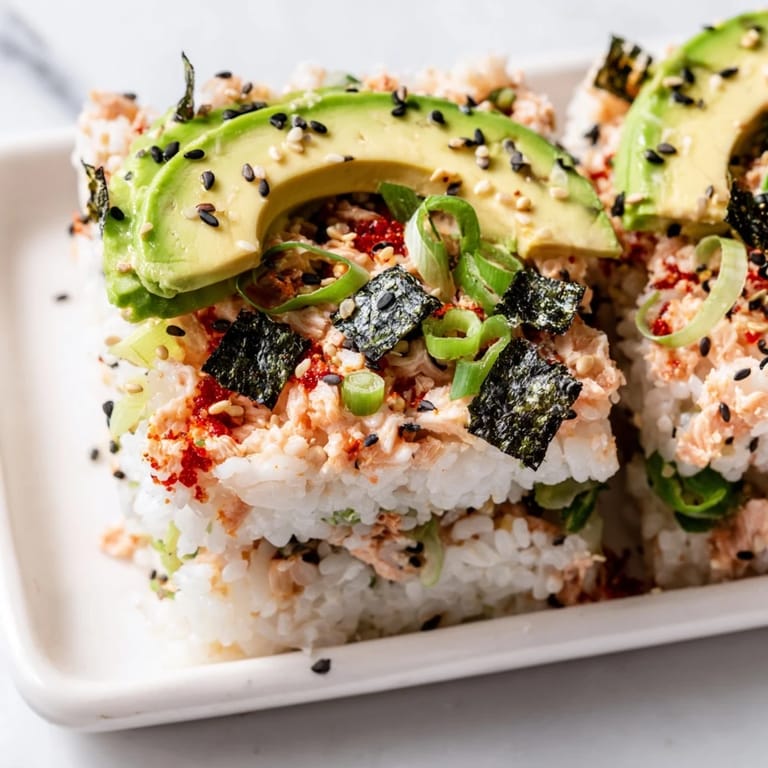
- Right before serving, arrange sliced avocado, torn nori, sesame seeds, and spring onions on top. The contrast between warm rice and cool avocado, between soft and crispy, is where the real joy lives.
 Save
Save The first time my ten-year-old nephew actually asked for seconds of something with fish in it, I nearly fell over. He sat there picking apart the layers, asking questions about how the rice got warm and why the seaweed was crunchy, and I realized this dish bridges the gap between what feels fancy and what actually feels fun to eat.
Why This Beats Regular Sushi Rolls
There's no rolling, no struggle, no tears of frustration when your nori tears halfway through. You layer, bake, and serve. The warmth of the oven transforms the cream cheese into something silky, and the rice stays just warm enough that the avocado softens into it without turning mushy. Plus, everyone gets the same ratio of salmon to rice to creamy deliciousness, which is honestly impossible to guarantee with hand-rolled sushi.
The Flavor Evolution
As the casserole sits for a minute after coming out of the oven, the flavors meld in a way that surprises you each time. The sesame oil rises up through the warm rice, the sriracha heat lingers just beneath the cream, and when you bite through that nori, you get a flash of ocean-like bitterness that balances everything else. It's sushi, but friendlier and less intimidating.
Make It Your Own
This dish is endlessly adaptable once you understand the structure. Swap salmon for cooked crab, shrimp, or even high-quality canned tuna if that's what's in your pantry. I've made it with cucumber ribbons for a vegetarian version, and it still sings. The real lesson here is that the technique matters more than the exact protein, and once you nail that, you can riff forever.
- Add pickled ginger or wasabi on the side for guests to customize their heat and tang levels.
- A light drizzle of sriracha mayo on the plate right before eating adds drama and flavor.
- Keep a few sheets of extra nori handy in case someone eats the topping before the dish even gets to the table.
 Save
Save This casserole is proof that sometimes the best meals come from standing in your kitchen thinking, what if I just made this easier? Serve it warm with cold sake or a crisp white wine, and watch how fast it disappears.
Recipe FAQ
- → What type of rice is best for this layered dish?
Short-grain sushi rice works best due to its sticky texture, which holds the layers together nicely.
- → Can other seafood replace salmon in this preparation?
Yes, cooked crab meat, canned tuna, or cooked shrimp can be used as alternatives to provide variety.
- → How do I achieve the creamy texture in the salmon layer?
Combining softened cream cheese with mayonnaise and a touch of lemon juice creates a rich and smooth base that blends well with flaked salmon.
- → What is the best way to bake the dish without drying out the salmon?
Bake the salmon separately until just cooked through, then fold it into the creamy mixture before layering and warming the assembled casserole.
- → Which toppings add the most flavor and texture contrast?
Fresh avocado slices, toasted sesame seeds, roasted nori squares, and thinly sliced spring onions provide creaminess, crunch, umami, and freshness.
- → Are there serving suggestions to enhance the experience?
Serving warm with soy sauce, pickled ginger, and wasabi complements the dish with savory, tangy, and spicy notes.