 Save
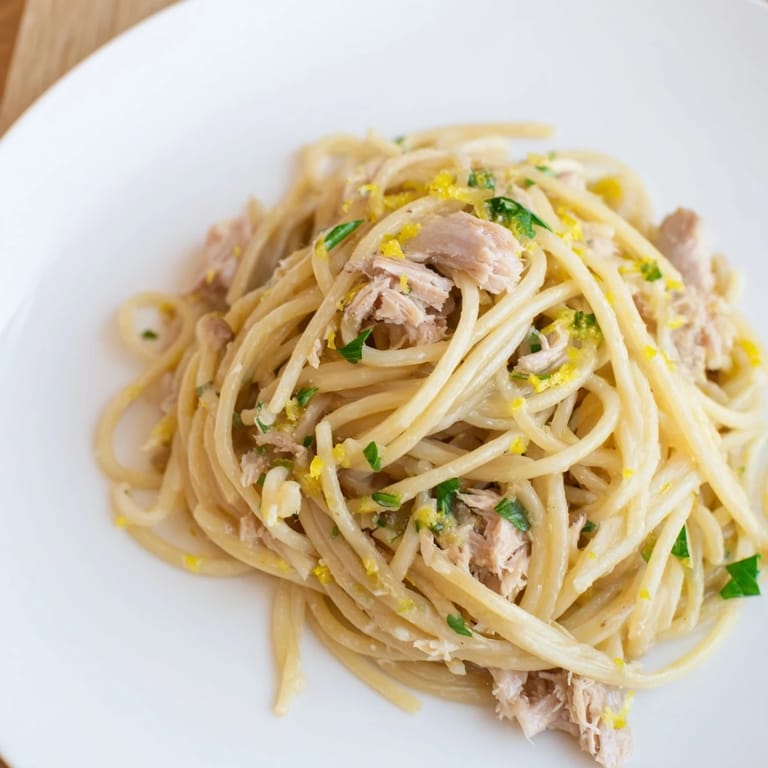
Save I used to think tuna belonged only in sandwiches until a friend tossed it into pasta one evening while we waited out a thunderstorm. The garlic sizzled, the lemon cut through the richness, and suddenly dinner felt less like a compromise and more like a discovery. Now it's my go-to when the fridge looks bare but I still want something that tastes intentional. There's something satisfying about a dish that comes together in the time it takes to boil water.
I made this for my sister once when she showed up unannounced after a long shift at the hospital. She sat at the counter, too tired to talk, and I just cooked. When she finished her plate and asked for seconds, I knew I'd found something worth keeping. It's become the dish I make when someone needs feeding more than they need conversation.
Ingredients
- Spaghetti: The long strands catch the sauce beautifully, and cooking it just until al dente keeps the texture from going soft and lifeless.
- Olive oil: This is your flavor base, so use something you'd actually want to taste, not the dusty bottle hiding in the back of the cupboard.
- Garlic: Slicing it thin instead of mincing gives you sweet, mellow bites instead of harsh sharpness, and it won't burn as easily.
- Lemon: Both the zest and juice matter here, the zest brings fragrance, the juice brings the kind of brightness that wakes everything up.
- Tuna in olive oil: The oil-packed kind has more flavor and a softer texture than the stuff in water, and it blends into the sauce instead of sitting on top of it.
- Red pepper flakes: A little heat in the background makes the lemon sing louder, but you can skip it if you're not in the mood.
- Flat-leaf parsley: It's not just for looks, the fresh green flavor cuts through the richness and makes the whole dish feel lighter.
- Pasta cooking water: This starchy liquid is what turns everything into an actual sauce instead of just oily noodles with stuff on them.
Tired of Takeout? 🥡
Get 10 meals you can make faster than delivery arrives. Seriously.
One email. No spam. Unsubscribe anytime.
Instructions
- Boil the pasta:
- Get your water boiling hard and salt it well, it should taste like the sea. Cook the spaghetti until it still has a little bite in the center, then save some of that cloudy cooking water before you drain.
- Cook the garlic:
- Warm the olive oil over medium heat and add the garlic, letting it soften and turn golden without any browning. The smell will fill your kitchen in seconds.
- Add the tuna and lemon:
- Flake in the tuna gently, then stir in the lemon zest, juice, and red pepper if you're using it. Let everything warm through together for a couple of minutes.
- Toss with pasta:
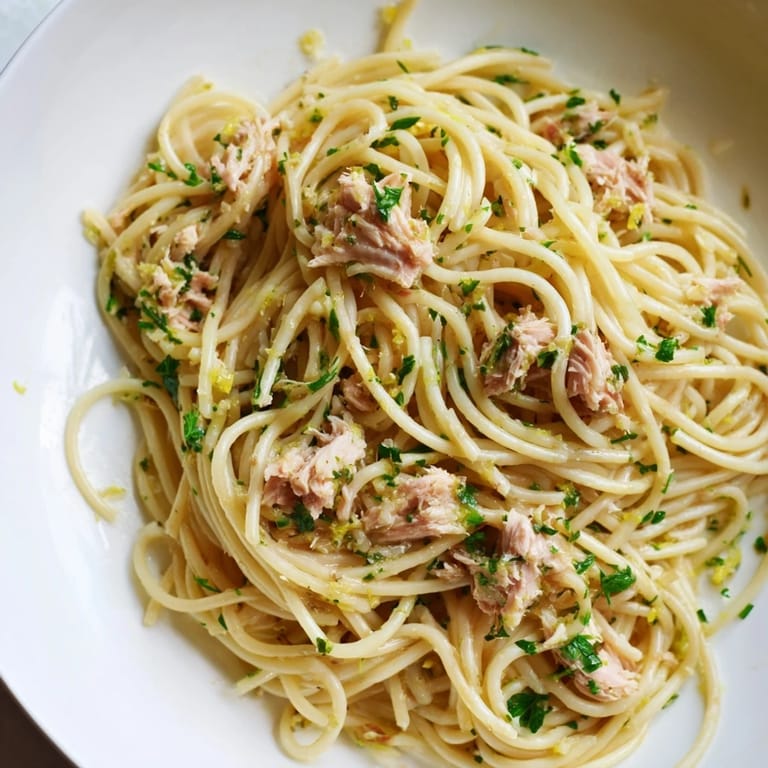
- Add the drained spaghetti right into the skillet and toss it all together, pouring in the reserved pasta water a little at a time until the sauce clings to every strand. It should look glossy, not dry.
- Finish and serve:
- Stir in the parsley, taste for salt and pepper, then divide it up and serve with extra parsley and lemon wedges on the side. The wedges aren't optional, that extra squeeze at the table makes all the difference.
 Save
Save One night I made this and realized halfway through that I'd forgotten to buy parsley. I tossed in some torn basil instead, and honestly, it was just as good. That's when I stopped treating recipes like rigid instructions and started trusting my instincts. Now this dish feels less like following steps and more like having a conversation with whatever's in the kitchen.
What to Do with Leftovers
This doesn't keep as well as tomato-based pastas because the lemon flavor fades and the noodles soak up all the oil, but if you do have extra, store it in the fridge and eat it cold the next day as a pasta salad. Add a handful of arugula or some halved cherry tomatoes to brighten it back up. I've also reheated it gently in a skillet with a splash of water and a drizzle of fresh olive oil, which brings it mostly back to life.
Simple Variations Worth Trying
If you want more texture, toss in a tablespoon or two of capers when you add the tuna, they bring a salty pop that works beautifully with the lemon. Cherry tomatoes, halved and stirred in at the end, add sweetness and color without changing the spirit of the dish. I've also swapped the tuna for canned salmon or even leftover grilled chicken when I'm cooking for someone who doesn't do fish, and it still works.
Pairing and Serving Suggestions
This is light enough that it doesn't need much alongside it, but a simple green salad with a sharp vinaigrette balances the richness nicely. If you want something more substantial, serve it with crusty bread to soak up any extra sauce left on the plate. A cold glass of Pinot Grigio or Sauvignon Blanc is ideal if you're drinking, but sparkling water with a lemon wedge works just as well.
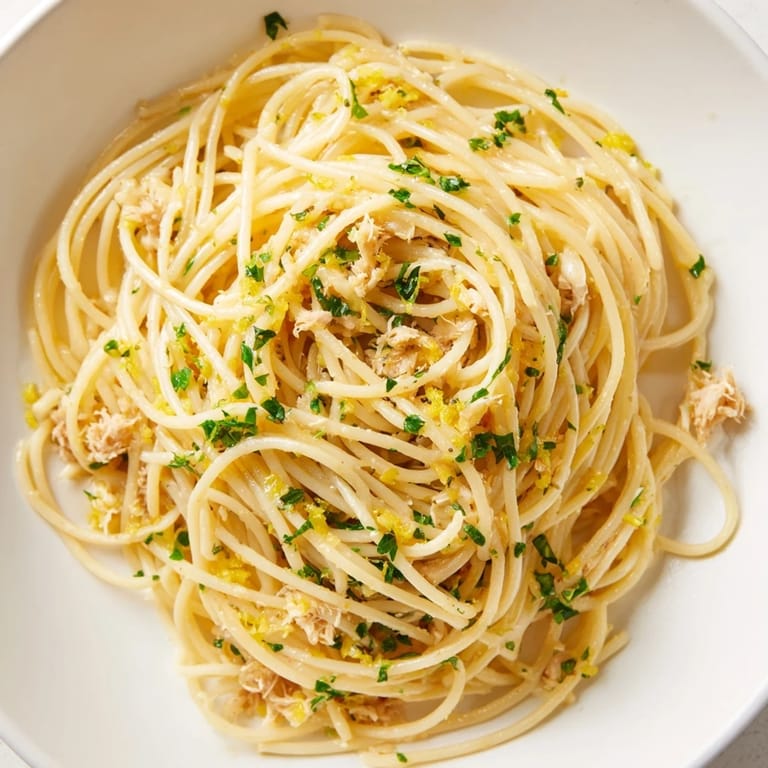
- Serve it in shallow bowls so the sauce doesn't disappear under the pasta.
- Have extra lemon wedges on the table, people always want more than you think.
- If you're feeding kids, go easy on the red pepper and let them squeeze their own lemon.
 Save
Save This is the kind of meal that proves you don't need a lot of time or a long ingredient list to make something that feels worth sitting down for. Keep the pantry stocked and you'll always have this one ready when you need it.
Recipe FAQ
- → Can I use fresh tuna instead of canned?
Yes, fresh tuna can be seared and flaked before adding to the pasta, though the cooking time may need adjustment for optimal tenderness.
- → How do I keep the pasta moist without a heavy sauce?
Reserve some pasta cooking water and gradually add it to the tuna mixture; starch in the water helps create a light, silky coating that binds the ingredients.
- → What variations can enhance the flavor?
Adding capers or halved cherry tomatoes introduces additional brightness and complexity, complementing the lemon and garlic notes.
- → Is this dish suitable for pescatarians?
Yes, featuring tuna and no meat, this dish fits well within a pescatarian diet.
- → What wine pairs well with this dish?
Dry white wines like Pinot Grigio or Sauvignon Blanc enhance the fresh lemon and garlic flavors without overpowering the tuna.