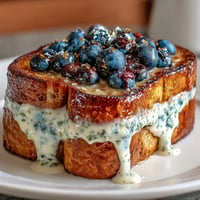
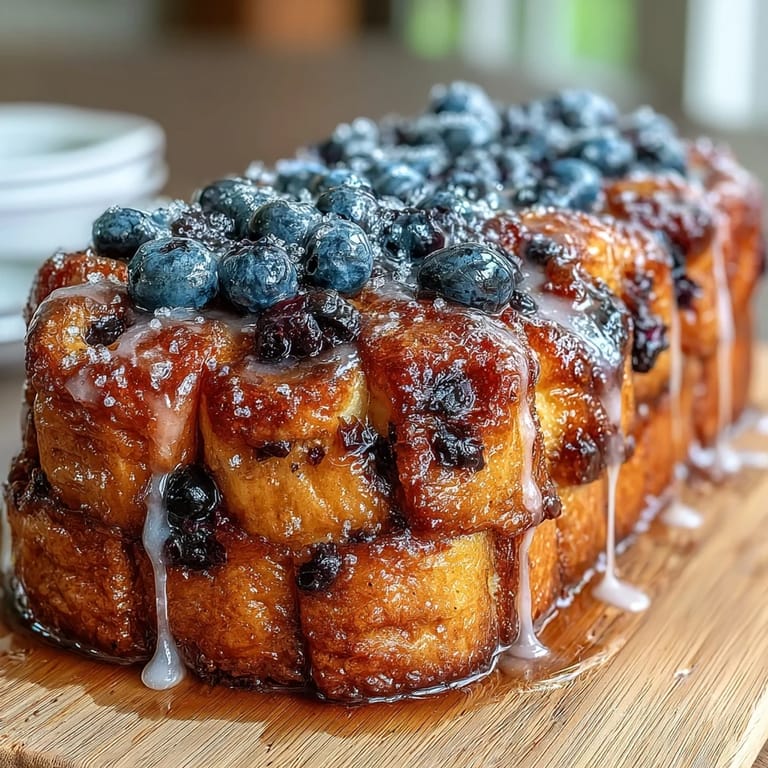
 Save
Save My kitchen smelled like a lemon grove the morning I first pulled this bread apart at the table, each square releasing steam and revealing those pockets of jammy blueberries nestled in tangy sourdough. A friend had mentioned her sourdough starter was finally acting lively after weeks of neglect, and I thought, why waste that energy on plain bread? The idea came together one Saturday when I had both fresh blueberries and Meyer lemons at their peak—the kind of moment where the pantry and the season align perfectly. That pull-apart format happened almost by accident when I was rolling out dough and wondering how to layer everything without it getting messy, and suddenly the loaf pan method made sense.
I made this for my sister's book club on a Sunday morning, and watching eight people reach for the same pull-apart square at the same time taught me something about food that recipes don't mention. There was this moment of genuine delight on every face when they bit through the golden crust into that cloud of tangy dough studded with burst blueberries. The lemon glaze was still warm and glossy, and someone asked if I'd made it professionally—I'm still riding that high.
Ingredients
- All-purpose flour: The structure of this bread depends on it developing gluten properly, so don't skip the kneading step even though it feels like a lot of work.
- Active sourdough starter, fed and bubbly: This is non-negotiable; a sluggish starter will give you dense, underproofed bread, so make sure it's truly bubbly and doubled from its last feeding.
- Granulated sugar (for dough): Feeds the yeast and adds subtle sweetness without overwhelming the tang.
- Fine sea salt: Enhances flavor and controls fermentation; don't substitute with table salt or you'll throw off the balance.
- Whole milk, lukewarm: Adds richness and helps create that tender crumb structure.
- Large eggs, room temperature: They incorporate more smoothly and contribute structure and richness; cold eggs can tighten the dough.
- Unsalted butter, softened (for dough): Softened butter emulsifies into the dough more easily than melted, creating a silkier texture.
- Granulated sugar and lemon zest (filling): The zest is where the magic lives; finely grate it right before mixing so the oils stay bright and aromatic.
- Fresh blueberries: Scatter them generously; they collapse slightly during baking and create pockets of jammy sweetness, though frozen berries work if you don't thaw them first.
- Melted butter (for brush): Creates the sticky surface that holds the lemon sugar in place.
- Powdered sugar and fresh lemon juice (glaze): Mix these just before drizzling so the glaze stays glossy and doesn't dry out too quickly.
Tired of Takeout? 🥡
Get 10 meals you can make faster than delivery arrives. Seriously.
One email. No spam. Unsubscribe anytime.
Instructions
- Mix your dough base:
- Combine flour, sugar, and salt in a large bowl, then whisk the sourdough starter, lukewarm milk, and eggs separately before combining them. The starter should smell pleasantly sour and active, not yeasty or acetone-like. Add the wet to the dry, then work in the softened butter until you've got a shaggy mass that's ready for kneading.
- Knead until silky:
- By hand or with a stand mixer, knead for 7 to 10 minutes until the dough transforms from rough and sticky to smooth and elastic with a subtle spring-back when you poke it. You'll feel the moment it shifts—trust that feeling over watching the clock.
- Let time do the work:
- Cover with plastic wrap or a damp towel and let it rise at room temperature for 6 to 8 hours, or overnight, until it's visibly doubled and jiggly when you move the bowl. Overnight is actually better because the longer fermentation deepens the flavor.
- Build the filling mixture:
- Rub the lemon zest and sugar together in a small bowl until fragrant and wet—this releases the oils so the lemon flavor permeates every bite. Don't skip this step; jarring the zest and sugar separately into the dough doesn't achieve the same effect.
- Roll and brush:
- Turn the puffy dough onto a lightly floured surface and roll it into a 12 by 18 inch rectangle, working gently so you don't deflate it completely. Brush the entire surface with melted butter, creating a thin, even layer that will hold everything in place.
- Layer the lemon sugar and blueberries:
- Sprinkle the lemon sugar evenly across the buttered dough, then scatter the fresh blueberries in a single layer—don't press them in, just let them nestle where they fall. A few patches of bare dough between berries are fine; even distribution matters less than even flavor.
- Cut into strips, then stack:
- Using a sharp knife or bench scraper, cut the dough into six equal 3 inch wide strips running the length of the rectangle. Stack all six strips directly on top of each other, then cut through the entire stack into six equal squares, creating 36 small filled cubes total.
- Arrange in the pan:
- Grease your 9 by 5 inch loaf pan generously and arrange the stacked squares vertically with their cut sides facing up so you can see all those beautiful layers. They should fit snugly but not be forced; if they don't all fit, you can squeeze them in gently and they'll adjust during the rise.
- Second rise with patience:
- Cover loosely with plastic wrap and let rise for 1 to 2 hours at room temperature until the squares are puffy and jiggly and slightly taller than the rim of the pan. This second rise is shorter because the dough is already developed; watch it rather than timing it exactly.
- Bake until golden:
- Preheat your oven to 350°F and bake for 35 to 40 minutes until the bread is deep golden brown and a skewer inserted in the center comes out clean with just a few moist crumbs clinging. If the top browns too quickly (which can happen with the sugar), loosely drape foil over the last 10 minutes.
- Cool, glaze, and serve:
- Let the bread cool in the pan for 15 minutes so it sets enough to handle, then turn it out onto a wire rack to cool completely. Whisk powdered sugar and fresh lemon juice into a thin glaze, then drizzle it over the warm bread just before serving so it pools slightly and glosses everything.
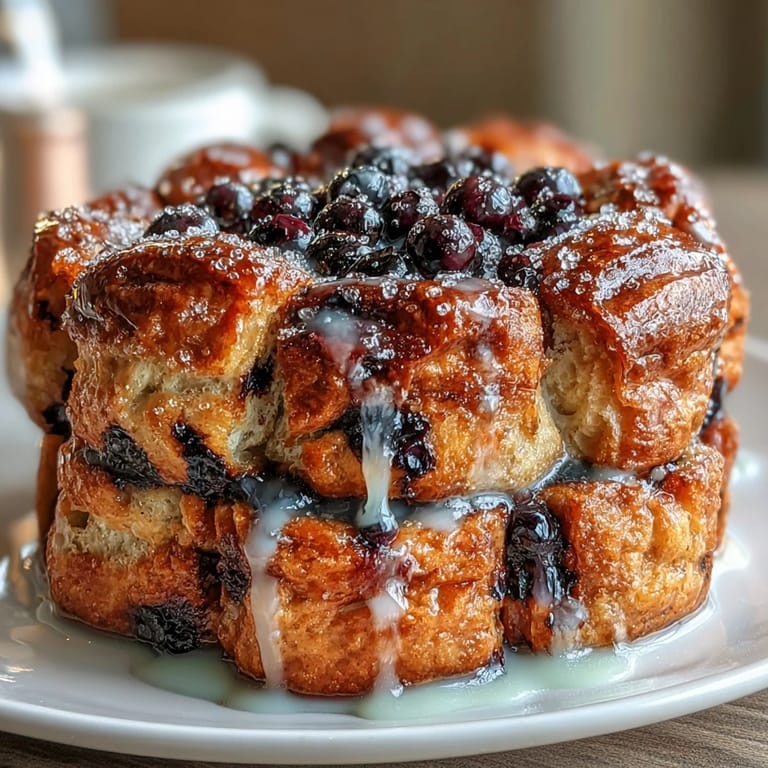 Save
Save There's something quietly satisfying about handing someone a warm piece of this bread and watching them discover the blueberries on their own as they pull it apart. It's the kind of bread that tastes intentional but doesn't require fussy techniques, which is honestly the best kind of recipe to have in rotation.
The Sourdough Starter Moment
One thing I've learned is that sourdough starter has moods—on a cold morning it rises slowly, but in warm weather it can overproof and collapse before you even get to the oven. The starter is your barometer for how fast this whole process will move, so pay attention to it more than the clock. I've kept mine on the counter for three years now, and I can tell by how it smells whether it's ready for a long rise or a short one.
Why This Shape Works
The pull-apart square method is brilliant because it creates maximum surface area for the lemon sugar and blueberries to caramelize slightly during baking, but it also means every single piece gets its own little moment of attention. You're not slicing through a loaf, which is faster but somehow less fun—you're peeling apart individual pieces, and that interaction with the bread makes it taste better somehow. I've tried making this as a traditional loaf and it's perfectly good, but the squares make it feel like an event.
Make It Your Own
The beauty of this recipe is how flexible it actually is once you understand the base technique. I've made it with raspberries instead of blueberries, with Meyer lemon zest swapped for regular, and even with a thin layer of ricotta mixed with honey tucked between the squares for a brunch situation. The architecture stays the same, but the flavor can shift based on what your market or freezer offers on any given week.
- If fresh blueberries aren't available or are expensive, frozen blueberries work beautifully as long as you don't thaw them—the ice crystals actually help them hold their shape through baking.
- A handful of sliced almonds scattered before baking adds a pleasant texture contrast without overpowering the delicate crumb.
- Leftover bread reheats wonderfully in a 300°F oven for 10 minutes, and the glaze can be refreshed with a light drizzle if it's absorbed into the crumb.
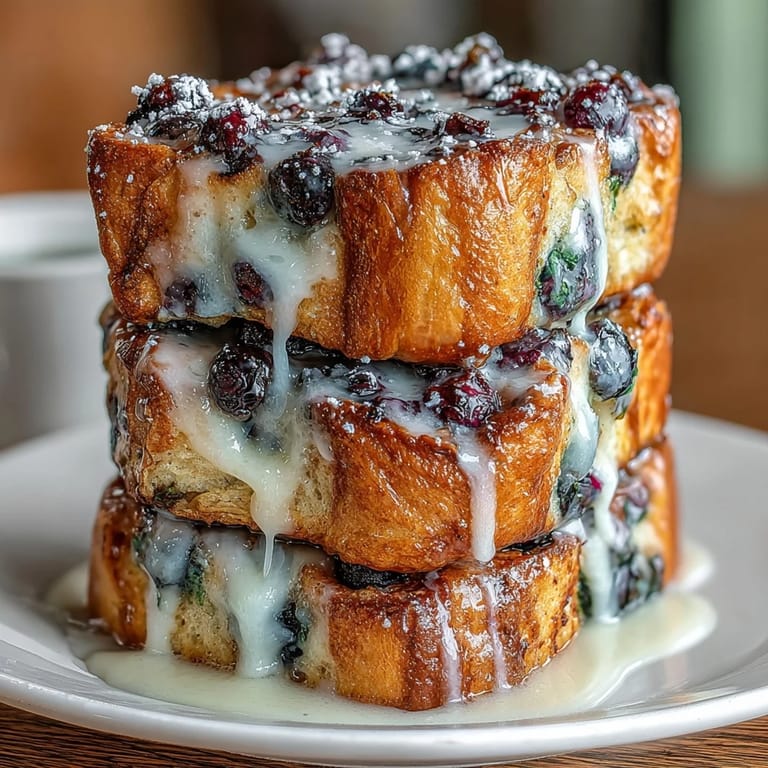 Save
Save This bread has become my answer to the question of what to bring to a gathering where everyone's tired of traditional recipes. It feels special without being complicated, and it tastes like you spent way more time in the kitchen than you actually did.
Recipe FAQ
- → How long should I let the sourdough dough rise?
The dough benefits from an overnight rise of 6–8 hours at room temperature to develop flavor and structure. After shaping, let it rise again for 1–2 hours until puffy before baking.
- → Can frozen blueberries be used instead of fresh?
Yes, frozen blueberries can be used directly without thawing. They may release more juice, which can slightly affect texture but adds flavor.
- → What is the purpose of the lemon sugar filling?
The lemon sugar filling adds a bright, zesty contrast to the rich sourdough and sweet berries, enhancing overall flavor and aroma.
- → How should I store leftover bread?
Store leftovers in an airtight container at room temperature for up to two days. Reheat gently before serving to restore softness.
- → Can sliced almonds be added for texture?
Yes, adding sliced almonds before baking introduces a pleasant crunch that complements the soft bread and juicy berries.