 Save
Save There's something about the smell of garlic hitting warm butter that makes you forget you're tired. I discovered this pasta on a Tuesday night when I had nothing in the pantry except chicken, tomatoes, and the basil plant my neighbor insisted I'd kill. It didn't die, and neither did the dinner—it became the kind of meal I'd make again and again without thinking twice.
I made this for my partner on a night when he'd been staring at his laptop for twelve hours straight. He took one bite and didn't say anything for a full minute—just kept eating. That's when I knew this recipe was a keeper. Now it's the thing I make when someone needs reminding that ordinary Tuesday nights can still feel special.
Ingredients
- 12 oz penne pasta: The ridges catch the cream sauce beautifully, so don't swap for something smooth.
- 1 lb boneless, skinless chicken breasts: Slice them thin so they cook through without drying out, and don't skip the resting time—it keeps them tender.
- 1 tbsp olive oil: Use something you'd actually taste, not the cheap stuff.
- 2 tbsp unsalted butter: Unsalted matters here because you're controlling the salt yourself.
- 1 medium yellow onion, finely chopped: The finer you chop it, the faster it disappears into the sauce.
- 3 garlic cloves, minced: Mince them right before you use them—garlic loses its punch sitting around.
- 1/2 tsp red pepper flakes: Optional, but they give you a whisper of heat that wakes everything up.
- 1 can (14 oz) crushed tomatoes: San Marzano if you can find it, though honestly any good quality crushed tomato works.
- 1/2 cup heavy cream: Don't use light cream—the richness is the whole point.
- 1/3 cup freshly grated parmesan cheese: Grate it yourself; pre-grated has cellulose that keeps it from melting smooth.
- 1/2 cup fresh basil leaves, chopped: Add half to the sauce and save the rest for garnish so it stays bright green and peppery.
- Salt and black pepper: Taste as you go—tomato sauce needs more salt than you think.
Tired of Takeout? 🥡
Get 10 meals you can make faster than delivery arrives. Seriously.
One email. No spam. Unsubscribe anytime.
Instructions
- Get everything ready:
- Fill a large pot with salted water and bring it to a rolling boil. While you're waiting, season your chicken breasts on both sides with salt and pepper—don't be shy, this is your only chance to season the chicken itself.
- Cook the pasta:
- Drop the penne in and set a timer for the package instructions, but start tasting a minute before it's done. You want it tender but still with a tiny bit of resistance when you bite it. Drain it in a colander and set aside, but pour that starchy cooking water into a mug—you'll need it later.
- Sear the chicken:
- Heat olive oil in a large skillet over medium-high heat until it shimmers. Lay the chicken breasts in carefully and listen for that sizzle—you should hear it right away. Let them sit for five to six minutes without moving them, then flip and do the same on the other side. They're done when the thickest part reads 165°F on a thermometer, or when the juices run clear.
- Make the sauce base:
- Slide the cooked chicken onto a plate and let it rest for five minutes while you turn the heat down to medium. Add butter and your chopped onion to the same skillet, stirring occasionally, until the onion turns translucent and soft. It should take about three to four minutes.
- Add the aromatics:
- Stir in the minced garlic and red pepper flakes if you're using them. Cook for just about one minute—you want to smell that garlic wake up, but you don't want it to brown and turn bitter.
- Build the tomato layer:
- Pour in the crushed tomatoes and let everything simmer together for five minutes. This is where the raw tomato flavor starts to mellow into something rounder and deeper.
- Bring in the cream:
- Turn the heat down low and slowly pour in the heavy cream while stirring. It'll look separated for a second, then come together into something glossy and pale pink. Simmer gently for two to three minutes just until it thickens slightly.
- Finish the sauce:
- Stir in the parmesan cheese and half of your fresh basil, mixing until the cheese melts and the basil turns dark and fragrant. Taste it and add salt and pepper until it tastes like something you want to eat.
- Bring it all together:
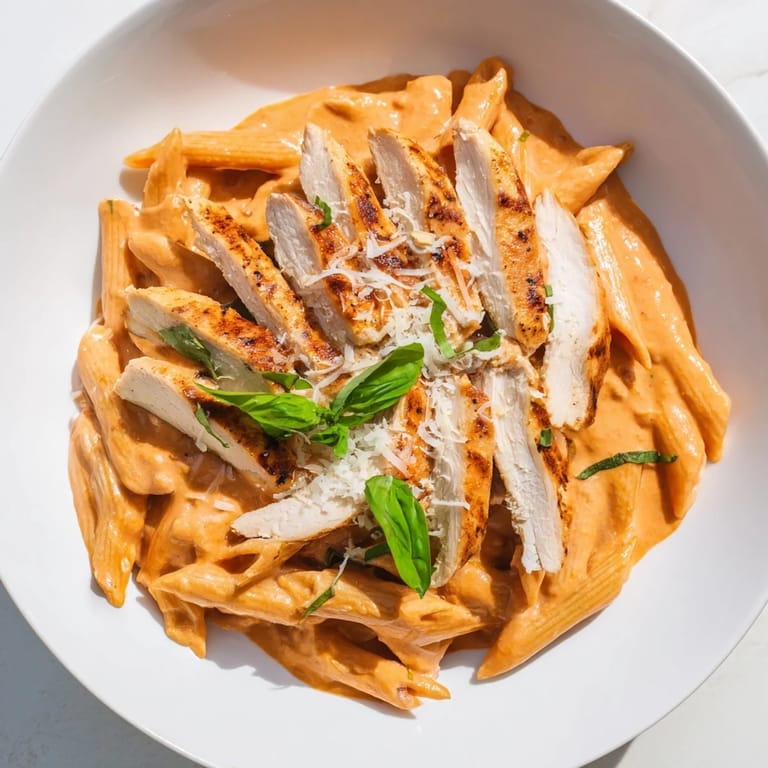
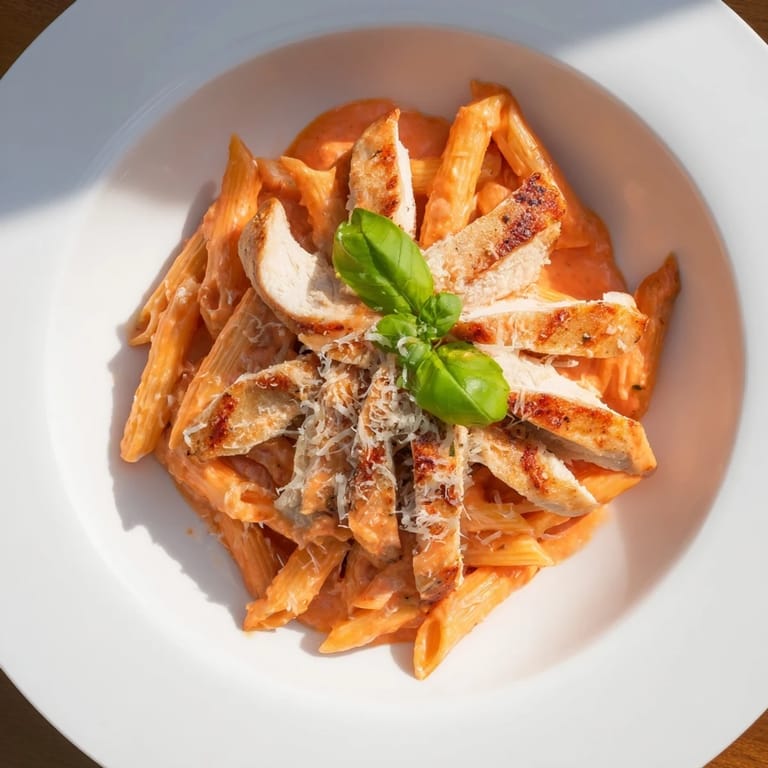
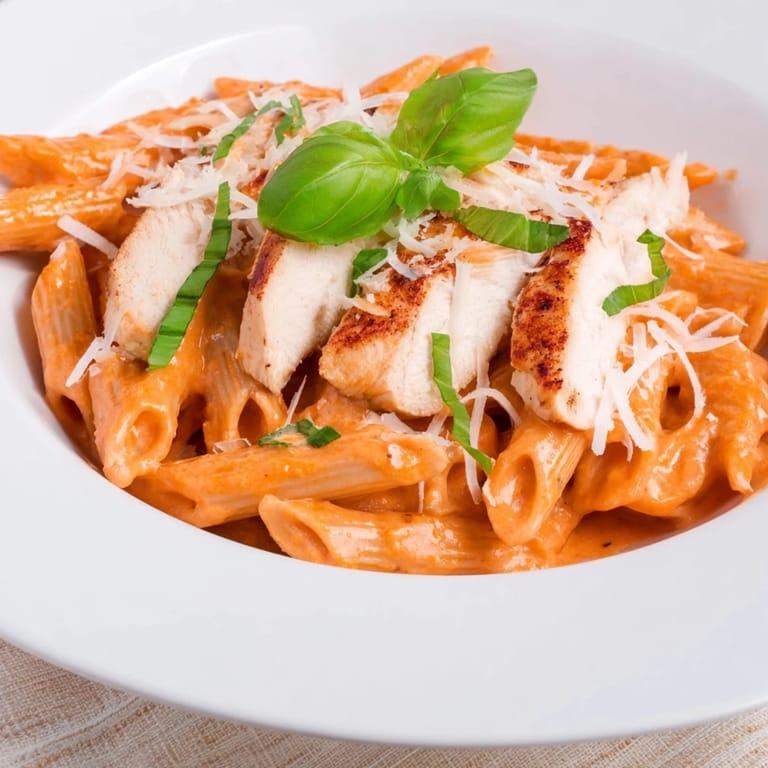
- Slice the rested chicken thinly. Add it back to the skillet along with the cooked pasta, tossing everything gently until each piece is coated in that creamy sauce. If it looks too thick, splash in some of that reserved pasta water a little at a time until you get a silky consistency.
- Serve:
- Transfer to bowls or plates while it's still hot, and scatter the remaining fresh basil on top. Finish with a sprinkle of extra parmesan if you're feeling generous.
 Save
Save The first time my sister made this, she called me halfway through in a panic because the sauce looked "weird." I talked her through lowering the heat and whisking slowly, and by the time her family sat down to eat, she was beaming. She still makes it every other week and won't let anyone else bring the pasta to dinner parties anymore.
Why This Feels Like Restaurant Food at Home
There's a trick that fancy restaurants use that nobody talks about: they use cream to make sauces feel richer and smoother than they have any right to be. The cream doesn't hide the tomato flavor—it just softens the edges and makes everything slide down your throat like it was designed to. Add fresh basil at the very end instead of cooking it to death, and suddenly your kitchen version tastes like someone who went to culinary school made it.
The Timing Dance
Getting everything finished at the same time is easier than you'd think if you remember one thing: the pasta and sauce should finish within a minute of each other. Start your pasta water while you're seasoning the chicken, and start the sauce when the chicken hits the pan. By the time the pasta is drained, your sauce is ready, and your chicken is rested. It's not magic—it's just a rhythm.
Small Changes That Feel Like New Recipes
This dish is a canvas. I've made it with spinach instead of basil on nights when that's what was in the fridge, and it becomes something earthier and darker. A splash of white wine after the onions caramelize adds a subtle tang that rounds out the sweetness of the tomatoes. Some people swear by a pinch of nutmeg stirred into the cream, and they're not wrong—it's barely noticeable but it makes you feel like something is different without knowing why.
- A handful of mushrooms sautéed separately and stirred in at the end adds texture and umami depth.
- Try a squeeze of lemon zest right before serving if the sauce tastes flat or one-note.
- If you have fresh thyme or oregano instead of basil, use it—different but equally good.
 Save
Save This is the kind of meal that disappears from plates without anyone thinking much about it, and then someone asks for it again the next week. That's how you know you've made something right.
Recipe FAQ
- → How do I ensure the chicken stays tender?
Cook the chicken breasts over medium-high heat until golden on each side, then allow them to rest before slicing to retain juices and tenderness.
- → Can I use a different type of pasta?
Penne is preferred for its shape and texture, but other short pasta like rigatoni or fusilli can be used to hold the sauce well.
- → What can I substitute for fresh basil?
Spinach or dried basil can be used, though fresh basil provides the best aroma and flavor in this dish.
- → How do I achieve a smooth cream sauce consistency?
Adding reserved pasta water a little at a time helps loosen the sauce and create a silky texture that clings to the pasta.
- → Is it possible to make this dish vegetarian?
Yes, omit the chicken and add sautéed mushrooms or zucchini for added texture and flavor.