 Save
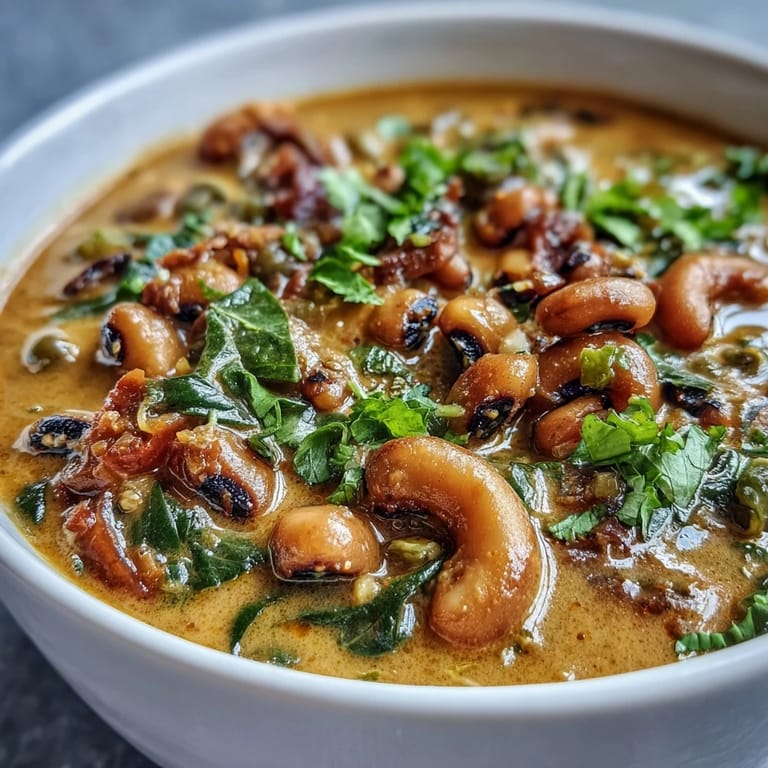
Save My neighbor brought over a container of this curry on a rainy Tuesday, and I was skeptical at first—black-eyed peas in coconut milk sounded like two cuisines having an argument. But the first spoonful changed everything. That warm spice hitting your tongue, the creaminess coating each bean, the way the ginger and turmeric seemed to know exactly what they were doing together. I've made it dozens of times since, and it never feels like a chore.
I made this for my friend who was going through a rough patch, someone who'd been living on takeout and exhaustion. Watching her face when she tasted it—like she'd forgotten food could be both nourishing and comforting—that's when I realized this curry isn't just dinner. It's the kind of thing you cook for people you want to feel better.
Ingredients
- Black-eyed peas: Canned works beautifully and saves time, but if you cook them from scratch the day before, the flavor deepens somehow. Two cups gives you substance without heaviness.
- Coconut oil: The choice here matters more than you'd think—it carries the spice flavors differently than regular oil, creating that silky mouthfeel.
- Onion: One large onion, chopped fine, creates the base that everything else builds on. Don't rush this part.
- Garlic and ginger: Three cloves and a tablespoon of fresh ginger make the curry smell like someone who knows what they're doing.
- Ground cumin: One teaspoon adds warmth and earthiness, a quiet note that holds everything together.
- Ground coriander: This one surprised me the first time I tasted it—floral and slightly sweet, it lifts the whole dish.
- Ground turmeric: The golden hue comes from this, but more importantly, it brings that distinctive warmth that makes curry taste like curry.
- Chili powder: Half a teaspoon is gentle; adjust based on whether you want heat or just the flavor of the pepper.
- Ground black pepper: Half a teaspoon rounds out the spice profile in a way that feels balanced.
- Garam masala: Added at the end, one teaspoon of this spice blend is the secret ingredient that makes people wonder what you did differently.
- Mustard seeds: Optional, but if you have them, they pop and sizzle in the hot oil, creating a moment of theater in your kitchen.
- Coconut milk: One can of full-fat coconut milk creates the creamy base. Don't skimp on this.
- Vegetable broth or water: Half a cup thins the curry just enough so it simmers rather than sits thick and heavy.
- Diced tomatoes: One can gives you brightness and acidity that balances all that richness.
- Green chilies: One to two, chopped, are optional but add a fresh heat that grows as you eat.
- Green peas: One cup, fresh or frozen, adds color and a gentle sweetness in the final minutes.
- Salt: One and a half teaspoons to start, but taste as you go—canned ingredients are often saltier than expected.
- Fresh cilantro: Two tablespoons, chopped, scattered on top right before serving. This is where brightness happens.
- Lime juice: Half a lime squeezed in at the end wakes everything up and makes the flavors pop.
Tired of Takeout? 🥡
Get 10 meals you can make faster than delivery arrives. Seriously.
One email. No spam. Unsubscribe anytime.
Instructions
- Start with the oil and seeds:
- Heat your coconut oil over medium heat until it smells warm and nutty. If you're using mustard seeds, add them and listen for the sizzle—this takes about 30 seconds and signals that your pan is ready.
- Build your flavor base:
- Add the chopped onion and let it soften for about 5 minutes, stirring occasionally, until it turns golden and translucent. This is your foundation.
- Wake up the aromatics:
- Stir in your minced garlic, grated ginger, and any green chilies. Cook this together for 1 to 2 minutes—your kitchen will smell incredible, and that's how you know it's working.
- Toast the spices:
- Add cumin, coriander, turmeric, chili powder, and black pepper. Stir constantly for about 1 minute so the spices bloom in the hot oil and release their essential oils. This step is non-negotiable for depth.
- Let the tomatoes break down:
- Pour in your can of diced tomatoes and let them cook for 5 minutes, breaking down into the oil and releasing their sweetness and acidity.
- Add the beans and peas:
- Stir in your cooked black-eyed peas and green peas, coating everything in the spiced oil. Mix well so each bean gets touched by the flavors you've built.
- Bring in the cream:
- Pour in the coconut milk and vegetable broth, stirring gently. Bring the whole thing to a gentle simmer—not a rolling boil, just a soft bubbling that tells you things are happening.
- Let it meld and thicken:
- Simmer uncovered for 15 to 20 minutes, stirring occasionally. This is when the curry transforms from ingredients into something unified. You'll notice it starting to thicken and darken slightly, and the smell becomes even more complex.
- Finish with the bloom:
- Stir in the garam masala and squeeze of lime juice. Taste it now—adjust salt if needed, maybe a pinch more lime if it feels heavy.
- Garnish and serve:
- Scatter fresh cilantro over the top right before serving. Eat it hot with rice or naan, letting each spoonful remind you why you love this dish.
 Save
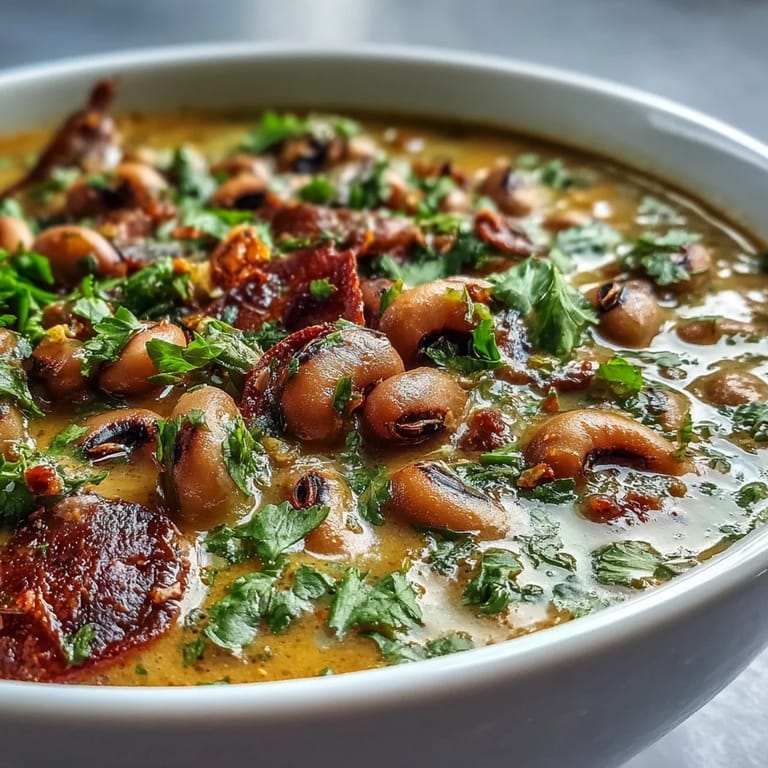
Save There's a moment about halfway through the simmering when the kitchen fills with this particular smell—warm, inviting, a little bit exotic but somehow also deeply comforting. That's when I know someone's about to have a really good meal.
The Spice Journey
The first time I made this, I was nervous about layering so many spices, worried they'd clash or overwhelm each other. What I discovered is that spices in a curry aren't competing—they're having a conversation. The cumin and coriander are old friends, the turmeric is the wise one bringing color and warmth, and the garam masala is the finale that brings everything into focus. Once you see it that way, you stop being afraid to adjust them.
Why Coconut Milk Makes All the Difference
I tested this curry with regular cream once, thinking it might work just as well. It didn't. The coconut milk brings something that dairy can't—a subtle sweetness and a richness that feels lighter on the palate even though it's luxurious. It also makes the curry vegan without anyone noticing or caring, which means more people get to eat it.
Serving and Storing
This curry is best served hot over basmati rice or with warm naan, but it's also one of those dishes that actually improves overnight as the flavors continue settling into each other. I've reheated it three days later and found myself grateful that I made extra. The texture stays creamy, and the spices seem to have become even more integrated.
- Store leftovers in an airtight container in the refrigerator for up to four days, and it reheats gently on the stovetop with a splash of water if needed.
- You can freeze it for up to three months, though I rarely get that far because it tends to disappear.
- Reheat slowly on the stove rather than the microwave to keep the texture from separating.
 Save
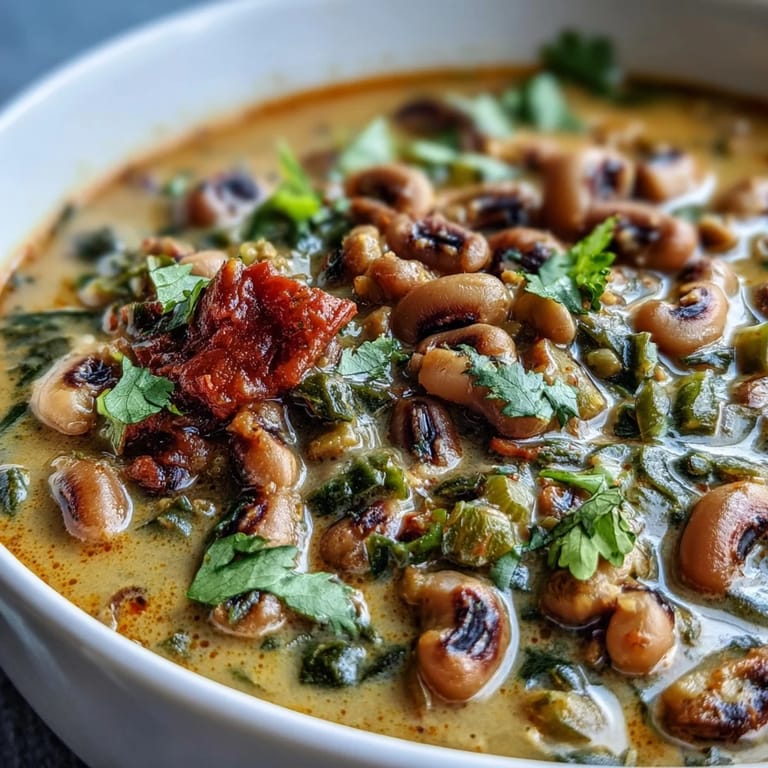
Save Make this curry when you want to feel capable in the kitchen and nourished at the table. It's the kind of dish that quietly becomes part of your regular rotation, asked for by people you care about.
Recipe FAQ
- → Can I use dried black-eyed peas instead of canned?
Yes, soak 1 cup dried black-eyed peas overnight, then cook until tender before adding to the curry. This takes longer but offers better texture control.
- → How can I make this curry thicker?
Simmer uncovered longer to reduce liquid, or mash a portion of the black-eyed peas against the side of the pot to naturally thicken the sauce.
- → What can I substitute for coconut milk?
Heavy cream creates richness, though the flavor profile will change. For a dairy-free option, try cashew cream or blended silken tofu for creaminess.
- → How long does this curry keep in the refrigerator?
Stored in an airtight container, this curry keeps well for 4-5 days. The flavors actually develop and deepen over time, making it excellent for meal prep.
- → Can I freeze this curry?
Absolutely. Freeze in portion-sized containers for up to 3 months. Thaw overnight in the refrigerator and reheat gently on the stovetop, adding a splash of water if needed.
- → Is this curry spicy?
The spice level is moderate and warming rather than hot. Adjust by reducing or omitting the chili powder and green chilies for a milder version, or increase for more heat.