 Save
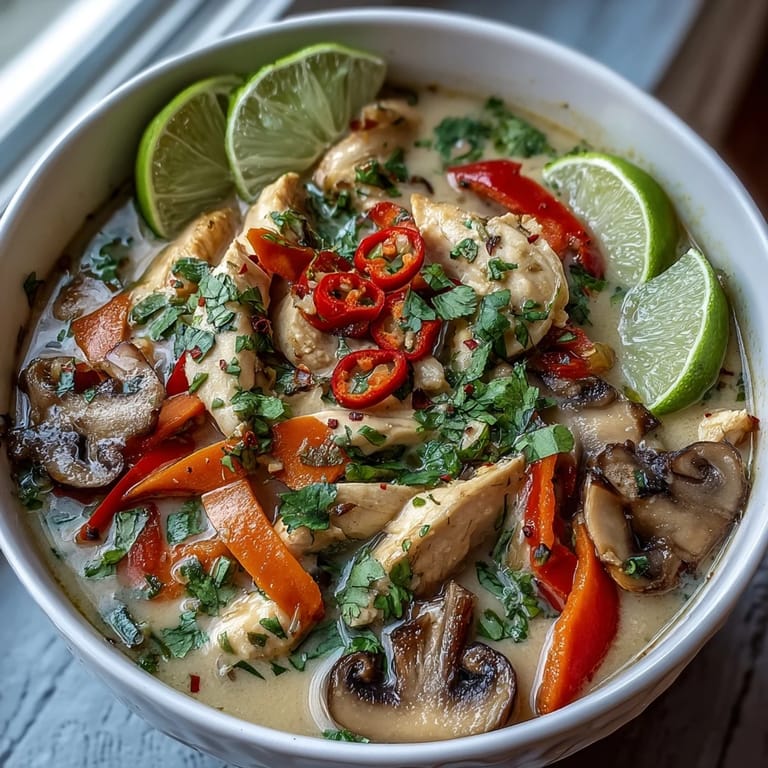
Save There's something about the smell of curry paste hitting hot oil that makes everything else fade away. I discovered this Thai coconut curry soup on a grey afternoon when I needed warmth that had nothing to do with the weather, and everything to do with that first spoonful of creamy, aromatic broth. What started as a quick dinner became the kind of meal I'd find myself craving on random Tuesdays, when the kitchen felt too quiet and the world felt too loud. The beauty of it is that it comes together in barely forty minutes, yet tastes like you've been simmering memories in a pot.
I made this for my neighbor who'd just moved in, and she came over skeptical about trying Thai food for the first time. Watching her face change with that first spoonful—the confusion, then the recognition of ginger and garlic, then pure satisfaction—reminded me why cooking for people matters. She's been requesting it ever since, and now I keep extra curry paste on hand just in case.
Ingredients
- Chicken breast or thighs: Thighs stay more tender if you're not hovering over the pot, but breast works fine if you slice it thin and don't overcook it.
- Mushrooms: Shiitake add earthiness that feels luxurious, but honestly, whatever you have in the crisper drawer works beautifully here.
- Carrots: Thin slicing means they soften right on time with everything else, no one vegetable finishing the race early.
- Red bell pepper: Adds sweetness and color, but if you're out, the soup doesn't suffer.
- Baby spinach or bok choy: The optional green at the end that makes you feel less guilty about the coconut milk, and wilts in seconds.
- Spring onions: Save these for garnish so they keep their bite and brightness.
- Fresh ginger: Grate it yourself if you can, the flavor is sharper and more alive than pre-minced.
- Garlic: Three cloves is my baseline, but I've been known to add a fourth when I'm cooking alone and need the company of alliums.
- Lemongrass: Bruise it to wake up its oils, then fish out the stalks at the end so no one bites into wood.
- Kaffir lime leaves: If you find them, grab them—they're subtle but unmistakably Thai, though not essential.
- Red curry paste: This is where the soul lives, so use a brand you'd actually eat on a spoon.
- Coconut milk: Full fat makes it richer, light makes it feel less heavy, but both work.
- Chicken broth: Good quality broth means you're halfway to excellent soup already.
- Fish sauce: Yes, it smells like low tide, but trust it—it rounds out flavors in ways nothing else can, or swap for soy sauce if you prefer.
- Brown sugar: Just a touch to balance the heat and salt, no more.
- Lime juice: Fresh squeezed, because it's the difference between good and bright.
- Cilantro and fresh chili: The final say in flavor, added at the table so everyone controls their own story.
Tired of Takeout? 🥡
Get 10 meals you can make faster than delivery arrives. Seriously.
One email. No spam. Unsubscribe anytime.
Instructions
- Build your flavor base:
- Heat oil in your pot until it shimmers, then add ginger, garlic, and lemongrass. You'll know it's right when your kitchen smells like a Thai market and you can't help but breathe deeply. Let it toast for exactly one minute, not longer or the garlic turns bitter.
- Wake up the curry paste:
- Stir in your red curry paste and let it cook another minute, watching it darken slightly and release its aromatics into the oil. This step is small but mighty—it transforms raw paste into something cohesive and complex.
- Sear the chicken:
- Add your sliced chicken and stir until every piece is coated in that gorgeous red paste. Cook for two to three minutes, just until the edges start to turn opaque but the inside is still raw—the broth will finish the job.
- Pour in the broth:
- Coconut milk first, then chicken broth, along with the kaffir lime leaves if you have them. The kitchen fills with warmth you can almost wrap around yourself.
- Add your vegetables:
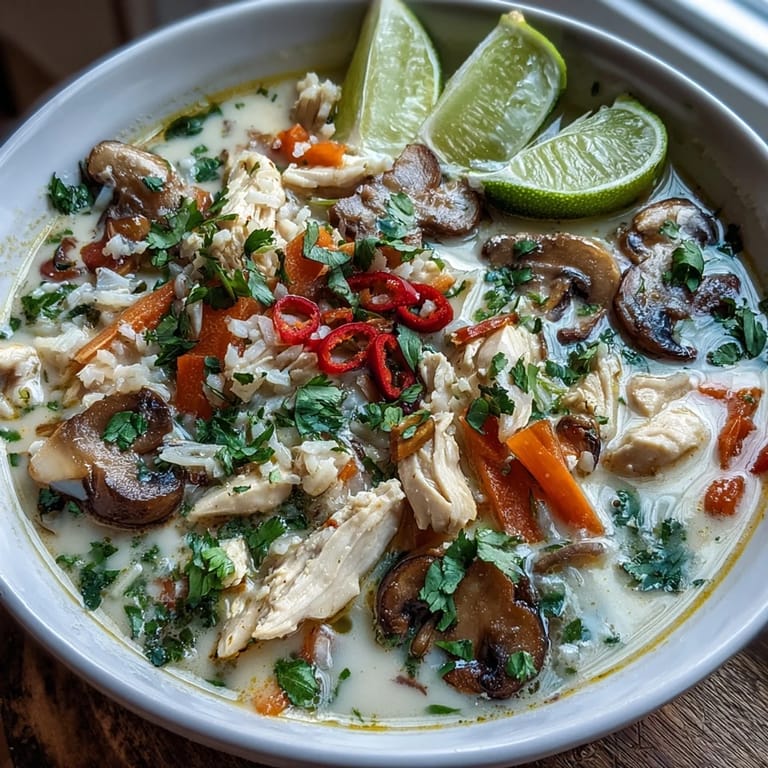
- Carrots, mushrooms, and bell pepper go in now, floating in that creamy broth like they were always meant to be there. Bring everything to a gentle simmer and let it cook for ten to twelve minutes until the chicken is cooked through and nothing is crunchy unless it should be.
- Season like you mean it:
- Fish sauce, brown sugar, and lime juice all go in together, and this is when you taste and adjust. Maybe you need more heat from another pinch of curry paste, maybe you need more lime brightness—listen to what the pot is telling you.
- Wilt your greens:
- If you're using spinach or bok choy, add it now and watch it surrender to the heat in just a minute or two. Then pull out your lemongrass and kaffir lime leaves so no one has an unpleasant surprise.
- Finish and serve:
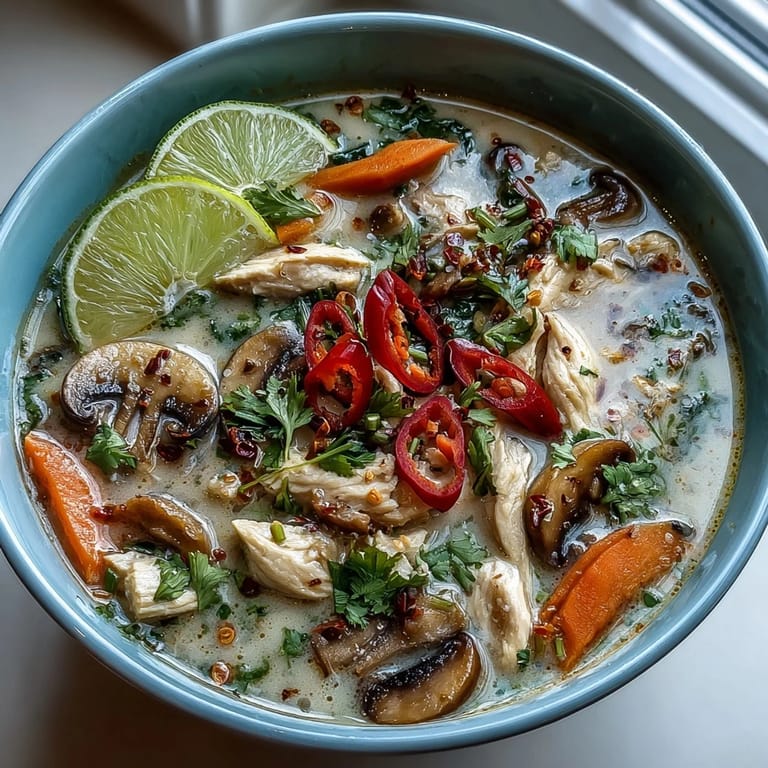
- Ladle the soup into bowls and let everyone dress their own with spring onions, cilantro, fresh chili, and a squeeze of lime. This is when it becomes personal.
 Save
Save There was a morning I made this soup for my partner before they left for a difficult day, and they came home hours later saying they kept thinking about it during a meeting. That's when I realized this soup does something beyond feeding—it settles something inside you.
When Heat Meets Comfort
The magic of this dish is that spice and creaminess live in the same bowl without fighting. The coconut milk doesn't drown the curry, and the heat doesn't overwhelm the subtle sweetness of the vegetables. It's a conversation between bold and gentle, and somehow they listen to each other. I've learned that you can always add more spice later, but you can't take it back, so I usually start conservative with the curry paste and let people adjust at the table.
Swaps That Work
Shrimp cooks faster than chicken and absorbs flavor just as eagerly, and honestly some of my best batches happened because I had shrimp instead and the soup came out in thirty minutes flat. Tofu works if you treat it gently and add it at the very end so it doesn't fall apart into the broth. Even swapping the protein, this soup tastes unmistakably like itself.
Make It Yours
This recipe is flexible because Thai cooking is about balance, not rigidity. If you're fresh out of something, the soup doesn't fall apart—it just becomes a different version of itself. Once I added roasted sweet potato because that's what I had, and it created a new favorite that I make deliberately now. The point is to taste as you go and trust your instincts about what your soup is becoming.
- Serve it over jasmine rice or rice noodles if you want something heartier and more filling.
- A crisp white wine like Riesling cuts through the richness and makes the meal feel a little lighter.
- Leftovers taste even better the next day as the flavors continue to marry together in the fridge.
 Save
Save This soup has become my answer to the question of what to make when someone needs feeding, whether it's sickness or sadness or just a Monday that won't let go. It asks very little of you but gives back generously.
Recipe FAQ
- → Can I make this soup vegetarian?
Yes. Replace chicken with firm tofu and use vegetable broth instead of chicken broth. Substitute fish sauce with soy sauce or tamari to maintain the savory depth.
- → How spicy is this soup?
The heat level depends on your red curry paste. Start with 1 tablespoon for mild-medium spice, then increase gradually. Fresh chili garnish adds extra kick for those who prefer it hotter.
- → Can I freeze this soup?
The soup freezes well for up to 3 months. Cool completely before transferring to airtight containers. Skip adding spinach until reheating to prevent mushiness.
- → What's the best way to slice the chicken?
Partially freeze the chicken for 20 minutes before slicing. This makes it firmer and easier to cut into thin, even strips that cook quickly and stay tender.
- → Can I use light coconut milk?
Yes, though the broth will be less rich and creamy. Full-fat coconut milk provides the best texture and carries the curry flavors more effectively.
- → What if I can't find kaffir lime leaves?
They're optional but add authentic citrusy aroma. Substitute with lime zest from 1-2 limes, or simply increase fresh lime juice at the end for brightness.