 Save
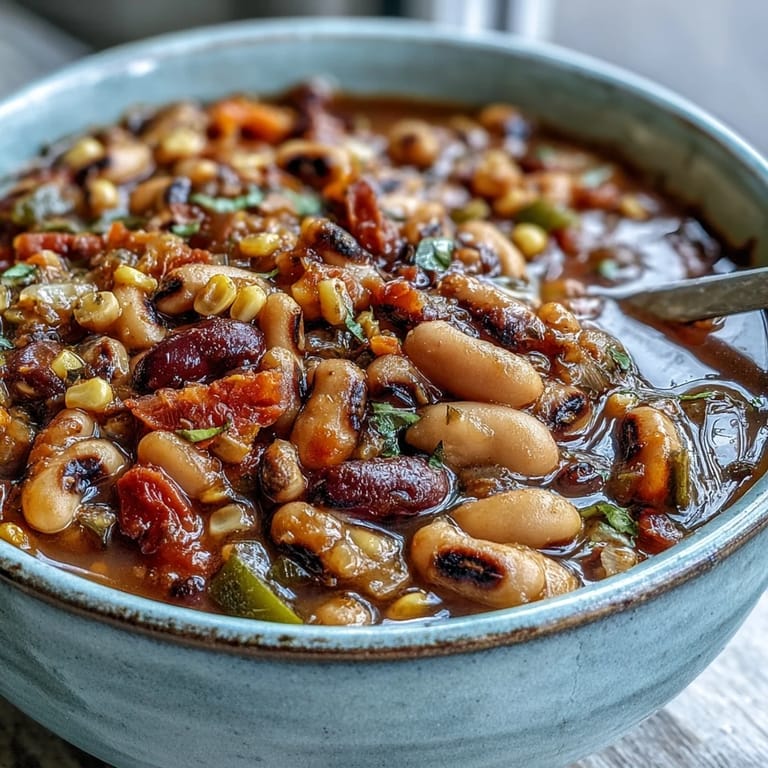
Save My neighbor brought over a pot of black-eyed pea chili on a gray November afternoon, and I watched steam rise from the bowl while she told me it was her grandmother's recipe, except vegetarian. That first spoonful changed something in me, not dramatically, but quietly—the earthiness of the peas, the way the spices didn't shout but whispered. I've been making it ever since, tweaking it slightly each time, and it's become the chili I reach for when I want something that feels both comforting and alive.
I made this for a dinner party once where someone casually mentioned they'd never had black-eyed peas before, and watching their face as they tasted it—that moment of discovering something new—made me realize how a simple pot of chili can be a small door opening into someone else's food world. The whole table went quiet except for spoons hitting bowls, which is really all the compliment you need.
Ingredients
- Black-eyed peas: Use canned if you're short on time, but if you cook them from dried, you'll notice the flavor is deeper and the texture somehow more forgiving when everything simmers together.
- Kidney beans: They add body and a slightly earthy sweetness, though I've swapped them for pinto beans when that's what I had on hand and it worked beautifully.
- Onion, garlic, bell peppers, carrot, and celery: This is your aromatic base—don't skip the sauté step, because that's where the magic of flavor actually begins.
- Diced tomatoes: Canned tomatoes are perfect here; they're picked at peak ripeness and break down into the broth naturally.
- Corn kernels: Fresh corn in season is wonderful, but frozen corn is honestly just as good and sometimes better because it's flash-frozen at its peak.
- Vegetable broth: The quality matters more than you'd think; a good broth makes the whole pot taste more intentional.
- Tomato paste: This concentrates flavor, so don't water it down—let it sit in the hot pan for a minute and brown slightly.
- Olive oil: Use something you wouldn't be embarrassed to drizzle on bread.
- Ground cumin: Warm and slightly nutty; it's the heart of this chili's personality.
- Chili powder: Not the spice blend, but actual ground chili peppers—the difference is noticeable.
- Smoked paprika: This adds a subtle depth that makes people ask what you did differently.
- Dried oregano: Just enough to remind you this has roots in Southwestern cooking.
- Cayenne pepper: Leave this out if heat isn't your thing, or add more if you like to feel it.
- Salt and black pepper: Always taste as you go; seasoning is the last adjustment that makes everything sing.
Tired of Takeout? 🥡
Get 10 meals you can make faster than delivery arrives. Seriously.
One email. No spam. Unsubscribe anytime.
Instructions
- Start with the soffritto:
- Heat your olive oil in a large pot over medium heat, then add the onion, garlic, carrot, celery, and both bell peppers. You're listening for a gentle sizzle and watching for the onion to turn translucent—this takes about five to seven minutes, and that patience is worth it.
- Bloom your spices:
- Once the vegetables are soft, add the cumin, chili powder, smoked paprika, oregano, and cayenne. Stir constantly for just one minute; you want the heat to wake up the spices so their fragrance fills your kitchen, not scorch them.
- Coax out the tomato paste:
- Push the tomato paste into the vegetables and let it sit for about a minute, stirring occasionally, so it darkens slightly and loses any raw edge.
- Build the chili:
- Pour in your diced tomatoes with their juice, the vegetable broth, black-eyed peas, kidney beans, and corn. Stir everything together, feeling the pot slowly come alive as you bring it to a gentle boil.
- Let it mellow:
- Reduce the heat to low, cover the pot, and let it simmer for twenty-five to thirty minutes, stirring occasionally. The longer it sits, the more the spices marry with the beans and vegetables, so don't rush this part.
- Taste and adjust:
- Before serving, sample a spoonful and add salt and black pepper as needed—this is where you make it yours.
- Serve with intention:
- Ladle it into bowls and let people add their own toppings, because a good chili is also about choice and personalization.
 Save
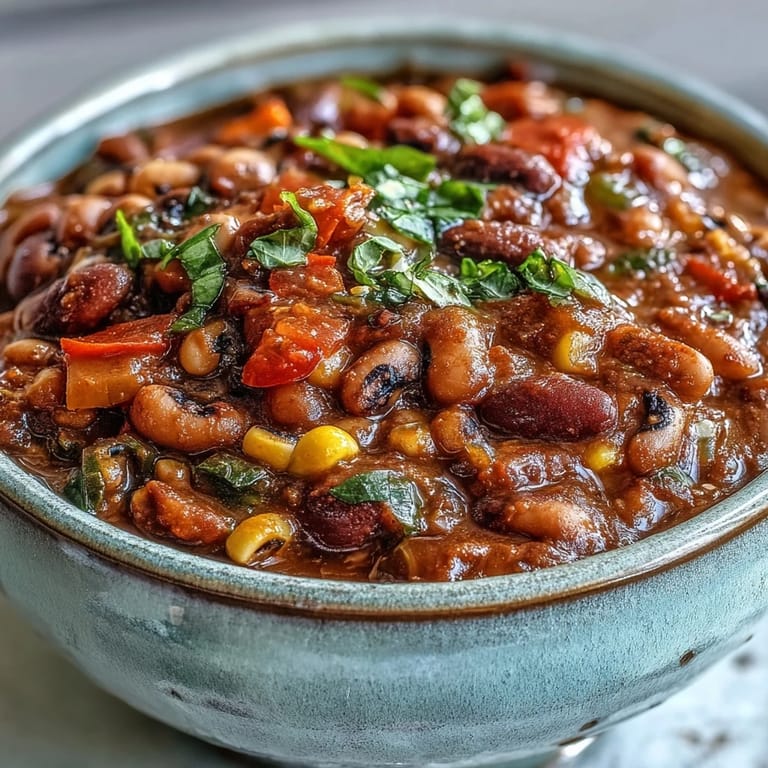
Save There's a moment, usually around minute twenty of simmering, when the whole kitchen smells like comfort and possibility at once—that's when you know you're in the right place. This chili has a way of turning an ordinary evening into something worth remembering.
Why This Chili Stands Apart
Most chilis lean on beef or chicken, which is fine, but black-eyed peas bring something different to the table—they're creamy without being heavy, earthy without being dense. I've noticed that people who think they don't eat beans often come back for thirds of this one, which tells me the flavor is doing the work, not any pretense.
Swaps and Flexibility
This recipe is forgiving in the way the best home cooking is. I've stirred in diced sweet potato for extra sweetness, added zucchini for summer lightness, and once threw in some diced butternut squash because it was what I had. The beans stay constant, the spices stay constant, but almost everything else can shift depending on your mood and your pantry.
Building Your Chili Bowl
The toppings matter almost as much as the chili itself—they're not just garnish but a way of finishing the dish exactly how you want it. Some people love the coolness of sour cream against the warm spices; others reach for cilantro to brighten everything up. I've learned to have a few options on the table so everyone gets to build their own experience.
- A spoonful of sour cream or plant-based yogurt curled on top cools the heat and adds richness.
- Fresh cilantro scattered across the surface adds brightness and a hint of freshness that balances the warmth.
- Shredded cheese, sliced jalapeños, and crispy tortilla chips all have their moment depending on what you're hungry for.
 Save
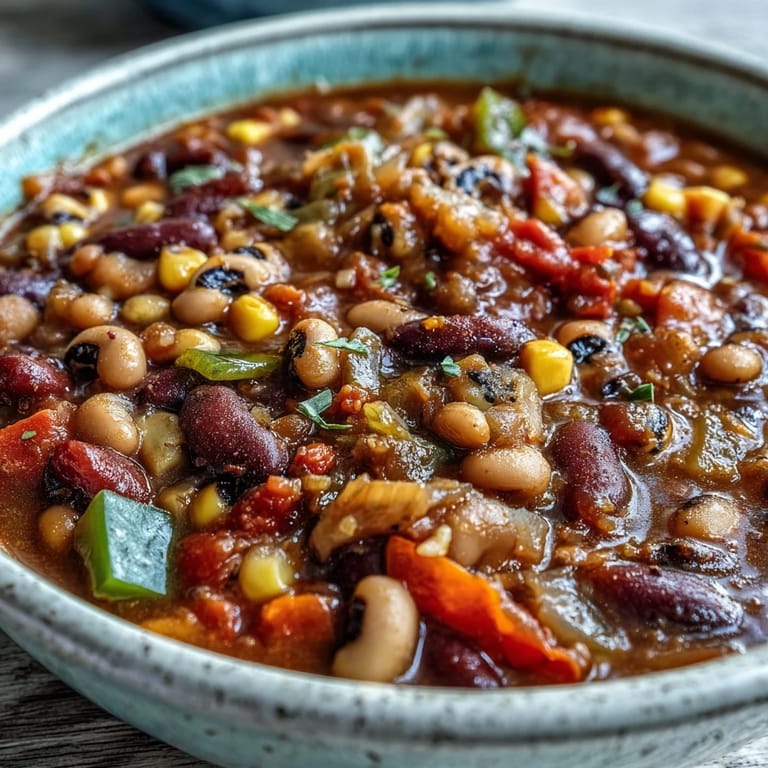
Save This is the kind of chili that gets better as it cools slightly, so don't serve it straight off the stove—let it settle for a few minutes first. It's simple, honest food that tastes like care, which is really all cooking is.
Recipe FAQ
- → What gives black-eyed pea chili its unique flavor?
The earthy, nutty flavor of black-eyed peas pairs beautifully with smoky paprika, aromatic cumin, and chili powder. The combination of legumes creates a creamier texture than traditional bean-based varieties, while the vegetable medley adds natural sweetness and depth.
- → Can I make this chili in advance?
Absolutely. In fact, the flavors develop and deepen when made ahead. Store in an airtight container in the refrigerator for up to 4 days, or freeze for up to 3 months. Reheat gently on the stovetop, adding a splash of broth if needed.
- → What toppings work best with this chili?
Fresh cilantro adds brightness, while creamy toppings like sour cream or plant-based yogurt balance the spices. Sliced jalapeños provide extra heat, shredded cheese adds richness, and a side of cornbread or tortilla chips completes the meal.
- → Is this chili spicy?
The base chili has mild to medium heat from chili powder and spices. The cayenne pepper is optional, so you can easily adjust the spiciness to your preference. Start with a small amount and add more if desired after tasting.
- → Can I use dried black-eyed peas instead of canned?
Yes, soak dried peas overnight and cook until tender before adding to the chili. One cup of dried peas yields about 2-3 cups cooked. This method takes longer but allows for more control over texture and sodium content.
- → What can I serve with black-eyed pea chili?
Cornbread is a classic pairing, but rice, quinoa, or crusty bread also work well. For a lighter option, serve with a simple green salad or roasted vegetables. Tortilla chips add crunch and make for easy, casual eating.