 Save
Save My neighbor brought samosas to a potluck last summer, and I spent the entire evening asking her how she made them so impossibly crispy without deep frying. She laughed and told me about her air fryer discovery, and by that night I was already planning my own batch. The smell of cumin and ginger hitting hot oil, the sound of that first bite—I was hooked. Now I make these constantly, and they've become my answer to every "what should I bring" text from friends.
I made these for my sister's book club last spring, and watching eight women reach for a third samosa while debating their mystery novel told me everything I needed to know. One woman even asked for the recipe, then admitted she'd probably just keep calling me to bring them instead. That's when I realized these weren't just appetizers—they were an excuse for people to slow down and enjoy something together.
Ingredients
- All-purpose flour: The foundation of your dough—using good quality flour makes a noticeable difference in how silky and easy to work with your dough becomes.
- Vegetable oil: This goes into both the dough and the filling, creating tender layers and carrying all those warming spices.
- Potatoes: The workhorse of the filling—waxy varieties hold their shape better than starchy ones, so choose accordingly if you have options.
- Frozen peas and carrot: These add sweetness and color; frozen actually works better here than fresh because it's already been blanched.
- Cumin seeds: Toast these in hot oil for just a moment to release their earthy, almost nutty aroma before adding other ingredients.
- Garam masala, coriander, turmeric, and chili powder: This quartet of spices is what makes the filling taste authentically Indian—don't skip or substitute casually.
- Fresh mint and cilantro: For the chutney, these herbs must be fresh and vibrant; wilted leaves will make a dull sauce.
- Green chili: Adjust based on your heat tolerance—this isn't about proving anything, it's about enjoying your food.
Tired of Takeout? 🥡
Get 10 meals you can make faster than delivery arrives. Seriously.
One email. No spam. Unsubscribe anytime.
Instructions
- Building the foundation with dough:
- Combine flour and salt in a bowl, then work in oil with your fingertips until it looks like breadcrumbs. Gradually add water while kneading to create dough that's smooth but slightly firmer than bread dough. Let it rest covered for 20 minutes—this relaxation is what makes the dough easy to roll later.
- Creating the filling with intention:
- Boil potatoes, peas, and carrot until just tender, then drain completely and let cool slightly. Heat oil in a pan, add cumin seeds and listen for them to crackle, then add onion, ginger, and green chili, cooking until soft and fragrant. Stir in the spice blend, add cooked vegetables, cook for just a couple minutes, then stir in cilantro and set aside to cool completely—this prevents soggy samosas later.
- Shaping with patience:
- Divide dough into six balls and roll each into a thin oval shape. Cut each oval in half, then shape each piece into a cone by bringing the straight edge corners together and wetting to seal. Fill with about 2 tablespoons of cooled filling and pinch the open end shut, making sure there are no gaps where filling could escape during cooking.
- Air frying to golden perfection:
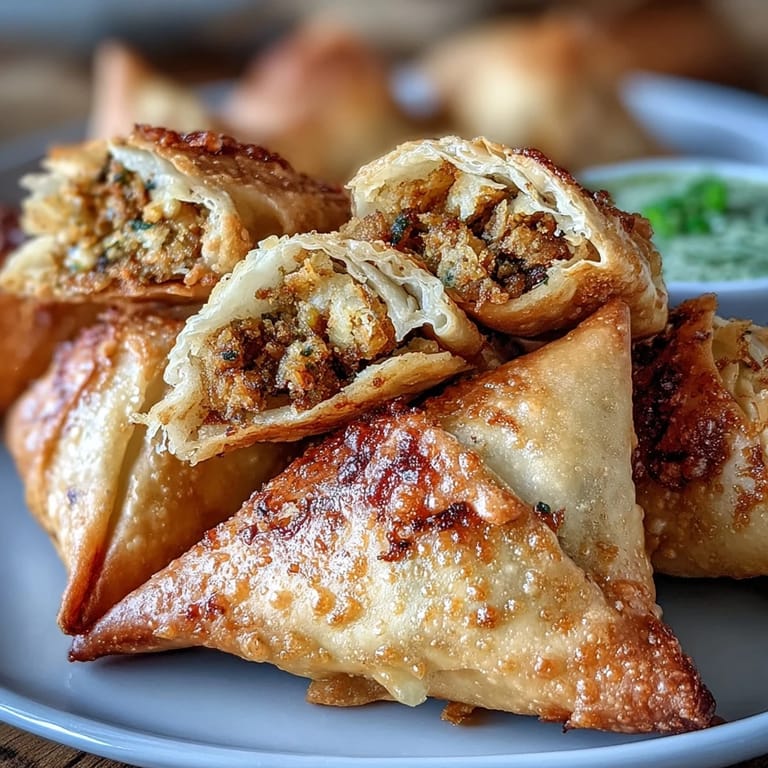
- Preheat your air fryer to 375°F, then lightly brush each samosa with oil on both sides. Arrange them in a single layer without crowding—this is crucial for even cooking. Air fry for 15 to 18 minutes, turning halfway through, until they're deep golden and the exterior sounds crispy when you tap it.
- Blending the chutney:
- Combine mint, cilantro, green chili, ginger, lemon juice, sugar, and salt in a blender with just enough water to get things moving. Blend until completely smooth, then taste and adjust—more salt if it needs depth, more lemon if it needs brightness. A good chutney should taste fresh and alive on your tongue.
 Save
Save There's a moment when you bite into your first homemade samosa and realize you've just made something people actually crave. That's when these stop being just a recipe and start being part of your kitchen identity.
The Air Fryer Advantage
Switching from deep frying to air frying changed not just how I make samosas, but how often I make them. Without the oil splatter and smell that lingers for hours, I'm actually willing to make them on a Tuesday night. The texture is honestly just as good—sometimes even better because there's no risk of dark brown outside with raw inside. My air fryer basket has seen these samosas more than anything else, and I'm completely at peace with that.
Making It Your Own
After my third batch, I started experimenting with the filling, adding finely diced bell pepper for more sweetness, or a tiny bit of amchur powder for subtle sourness. The base formula works, but once you understand the balance of soft vegetables and warm spices, you can play. Some people add cashews for luxury, others add paneer for richness—I've even seen someone add corn kernels for their daughter who loved the sweetness. The samosa welcomes creativity as long as you keep the filling relatively dry.
Storage and Serving
Samosas taste best served within an hour of cooking while they're still at that perfect crackling stage, but they're also forgiving if you need to make them ahead. Reheat in the air fryer at 325°F for about five minutes to bring back the crispness without overcooking. I've learned the hard way that storing them at room temperature means they stay crunchy longer than storing them in the fridge, where the humidity gradually softens them.
- Make the dough and filling a day ahead to streamline your cooking day.
- You can freeze unbaked samosas and air fry them straight from frozen, just add a few extra minutes.
- Mint chutney keeps for three days in the fridge but tastes best when fresh.
 Save
Save These samosas became my signature dish because they taste like care tastes. Serve them hot with that bright mint chutney, and watch people's faces change.
Recipe FAQ
- → How can I make the samosas crispier?
Brushing the samosas lightly with oil before air frying and ensuring they are spaced evenly helps achieve an extra crispy texture.
- → Can I prepare the dough in advance?
Yes, the dough can be prepared ahead and refrigerated for up to 24 hours, wrapped tightly to prevent drying out.
- → What spices are used in the filling?
The filling includes cumin seeds, ginger, coriander, garam masala, turmeric, chili powder, and fresh cilantro for a balanced spice profile.
- → How is the mint chutney made fresh and vibrant?
Blending fresh mint, cilantro, green chili, lemon juice, ginger, and a touch of sugar with salt and water creates a bright, refreshing chutney.
- → Can I substitute ingredients for dietary preferences?
Gluten-free flours can replace all-purpose flour for a gluten-free version, and all ingredients here are naturally nut-free and vegetarian.