 Save
Save The snap of cucumber against my cutting board always wakes me up on slow spring mornings. I hadn’t set out to make poke until a friend challenged me to rethink what I call lunch, and suddenly I was tasting bright ponzu and cool, glossy tuna at noon on a Tuesday. It's a meal that’s assembling art—each ingredient vivid, and every bowl feeling like a different landscape. The fresh, clean scent of the marinated fish mixing with sharp radish told me before I even sat down that this would become a midweek favorite. Chilled chopsticks and wide smiles soon followed.
The last time I made this poke bowl was on a sunny day when my sister came over hungry and unannounced; we built our bowls side by side, each piling on more radishes than the other. The laughs over who could make the prettiest topping arrangement competed with the sound of rice scooping into bowls. Sharing out thick slices of avocado, we argued about the right amount of ginger until lunchtime vanished and there was nothing left but nori crumbs. I still think her bowl looked better—but mine had more pickled ginger.
Ingredients
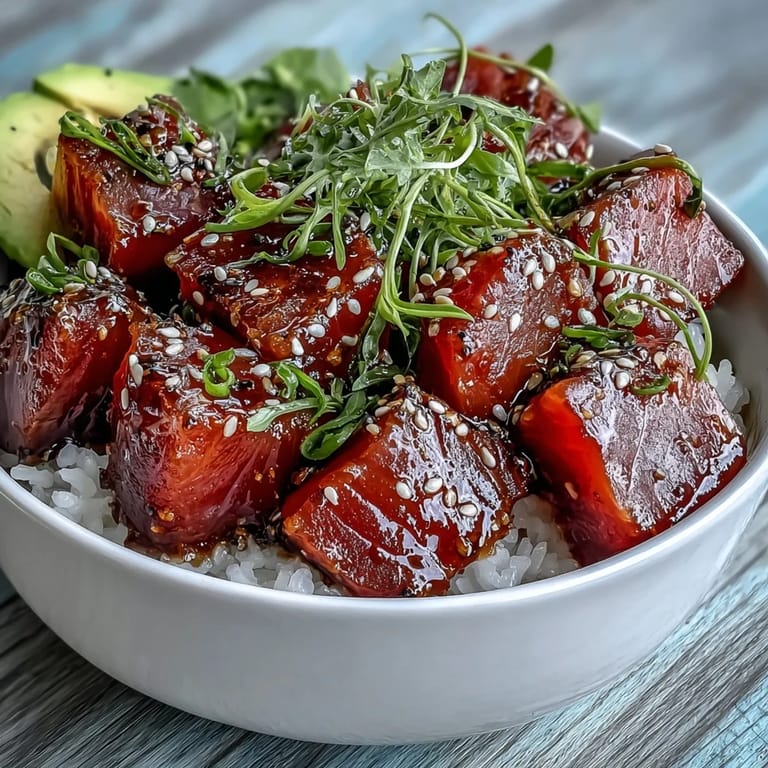
- Sushi-grade tuna: The star—look for deep red, almost translucent cuts, and dice it just before marinating for unbeatable texture.
- Ponzu sauce: Its citrusy tang gives the poke a refreshing lift; if you like it zingier, add a splash more than called for.
- Sesame oil: Toasted is a must, just a drizzle perfumes the fish beautifully—don’t substitute regular.
- Soy sauce: Adds umami depth to balance the marinade; choose low sodium if you prefer.
- Rice vinegar: Use for both fish and rice, this subtle acidity ties everything together without overpowering.
- Toasted sesame seeds: For tiny bursts of flavor and a bit of crunch, toast them fresh if possible.
- Cucumber: Thin slices not only look elegant but stay deliciously crisp.
- Radishes: Their peppery bite adds needed contrast—you’ll miss them if you leave them out.
- Avocado: Creamy and cooling, slice just before serving to avoid browning.
- Carrot: Julienne into thin matchsticks for sweet crunch; I love using rainbow carrots for color.
- Edamame: Shell before adding, and don’t skip—these give the bowl extra bite and protein.
- Spring onions: Scatter finely for a pop of green and mild sharpness.
- Pickled ginger: If you’re a fan, it brings a delicious tingle to every bite; optional but beloved in my house.
- Sushi rice: Cook until sticky but not mushy—cooling it properly is essential for bowl structure.
- Rice vinegar (for rice): Adds brightness to the base and makes plain rice feel special.
- Salt: Just a pinch elevates the rice without making it salty.
- Nori sheet: Slice thin for dramatic garnish and a whiff of the ocean.
- Extra sesame seeds: Sprinkle with abandon—they add aroma and a hint of nuttiness.
- Microgreens: Totally optional, but I add them when I want the bowls to feel fancy or for a pop of color.
Tired of Takeout? 🥡
Get 10 meals you can make faster than delivery arrives. Seriously.
One email. No spam. Unsubscribe anytime.
Instructions
- Marinate the tuna:
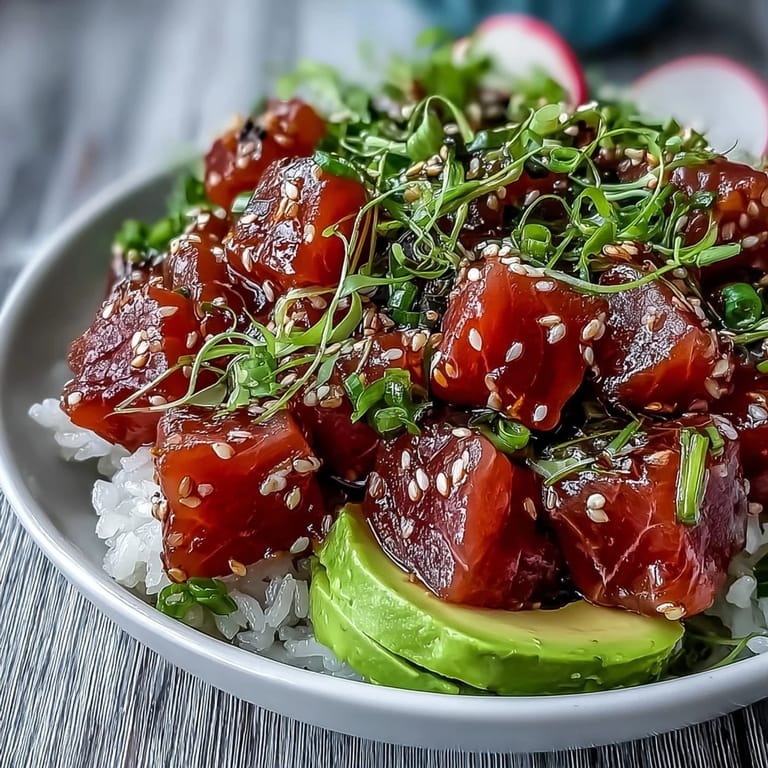
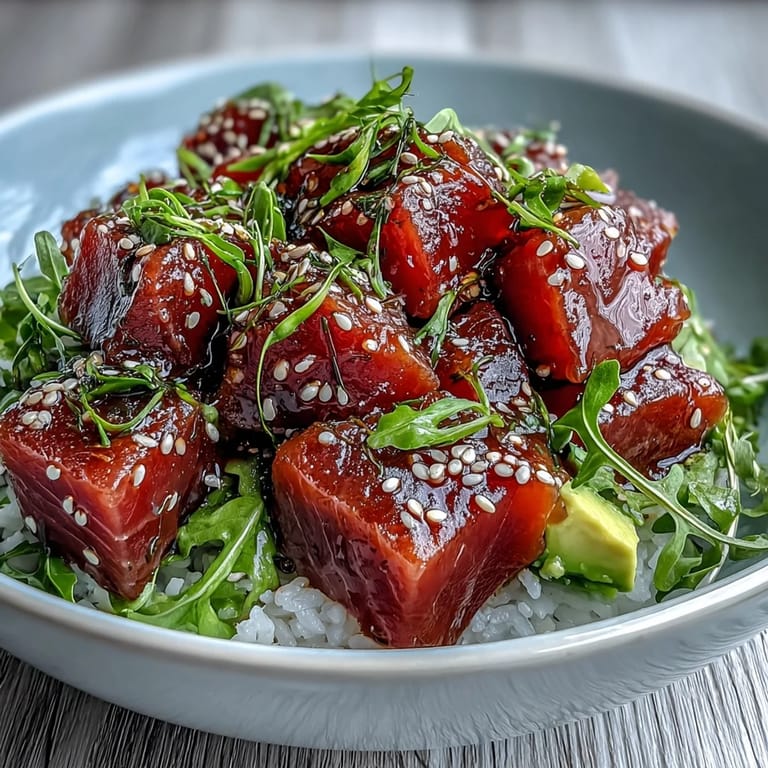
- Dice the tuna into small cubes, then toss gently in a bowl with ponzu, sesame oil, soy sauce, rice vinegar, and sesame seeds. Cover and chill for about 10 minutes so every piece soaks up the flavors.
- Season the rice:
- While the fish chills, fluff your cooled sushi rice and gently mix in rice vinegar and a pinch of salt—use a light hand so you keep the grains whole and glossy.
- Prep your toppings:
- Slice cucumber and radishes wafer-thin, then fan out your avocado and julienne the carrot; set aside spring onions, edamame, and pickled ginger if you’re using them.
- Assemble the bowls:
- Scoop seasoned rice into two deep bowls, shaping a soft mound in each—don’t pack it down or it’ll get clumpy.
- Add tuna and veggies:
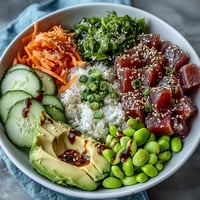
- Pile the marinated tuna in the center, then scatter your veggies and toppings in glorious little clusters all around; think painter’s palette, and play with patterns if you feel bold.
- Garnish:
- Lace over the nori strips, a good shake of sesame seeds, and microgreens if you want them to really shine.
- Serve right away:
- Tuna is best fresh—grab your chopsticks and dig in as soon as you garnish.
 Save
Save  Save
Save Not long ago, my partner interrupted me mid-garnish and snapped a photo, and now that messy masterpiece is still their phone background. It’s funny how a homemade poke bowl has become our way of making weekends feel just a bit special, even when the calendar says otherwise.
How to Make It Your Own
Swapping out proteins gives you endless variations—try salmon if you love richness, or cubes of chilled tofu for a lighter, plant-based version. Mixing up the veggies is half the fun: crunchy bell peppers, snap peas, or even thin mango slices can bring something unexpected to the bowl.
Ways to Dial Up the Flavor
If you like a little heat, add a squeeze of sriracha or drizzle spicy mayo across the top just before serving. Finishing with citrus zest—lime or yuzu—has become my not-so-secret move for extra zing. Ginger-miso dressing on the side is always a hit at dinner parties when one bowl just isn’t enough.
What I Wish I Knew Sooner
Sourcing truly fresh, sushi-grade tuna makes all the difference, and don’t be shy about asking fishmongers when it came in. Using a very sharp knife avoids tearing the meat and leaves each cube perfectly clean—there’s real satisfaction in a beautiful dice.
- If prepping ahead, keep rice and toppings separate until serving.
- Don’t skip the quick chill for both fish and rice.
- Add nori and microgreens just before eating so they stay crisp.
 Save
Save 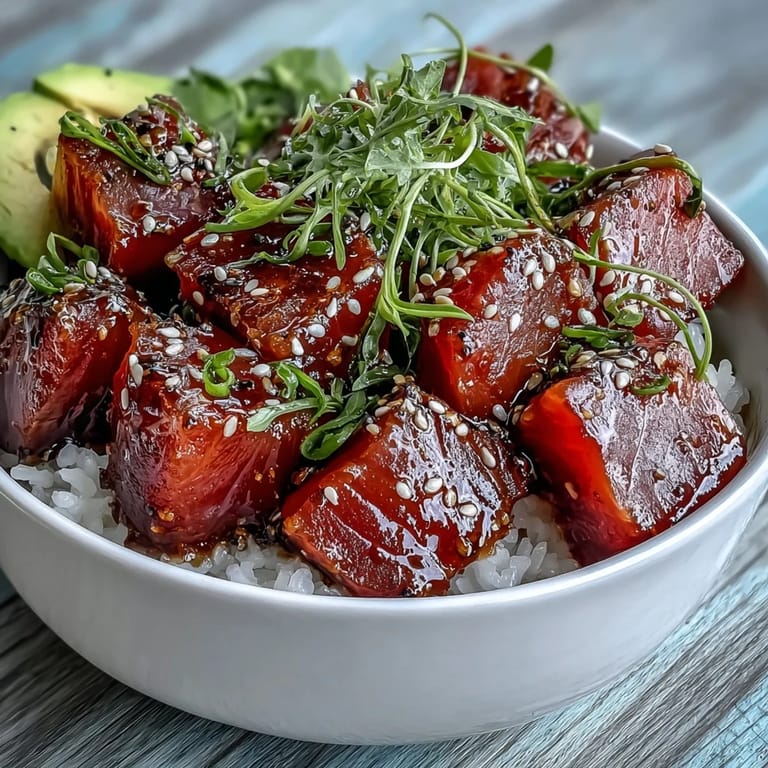 Save
Save Spring poke bowls bring a rush of freshness and color to any table. Every time I build one, I’m reminded that even simple meals can feel like a small celebration just for you.
Recipe FAQ
- → How do I pick tuna for best flavor and safety?
Choose sushi‑grade or sashimi‑grade tuna from a trusted fishmonger. Look for bright color, firm texture and a clean, ocean smell. Keep it chilled and use within a day of purchase for optimal freshness.
- → How long should I marinate the tuna?
A short 10–15 minute soak in ponzu, sesame oil and rice vinegar is enough to infuse flavor without breaking down the fish. Prolonged marinating can start to cure the tuna and change its texture.
- → Can I swap the tuna for another protein?
Yes—salmon is a natural alternative, and firm tofu works for a vegetarian option. Adjust marinating time for texture: tofu benefits from a longer soak, while salmon mirrors tuna timing.
- → Any tips for perfect sushi rice?
Rinse rice until the water runs clear, cook to just tender, then fold in a little rice vinegar and a pinch of salt while it’s still warm. Cool slightly before assembling to keep grains distinct.
- → How should leftovers be stored and for how long?
Store components separately in airtight containers in the fridge. Marinated tuna is best eaten within 24 hours; keep rice and vegetables chilled and reassemble just before eating to preserve texture.
- → What garnishes enhance the bowl’s flavor?
Nori strips, extra toasted sesame seeds, microgreens and a drizzle of additional ponzu or spicy mayo add aroma, crunch and a balanced finish. Add pickled ginger for a bright palate cleanser.