 Save
Save The first time the sharp tang of kimchi mingled with the aroma of sizzling rice in my kitchen, it was a total improvisation born from an almost-empty fridge and a craving I couldn’t define. There’s a particular thrill in tossing cabbage leaves into a hot pan and hearing them snap, making fried rice feel more alive than usual. Whenever I open a jar of kimchi, the funky, spicy scent seems to promise a meal that will wake up my taste buds no matter how dull the day. Sometimes it’s less about tradition and more about what’s calling from the crisper drawer, which is exactly how this favorite came together. Kimchi cabbage fried rice transforms a couple of odds and ends into something bright and deeply satisfying in just minutes.
I once made a double batch for a small study group, thinking it’d just be fuel for finals, but we ended up debating the best ratio of kimchi to rice over chopsticks and laughter. The memory of our mismatched bowls—some topped haphazardly with eggs, others with more green onions than rice—still makes me smile. This dish has a way of turning even a tiny kitchen into a backdrop for connection, where the only thing sharper than the kimchi is the conversation. That one night, it somehow felt like I’d made enough to feed a crowd, even though my ingredients had seemed laughably meager. The spontaneous feel made it extra special.
Ingredients
- Napa cabbage: Its sweet crunch and tender leaves anchor the texture—I slice it thin so it softens but never disappears.
- Kimchi: The tangy, spicy backbone of the dish; keeping a bit of juice adds depth and keeps the rice from drying out.
- Green onions: These give each bite a pop of freshness and color—don’t stint on the garnish if you love a bright finish.
- Carrot (optional): When I have it, the carrot’s gentle sweetness balances the spice; julienne so it cooks quickly.
- Cooked rice: Day-old rice is best—the grains stay fluffy and separate, soaking up every drop of flavor.
- Soy sauce: Brings saltiness and a subtle umami note; I prefer a splash rather than a pour for balance.
- Gochujang (optional): When craving extra heat, a spoonful transforms everything; start with a little and mind the spice level.
- Toasted sesame oil: Even a teaspoon is enough for nutty aroma—add it off heat for the best flavor.
- Sugar: Just a whisper offsets the kimchi’s sour bite; I use less than a teaspoon.
- Black pepper: A familiar warmth beneath the chili heat—freshly ground if possible.
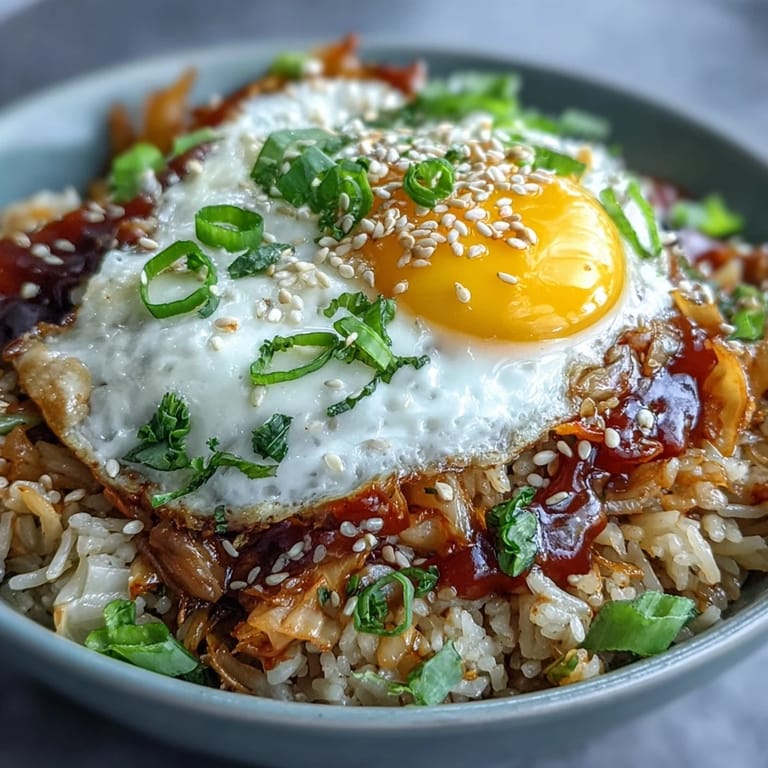
- Eggs: Frying them separately ensures runny yolks to mix through the rice—there’s nothing like piercing that golden center.
- Neutral oil: Prevents sticking and lets the other flavors shine; don’t use anything too strong.
- Sesame seeds: That final sprinkle makes everything look inviting and adds gentle crunch.
Tired of Takeout? 🥡
Get 10 meals you can make faster than delivery arrives. Seriously.
One email. No spam. Unsubscribe anytime.
Instructions
- Chop and ready everything:
- Grab your sharpest knife and prep all your veggies, letting the colors brighten up the cutting board. Have chilled rice nearby—it’s much easier to handle when cold.
- Sizzle the veggies:
- Pour half the oil into a hot skillet or wok and tumble in the sliced cabbage and carrot. Stir just until the cabbage wilts and the carrot is barely tender, the kitchen filling with a toasty aroma.
- Bring in the kimchi magic:
- Add chopped kimchi and green onions, stirring as the spicy funk and oniony scent rise together. Let it go until everything is glossy and lively in the pan.
- Add rice and break up clumps:
- Scatter in the cold rice, using your spatula to gently press apart chunks. Toss it with the vegetables, making sure each grain starts to color and picks up the chile from the kimchi.
- Season it right:
- Drizzle in soy sauce, gochujang, sesame oil, sugar, and black pepper. Stir-fry until the rice is piping hot and evenly glowing red-orange, then taste to see if it’s singing yet.
- Final seasoning and adjustment:
- Take a quick forkful—add a pinch more salt, a dash more sugar, or extra gochujang if you want it bolder. Set the pan aside while you fry the eggs.
- Fry the eggs:
- In a separate nonstick pan, heat the rest of your oil and carefully crack the eggs in. Cook until the whites are set but the yolks tremble when touched with a spatula.
- Assemble and garnish:
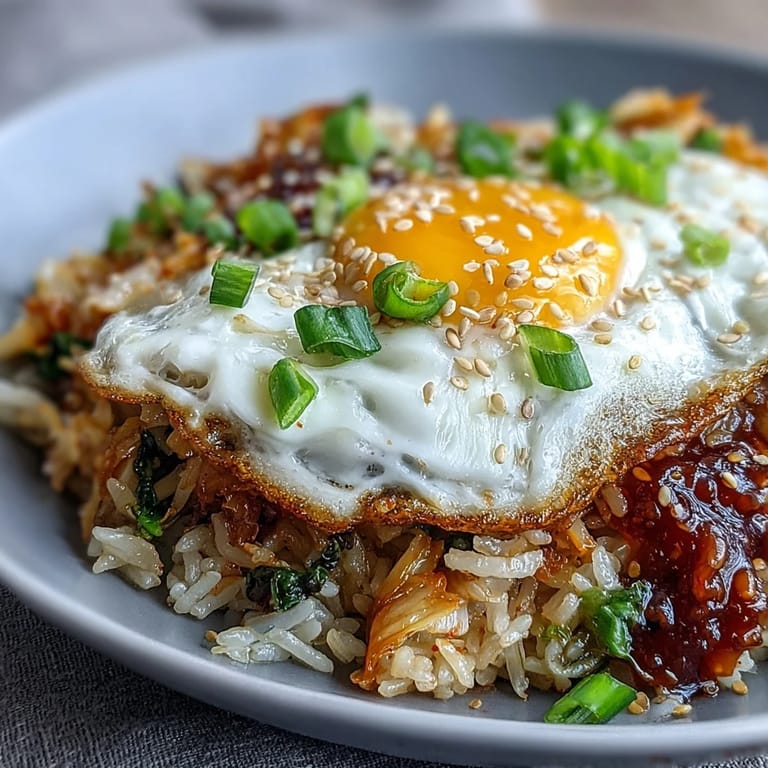
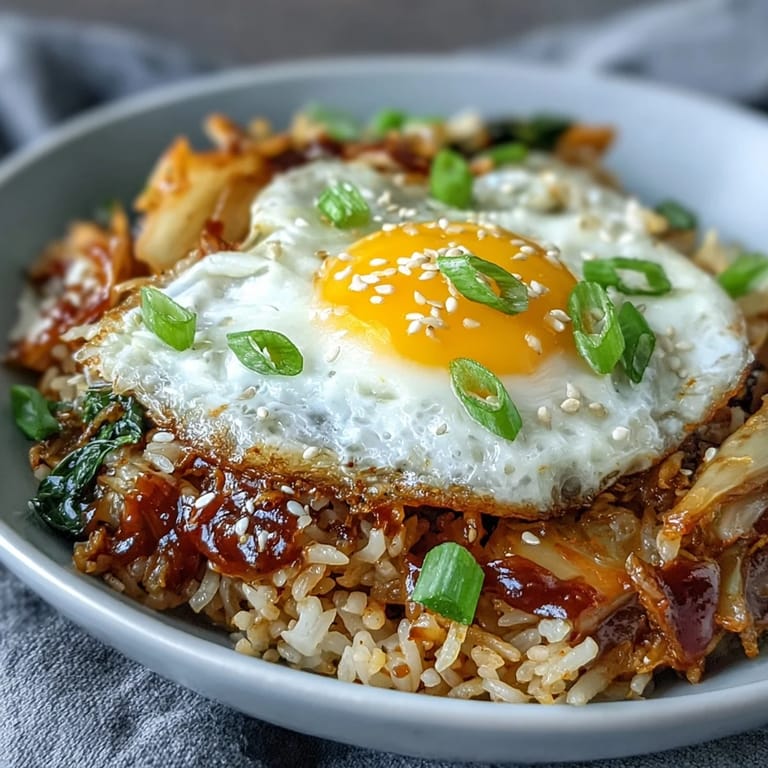
- Spoon the rice into bowls, crown each with a sunny egg, then scatter sesame seeds and extra green onions over the top. Serve right away while everything’s hot and tempting.
 Save
Save  Save
Save The night this fried rice became more than just a means to use up leftovers, I caught my roommate sneaking seconds straight from the pan. It was the sound of chopsticks clinking and the simple grin she threw over her shoulder that made me realize how a dish like this can turn a Wednesday night into a small celebration.
Switching Up the Protein
If I’m out of eggs or craving more substance, diced tofu or crisped tempeh make a rich, satisfying substitute. Occasionally, I’ve shredded in some leftover roast chicken—it’s all about what’s at hand and what tastes good together.
How to Use Up Leftover Kimchi
Half a jar of kimchi can languish in the fridge far too long, but this dish ensures every last spicy scrap gets used. I even save the brine to splash into the pan, watching it bubble and sizzle into the vegetables for a hit of tang.
Last-Minute Serving Tricks
If I’m feeling fancy, I’ll serve the rice in wide bowls and let everyone top theirs just how they like it. Toasted nori strips, a dab of extra gochujang, or a handful of pickled radish are all fair game—and it’s fun to build your own bowl at the table.
- Keep an eye on the eggs so the yolk stays runny.
- Give the sesame seeds a quick toast if you want the aroma to pop.
- Don’t be afraid to snip fresh herbs (like cilantro) over the top just before eating.
 Save
Save 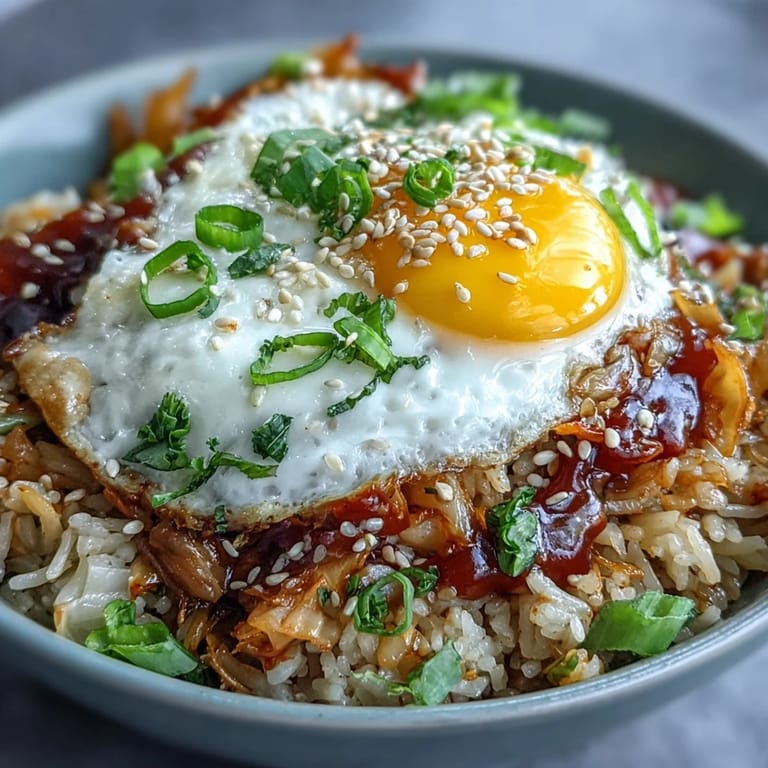 Save
Save Whether this makes a cozy solo lunch or a crowd-pleasing dinner, it’s proof that a simple, spicy fry-up can bring surprising joy to the table. Don’t be surprised if it becomes a weeknight classic in your kitchen, too.
Recipe FAQ
- → What type of rice works best?
Day-old jasmine or short-grain rice is ideal. Chilled rice separates more easily and fries without becoming mushy, producing better texture and crisp bits.
- → How can I control the spice level?
Adjust gochujang or omit it entirely and rely on the kimchi juice for milder heat. Add chili paste gradually and taste as you go to reach the desired kick.
- → How do I keep the cabbage crisp?
Stir-fry the cabbage over medium-high heat just until slightly softened—about 1–2 minutes—so it retains bite. Add it toward the start and avoid overcooking.
- → Tips for a perfect sunny-side egg?
Use a nonstick pan with moderate heat and a little oil. Cook until whites are set but yolks remain runny; covering the pan briefly can help set whites without overcooking yolks.
- → How should leftovers be stored and reheated?
Cool quickly, store in an airtight container in the fridge for up to 2–3 days. Reheat in a skillet with a splash of oil or water over medium heat to refresh texture; microwave if needed but stir halfway through.
- → How to make it vegetarian or vegan?
Use vegetarian kimchi (without fish sauce or shrimp paste) and swap the fried egg for sautéed mushrooms, crumbled tofu, or seasoned tempeh to keep similar texture and protein.