 Save
Save The first time I tasted mango sticky rice wasn't in Thailand, but in a tiny dessert shop tucked between a laundry and a phone repair place in my neighborhood. The owner, a woman named Noi, handed me a small white plate and said nothing, just smiled. One bite and I understood why she didn't need to explain anything. Years later, I finally asked her to teach me, and she laughed because the secret, she said, was patience with the rice and respect for the mango. Now when I make it, I think of her kitchen and that particular way steam rises from a bamboo basket.
I made this for a dinner party once when my friend Marcus brought his mom visiting from out of town, and she took one spoonful and went completely quiet. Not in a bad way—in that way where you know someone is genuinely transported back to a memory. She told us later it reminded her of a dessert her childhood neighbor used to make, and somehow that detail made the whole meal feel less like showing off and more like sharing something real.
Ingredients
- Glutinous (sticky) rice, 1 cup: This is non-negotiable—regular rice won't give you that signature creamy, almost custard-like texture. Look for it labeled explicitly as sticky rice or sweet rice, usually in Asian grocery stores. Soaking it overnight sounds like extra work, but it actually cuts down steaming time and ensures even cooking.
- Coconut milk (full-fat), 1 cup for sauce plus 1/3 cup for topping: Full-fat is the only way here; light versions will leave your rice tasting thin and sad. Shake the can before opening because the cream separates, and you want that richness distributed through your sauce.
- Granulated sugar, 4 tbsp for sauce plus 1 tbsp for topping: The sweetness balances the coconut's slight bitterness and lets the mango flavor shine through. I learned the hard way that skimping here makes everything taste flat.
- Salt, 1/4 tsp for sauce plus pinch for topping: This tiny amount amplifies every other flavor without making anything taste salty. It's the whispered note that makes everything else taste more like itself.
- Ripe mangoes, 2: This matters more than people realize—an underripe mango is mealy and disappointing, while an overripe one feels mushy. You want fruit that yields gently to pressure and smells faintly sweet at the stem end.
- Cornstarch mixed with water, 1 tsp plus 2 tsp water (optional): Use this only if you want your topping sauce thicker. I usually skip it and like the pourable version, but some people prefer something that clings to the rice more.
- Toasted sesame seeds or mung beans for garnish (optional): This adds a textural contrast that shouldn't be skipped if you can manage it. The nuttiness from toasted seeds is the final touch that feels intentional.
Tired of Takeout? 🥡
Get 10 meals you can make faster than delivery arrives. Seriously.
One email. No spam. Unsubscribe anytime.
Instructions
- Rinse and soak your rice:
- Run the sticky rice under cold water while stirring gently with your fingers until the water flowing out turns from milky white to almost clear. This removes surface starch that would otherwise make the rice gluey rather than creamy. Let it soak in fresh water for at least four hours, though overnight is genuinely better if you have time.
- Steam the rice slowly:
- Drain your soaked rice well, then spread it evenly in a steamer basket lined with cheesecloth so the individual grains don't fall through. Set it over gently boiling water and steam for twenty-five to thirty minutes until the grains turn translucent and feel tender when you pinch one.
- Warm your coconut sauce gently:
- While the rice steams, combine one cup of coconut milk with the sugar and salt in a saucepan. Heat it slowly, stirring occasionally, until the sugar completely dissolves—the mixture should feel warm to the touch but never bubble or simmer. This gentle approach keeps the coconut milk from separating into an unpleasant texture.
- Marry the rice and sauce:
- The moment your rice finishes steaming, transfer it to a bowl and pour the warm coconut sauce over it. Stir everything together with a gentle hand, then cover the bowl and let it sit undisturbed for fifteen minutes so the rice absorbs the coconut flavor evenly.
- Make your topping sauce:
- Combine one-third cup coconut milk with one tablespoon sugar and a pinch of salt in a small saucepan. If you want it thicker, whisk together the cornstarch and water separately, then stir it in as the sauce heats and begins to thicken slightly. Let it cool slightly so it's warm but not piping hot when you serve it.
- Plate and present:
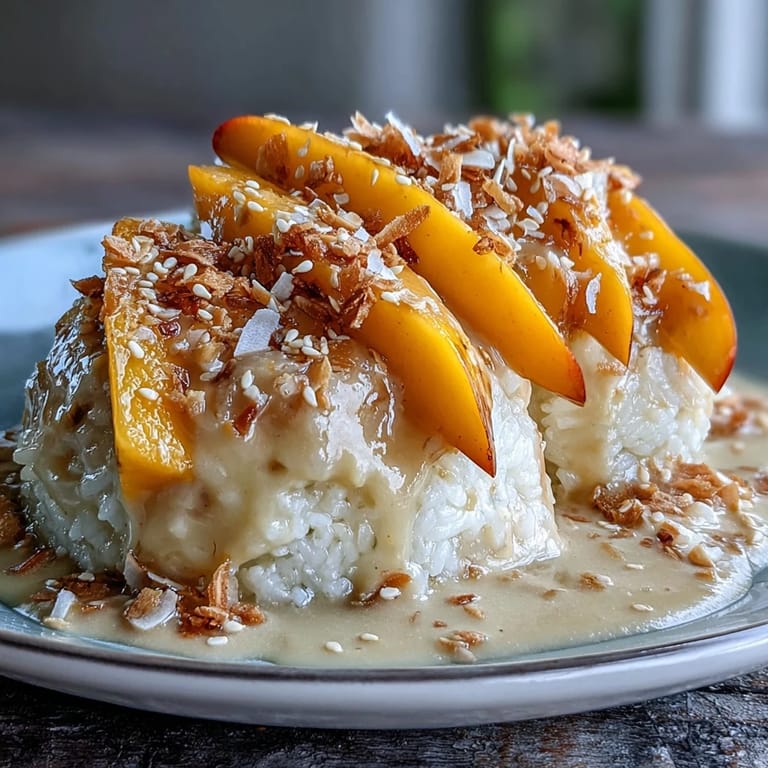
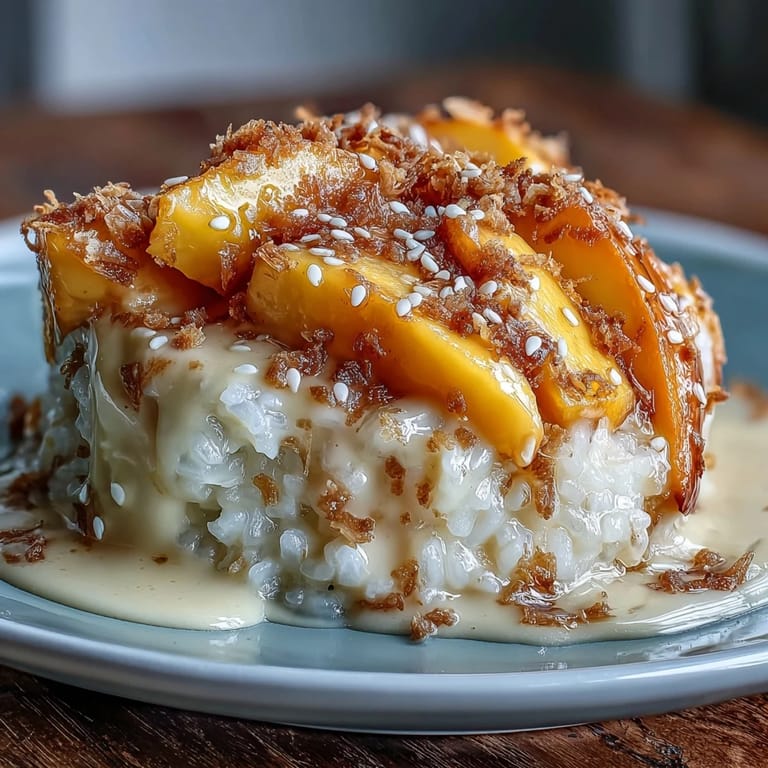
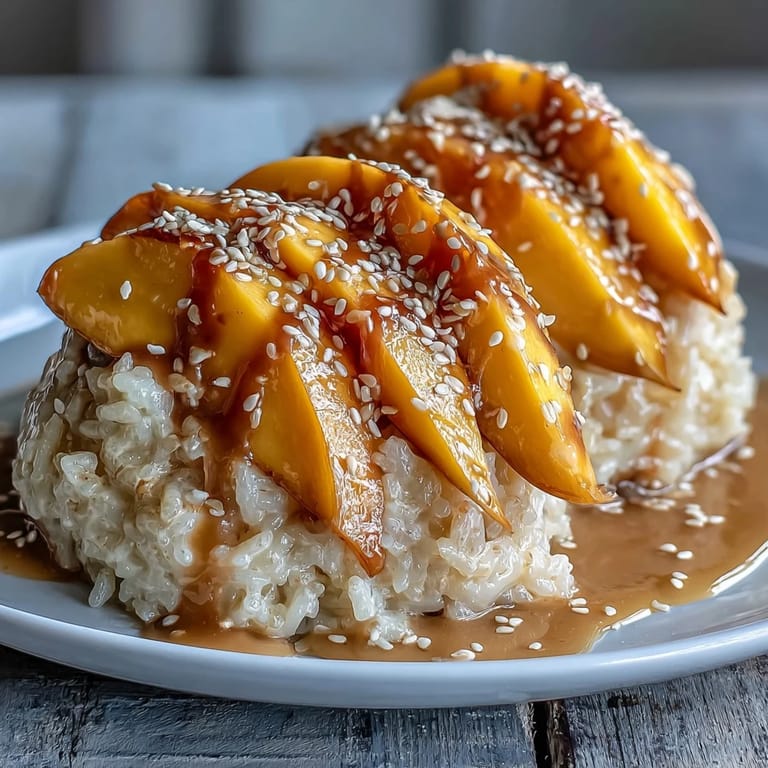
- Mound a portion of the sticky rice onto each plate—use a bowl or small cup to shape it neatly if you like things tidy, or just let it flow naturally if you prefer rusticity. Arrange fresh mango slices alongside, then drizzle the coconut topping over everything and scatter with toasted sesame seeds or mung beans if you have them.
 Save
Save There's something about mango sticky rice that stops conversation mid-sentence. Not because it's complicated or pretentious, but because it's just that good—clean, balanced, familiar yet somehow special every single time. When people ask for the recipe now, I always give it to them, but I also tell them to taste it at room temperature and never rush the rice, because those are the details that separate okay from the kind of dessert you think about for weeks afterward.
Finding the Right Mangoes
The mango selection process taught me more than I expected about produce. A mango ready to eat should yield to gentle pressure near the pointed end, but still feel firm overall—it should smell sweet and slightly floral at the stem without any off or fermented notes. Color alone means almost nothing, so don't get hung up on whether it's yellow, red, or orange. I now squeeze them very gently in the palm of my hand rather than pressing with my fingers, which helps avoid leaving bruises that affect texture.
The Coconut Milk Trick
Full-fat coconut milk separates during storage, and this recipe actually depends on that separation working in your favor. When you open a can and see that thick cream on top and watery liquid below, you now have control over the sauce's consistency. For the sweetened sauce that goes over the rice, shake everything together to mix. For the topping sauce where you want something pourable and silky, you can use more of the liquid portion and less of the cream, giving you a lighter drizzle.
Timing and Make-Ahead Strategies
This dessert rewards planning but doesn't demand it. The rice can be soaked the night before, steamed up to two hours ahead, and even infused with the coconut sauce up to four hours early. Keep it covered at room temperature and give it a gentle stir before serving. The mango should be sliced fresh no more than an hour or two before plating to preserve its bright flavor and firm texture. The topping sauce is best made within thirty minutes of serving so it's still warm when it hits the plate.
- If you're serving guests and want to be relaxed about timing, soak and steam the rice in the morning, then finish assembly just before dessert time.
- The individual components taste fine cold or room temperature, but warm coconut sauce drizzled over cool mango creates the most contrast and satisfaction.
- For a crowd, assemble everything on a platter family-style and let people serve themselves—it looks beautiful and feels approachable rather than fussy.
 Save
Save Mango sticky rice is the kind of recipe that rewards attention but never demands perfectionism. Make it, serve it, watch people's faces, and don't overthink it—that's the real secret.