 Save
Save My nonna used to make this ricotta pie every Easter, and the kitchen would fill with this bright, almost floral lemon scent that made everyone stop what they were doing. One year I watched her grate the zest directly over the filling, and she caught me sneaking a fingerful of the creamy mixture when she wasn't looking—she just smiled and handed me the microplane to finish the job. That pie taught me that the simplest ingredients, treated with care, can become something that people remember for decades. Now when I make it, I think about her hands moving through each step, unhurried and confident.
I brought this pie to a potluck once where everyone was stressed and rushing, and watching people actually pause to sit down and eat it together felt like a small miracle. Someone asked for the recipe while their fork was still in their mouth, which I took as the highest compliment. That moment reminded me why I love cooking things that slow people down.
Ingredients
- All-purpose flour: Two cups for the pastry shell—keep it cold and work quickly so the butter stays in little pieces, which is what creates those tender, flaky layers.
- Granulated sugar: Half a cup goes in the pastry, and three-quarters cup sweetens the filling, balancing the tartness of the lemon without making it cloying.
- Unsalted butter, cold and cubed: A half cup that should come straight from the fridge and stay there until you're ready to use it, because cold butter is the secret to a crust that shatters beautifully.
- Eggs: One whole egg plus one yolk for the pastry, then three more for the filling—they're what gives the ricotta that silky, almost mousse-like texture.
- Whole milk ricotta cheese, well drained: Two cups is essential, and I learned the hard way to drain it in cheesecloth for at least an hour before using, otherwise the filling gets watery and the crust gets soggy.
- Fresh lemon zest: From two lemons, and this is where you taste the brightness—use a microplane and don't be shy, the citrus is what makes people ask for the recipe.
- Lemon juice: Just a tablespoon, which deepens the flavor without making it sour or sharp.
- Heavy cream: A quarter cup that adds a luxurious smoothness to the filling, almost like you're eating a cloud.
- Vanilla extract: A teaspoon in both the pastry and filling for depth that people can't quite identify but makes them keep eating.
- Salt: A quarter teaspoon in the filling and another quarter in the pastry—it sounds like nothing but it's the ingredient that makes every other flavor sing.
- Powdered sugar for dusting: Save this for the very end, right before serving, so it doesn't dissolve into the filling.
Tired of Takeout? 🥡
Get 10 meals you can make faster than delivery arrives. Seriously.
One email. No spam. Unsubscribe anytime.
Instructions
- Make the pastry base:
- Combine your flour, sugar, and salt in a large bowl, then add the cold butter cubes and use your fingertips to rub everything together until it looks like coarse breadcrumbs—this is the moment that determines whether your crust will be tender or tough, so take your time and keep your hands cool.
- Bring the dough together:
- Stir in the egg, egg yolk, and vanilla, then add cold water one tablespoon at a time, mixing gently until the dough just barely holds together—stop as soon as it does, because overworking it toughens the crust.
- Chill and rest:
- Shape the dough into a disk, wrap it tightly in plastic wrap, and refrigerate for at least 30 minutes, or overnight if you have time.
- Prepare your pan:
- Preheat your oven to 350°F while you lightly grease a 9-inch pie or tart pan and set it on a baking sheet—the sheet catches any drips and makes it easier to move the pie in and out of the oven.
- Roll and line:
- On a lightly floured surface, roll the dough out to about an eighth of an inch thick, then gently press it into the pan, working it up the sides and letting any excess hang over the edge before trimming it flush with the rim. Prick the base all over with a fork, chill for 10 minutes, and you're ready for the filling.
- Make the ricotta filling:
- In a large bowl, whisk together the drained ricotta, sugar, eggs, vanilla, lemon zest, lemon juice, flour, and salt until completely smooth—the flour here acts like a stabilizer, so don't skip it—then fold in the heavy cream gently so it doesn't deflate.
- Fill and bake:
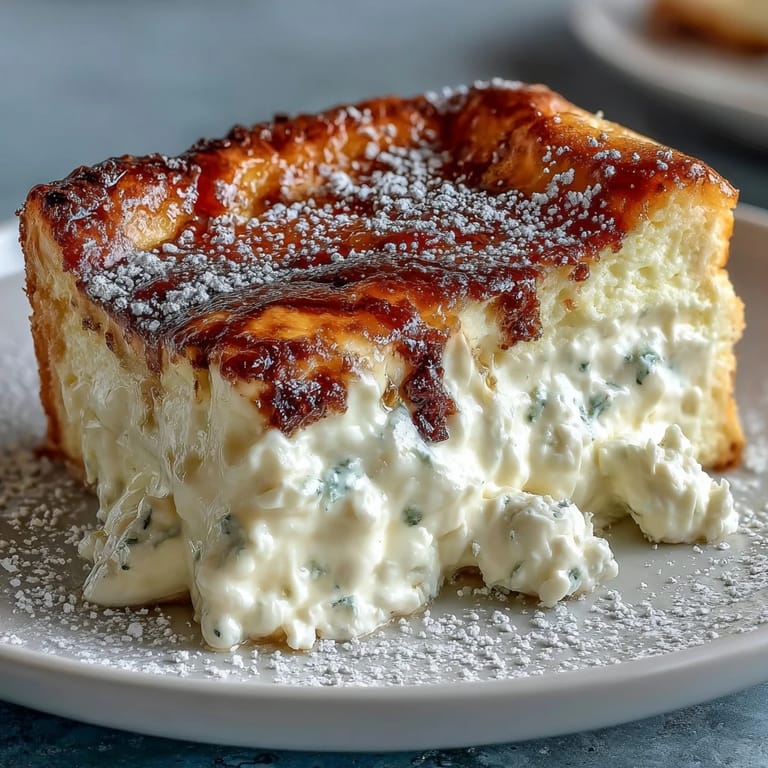
- Pour the ricotta mixture into your prepared crust, smooth the top with a spatula, and bake for 55 to 60 minutes, until the filling is set around the edges but still has a slight wobble in the very center—that wobble firms up as it cools and is what keeps the pie creamy instead of rubbery. The top should be light golden, almost like pale honey.
- Cool with patience:
- Let the pie cool completely on a wire rack until it reaches room temperature, then cover it loosely and refrigerate for at least 2 hours before slicing, because a cold pie cuts cleanly and tastes even better.
- Finish and serve:
- Just before serving, dust generously with powdered sugar—the contrast between the snowy white and the creamy filling is part of the magic.
 Save
Save There was a year when a family friend brought her teenage daughter to Easter dinner, and this girl had spent months away from Italy. She took one bite of this pie and started crying at the table—not because anything was wrong, but because it tasted like coming home.
Why Lemon Zest Changes Everything
The lemon zest is what separates this pie from something forgettable. It's not about making the pie taste lemony in an obvious way—it's about bringing this bright, almost effervescent quality that lifts the creaminess and makes you want another slice before you've finished your first. I learned this by accident once when I forgot to add it and the pie was decent but flat, missing something indefinable. The next day I dusted some zest on top as a garnish and suddenly understood what nonna had been trying to teach me all along.
The Pastry Shell Matters More Than You Think
People often focus entirely on the filling and treat the crust like an afterthought, but the truth is that a tender, buttery crust is what makes someone close their eyes when they bite into a slice. The secret isn't complicated—it's cold butter, minimal water, and resisting the urge to overwork the dough. I've made this pie with food processors and with my hands, and the hand-mixed version always wins because you can feel when you've done enough work. Keep tasting the texture as you go, and trust your instincts.
Timing and Temperature
The oven temperature of 350°F is lower than you might expect, and that's intentional—it allows the crust to set and turn golden without the filling racing ahead and cracking. Baking at a lower temperature takes longer but gives you a more forgiving window where the pie comes out creamy instead of overcooked. Watch it starting around 50 minutes, and remember that the center will still be slightly soft when you pull it out, which is exactly right.
- If your crust starts browning too quickly, tent it loosely with foil to protect it while the filling finishes cooking.
- Don't skip the 2-hour chill after cooling—it lets everything set properly and the flavors develop further.
- This pie actually tastes better the next day, so there's no shame in making it a day ahead of your celebration.
 Save
Save This pie is one of those dishes that gets better every time you make it, because you learn where the sweet spots are and how to trust your instincts. Make it for someone you love, and it becomes part of the story you tell together.
Recipe FAQ
- → What type of ricotta works best?
Use whole milk ricotta that is well drained to achieve a smooth, creamy texture without excess moisture.
- → How do I ensure the crust stays tender?
Keep butter cold when mixing and avoid overworking the dough to maintain flakiness and tenderness in the crust.
- → Can I enhance the lemon flavor?
Adding orange zest alongside lemon zest provides a more pronounced citrus aroma and depth.
- → What oven temperature is ideal for baking?
Baking at 350°F (175°C) allows the filling to set evenly while the crust browns nicely.
- → Is chilling the pie important?
Chilling for at least two hours after baking helps the filling firm up, making slicing easier and enhancing flavors.
- → Can I substitute gluten-free flour?
Yes, gluten-free flour can replace all-purpose flour in the crust for those with dietary restrictions, though texture may slightly vary.