 Save
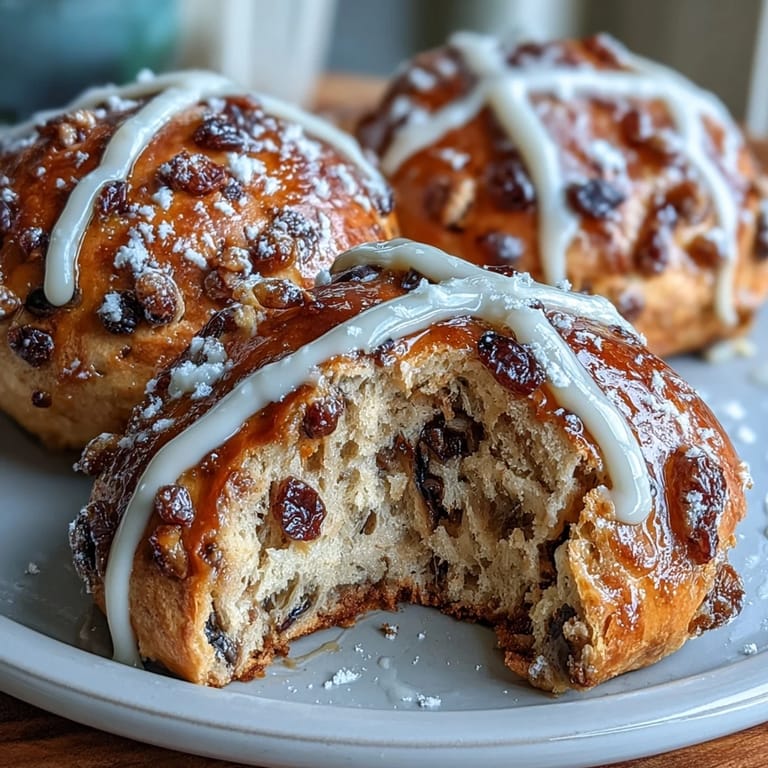
Save A chilly Sunday morning once had the kitchen humming to the sound of rain against the windows as I tugged open a packet of yeast to make these hot cross buns. The scent of cinnamon always seems to hang in the air long after the buns come out of the oven—a homey, spicy cloud that makes the wait feel worthwhile. I never realized how simple ingredients could fill the whole house with anticipation. As each bun rose slowly by the radiator, I couldn't help but peek under the towel every five minutes. There’s something quietly wonderful about shaping each portion by hand before the final bake.
One spring, my neighbor popped by unannounced just as I was brushing the sticky, apricot glaze over a fresh tray of buns. We ended up splitting a few right from the rack, laughing about our messy icing lines—the only silence was that first bite. Ever since, I make an extra dozen to gift away, just in case a friend shows up at the door.
Ingredients
- Bread flour: Gives the buns their chewy, bakery-worthy crumb—I find sifting helps avoid lumps in the dough.
- Granulated sugar: Just enough to sweeten, and a dash more if you like your buns on the dessert side.
- Active dry yeast: The backbone—let it bloom a moment in warmed milk for an extra plush rise.
- Salt: Balances the sweetness and deepens the spice flavors.
- Ground cinnamon: Essential for that unmistakable aroma, but I like using a touch extra on cold days.
- Ground nutmeg: Adds warmth and a nostalgic bakery note—don’t skip it, even if it’s tempting.
- Ground allspice: Just a pinch gives the buns a cozy, round flavor profile.
- Whole milk, lukewarm: Encourages the yeast to thrive and keeps the dough moist.
- Unsalted butter, melted: Adds richness—I always let it cool off a touch so it doesn’t shock the dough.
- Eggs, room temperature: Bind the dough and add a subtle tenderness; I crack them in after they’ve lost their fridge chill.
- Raisins or currants: Pockets of juicy sweetness in every bite—if your raisins are a bit firm, soak them in warm water first.
- Orange zest (optional): Brightens up the flavor and makes the buns sing; only zest the colored part, not the bitter white pith.
- All-purpose flour (for cross paste): Keeps the cross defined yet soft after baking—sift for a lump-free mix.
- Water (for cross paste): Adjust the amount to get a thick, pipeable consistency—start slow, a spoonful at a time.
- Apricot jam or honey (for glaze): That shiny finish is what stops passersby in their tracks; strain the jam for a silky effect.
- Water (for glaze): Just enough to loosen the jam or honey—don’t overdo, or the glaze will slip right off.
Tired of Takeout? 🥡
Get 10 meals you can make faster than delivery arrives. Seriously.
One email. No spam. Unsubscribe anytime.
Instructions
- Mix Dry Ingredients:
- Tip the flour, sugar, yeast, salt, cinnamon, nutmeg, and allspice into your largest bowl and give it all a good whisk so the spices are distributed evenly.
- Add Wet Ingredients:
- Pour in the warm milk, melted butter, and eggs, and mix until a shaggy dough starts forming; it will look a bit messy at first, but don’t worry.
- Knead the Dough:
- Knead by hand on a floured surface or with a dough hook—keep going for 8 to 10 minutes until the dough becomes silky and springs back.
- Add Fruit:
- Scatter in the raisins (with orange zest if you fancy), kneading just enough to spread them through the dough without squishing.
- First Rise:
- Pop the dough into a greased bowl, cover with a damp towel, and let it rise somewhere warm until doubled—it’s slow magic, about an hour.
- Shape Buns:
- Punch down the risen dough and split into 12 equal balls, cupping each between your palms until perfectly smooth underneath.
- Second Rise:
- Arrange the buns on a parchment-lined tray, not quite touching, cover, and leave to puff for 45 minutes in a cozy spot.
- Pipe the Crosses:
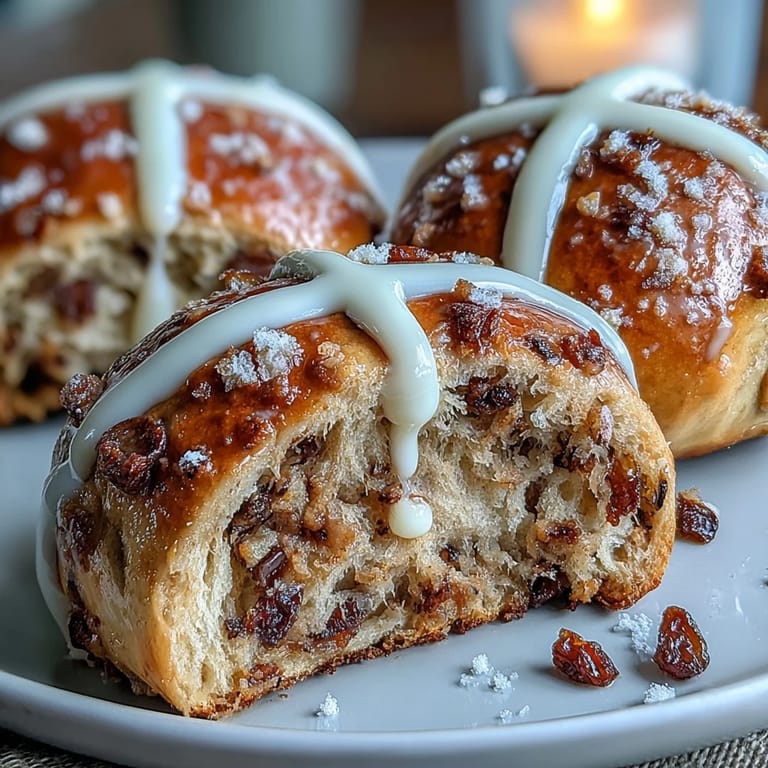
- Mix flour and water for the paste until thick but pipeable, then zig-zag a neat cross over each bun using a small piping or sandwich bag.
- Bake:
- Slide the tray into a 375°F (190°C) oven and bake 20-25 minutes, or until the tops are deeply golden and fragrant.
- Make the Glaze:
- While the buns bake, gently warm the jam or honey with water until runny and smooth, stopping just as it starts to bubble.
- Glaze and Serve:
- Brush the hot buns with your glaze the moment they emerge, then let them cool for a few minutes before digging in.
 Save
Save 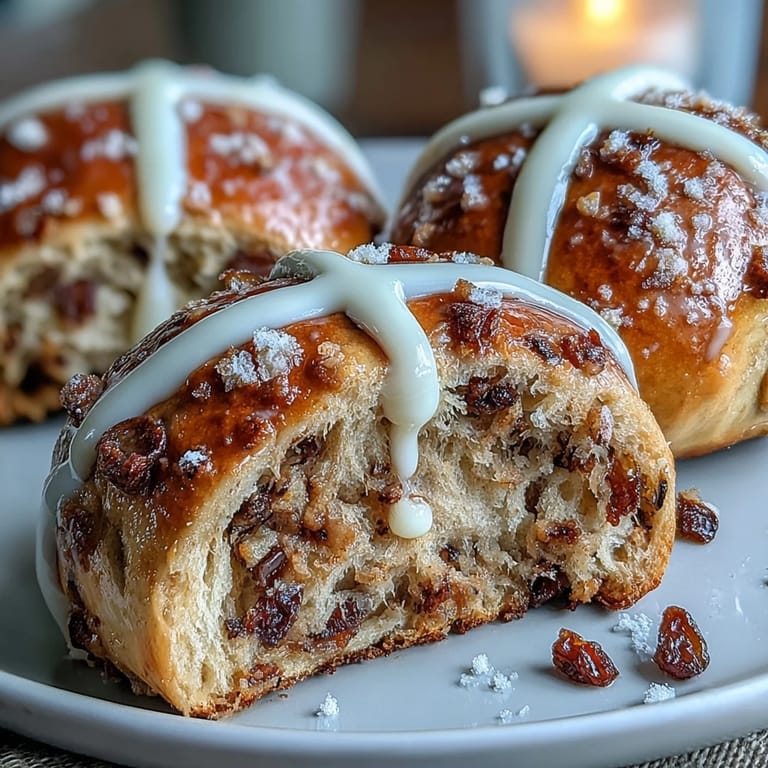 Save
Save I’ll never forget my aunt, who swore she wasn’t a bread person, tearing into a still-steaming bun and then, in a rare show of delight, asking for seconds. The real charm of these buns is in moments like that—everyone gathered, finger-licking the shiny glaze, already planning another round.
Making the Crosses Just Right
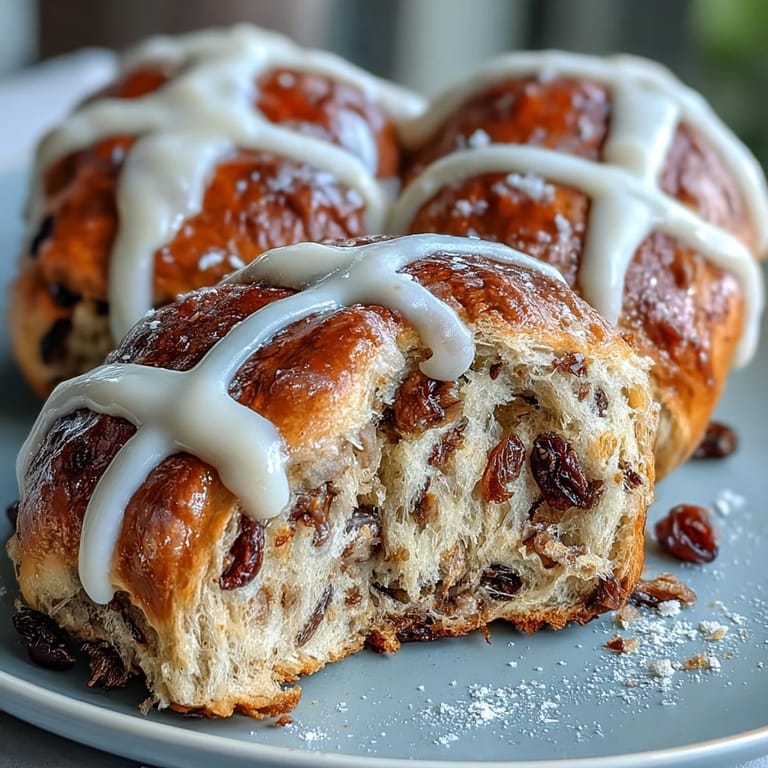
Getting the cross paste right took a bit of tinkering for me. If it’s too runny, it drips off the buns; too stiff, and you’ll find it tough to pipe neatly. Aim for a heavy yogurt consistency—it might take a couple tries but it’s all part of the fun. I use a sandwich bag with the tiniest corner snipped for control. There’s a quiet satisfaction in nailing those clean, intersecting lines across a golden, puffy surface.
Personalizing Your Buns
Once I started playing with add-ins, these classic buns felt even more like my own. A handful of chopped dried apricots or a scoop of candied peel can wake up the flavor and make every bite a surprise. One friend likes to toss in cranberries for a tangy bite—I’ve found no substitutions that don’t work. Making something a little different each time keeps it exciting, and a batch rarely lasts longer than a day. It’s easy to tailor them for whoever is at your table.
Serving and Storing Hot Cross Buns
A warm bun with melting butter is the obvious move, but I sometimes toast leftovers for breakfast the next day. If you somehow resist eating them all, cool them fully and freeze in an airtight bag for those sudden cravings—five minutes in a warm oven revives them beautifully.
- Let the glaze dry before stacking or packaging, or you’ll lose that shiny finish.
- If you skip the glaze, the tops won’t be as enticing (but will freeze a bit better).
- Always check the bottoms—golden but not overdone is the sweet spot.
 Save
Save  Save
Save May your kitchen smell sweet and your buns turn out just as soft and golden as you’d hoped. Share them while they’re warm—you’ll almost always wish there were more.
Recipe FAQ
- → How do I keep the buns soft after baking?
Brush buns while warm with apricot jam or honey to lock in moisture, store wrapped in a clean tea towel or airtight container, and reheat briefly to refresh texture before serving.
- → Can I swap active dry yeast for instant yeast?
Yes—use slightly less instant yeast and mix it directly with the dry ingredients. You may see a faster rise, so watch the dough and adjust proofing times accordingly.
- → What’s the best consistency for the cross paste?
Mix flour and water to a thick, pipeable paste that holds its shape but squeezes smoothly through a bag. If too thin it will spread; if too stiff it won't pipe neatly.
- → What are good raisin substitutes?
Use currants, chopped dried apricots or cranberries for brightness. Chopped candied peel adds traditional citrusy notes—use about the same volume as the raisins called for.
- → Can I freeze the buns?
Freeze fully cooled buns unglazed in a single layer on a tray, then transfer to a sealed bag. Thaw, warm gently and brush with jam before serving for best results.
- → How do I know when the buns are done?
Buns are ready when they are deep golden and sound slightly hollow when tapped on the bottom. An internal temperature around 190°F (88°C) indicates a fully baked enriched dough.