 Save
Save There's something about wild rice that makes you slow down. I discovered this soup on a grey afternoon when my farmer's market haul looked impossibly abundant, and I couldn't bear to let those mushrooms go soft in the crisper drawer. What started as mild kitchen panic became this deeply satisfying bowl that somehow tastes like it's been simmering for hours, even though it comes together in just over an hour. The earthiness of the wild rice mingles with the umami-rich mushrooms in a way that feels almost meditative to cook.
I made this for my neighbor one particularly cold February evening, and she showed up at my door the next morning with an empty bowl and a sheepish grin. She'd reheated it for breakfast, she confessed, and eaten it standing over the stove at 6 a.m. before anyone else woke up. That's when I knew I'd gotten something right.
Ingredients
- Olive oil: Use good quality if you have it, since it's one of the base flavors—about 2 tablespoons coats everything gently without being greasy.
- Yellow onion, celery, and carrots: This is your flavor foundation, and chopping them roughly equal in size means they cook evenly and disappear into the broth beautifully.
- Garlic cloves: Fresh minced garlic makes all the difference; powdered garlic turns metallic when it simmers this long.
- Fresh thyme and rosemary: These herbs smell incredible as they bloom in the hot oil, and they anchor the whole soup in comfort.
- Bay leaf: Don't skip this small thing—it whispers sophistication into the background.
- Fresh parsley: A handful stirred in at the end adds brightness that cuts through all the richness.
- Mixed wild mushrooms: Cremini, shiitake, and oyster varieties give you different textures and depths of flavor; clean them with a damp cloth rather than washing to keep them from getting waterlogged.
- Wild rice: Always rinse it first under cold water to remove any debris, and don't skip this step even if you think it's fussy.
- Vegetable broth: This is your liquid gold; use something you'd actually drink on its own, not the thin stuff from a can if you can help it.
- Heavy cream or plant-based alternative: It tempers the earthiness and creates that silky mouthfeel that makes this feel like a restaurant soup.
- All-purpose flour: This thickens without making things gluey, but stir it in thoroughly to avoid lumps.
- Soy sauce: A small splash adds umami that makes people ask what the secret ingredient is.
- Salt and black pepper: Taste as you go; the saltiness creeps up as the broth reduces, so hold back at first.
Tired of Takeout? 🥡
Get 10 meals you can make faster than delivery arrives. Seriously.
One email. No spam. Unsubscribe anytime.
Instructions
- Start your flavor base:
- Heat olive oil in your pot over medium heat, then add the onion, celery, and carrots. Let them soften for 6 to 8 minutes, stirring occasionally, until the onion turns translucent and the kitchen smells inviting. You'll know you're there when a wooden spoon leaves a trail through the vegetables.
- Wake up the aromatics:
- Add garlic, thyme, rosemary, and your bay leaf, stirring constantly for about a minute until the aroma hits you—that's when you know the oils are releasing. Don't let it brown, or those delicate herb flavors turn bitter.
- Coax the mushrooms:
- Toss in all your sliced mushrooms and cook for 6 to 8 minutes, stirring now and then as they release their liquid and collapse slightly. The pan will initially look crowded, then suddenly spacious as they reduce down, and the whole pot turns a rich brown color.
- Make a light roux:
- Sprinkle flour over everything and stir well for about a minute, coating the vegetables and mushrooms—this thickens your soup gently without creating lumps. The flour will smell slightly toasted and nutty when it's ready.
- Build the broth:
- Slowly pour in your vegetable broth while stirring constantly, creating a smooth liaison between the flour and liquid. This is patient work, but it prevents the grainy texture that comes from dumping it all in at once.
- Introduce the rice:
- Stir in the wild rice and soy sauce, then bring everything to a boil. Once it's bubbling, reduce the heat to low, cover with a lid, and let it simmer for 40 to 45 minutes, stirring occasionally, until the rice is tender but still has a slight chew.
- Finish with richness:
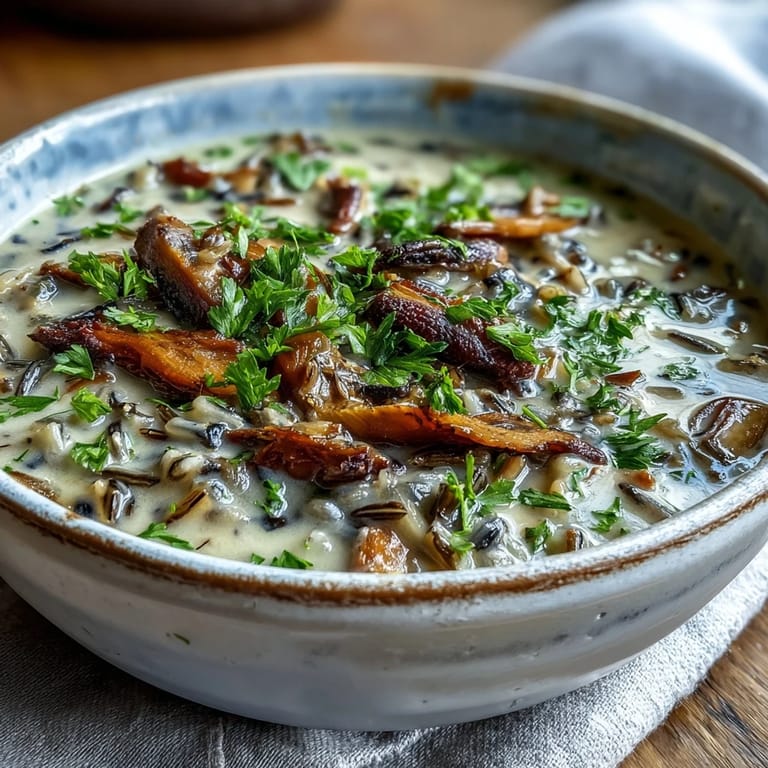
- Pull out the bay leaf, then stir in your cream and parsley, simmering uncovered for 2 to 3 minutes until everything is heated through and the parsley brightens the color. The soup will smell almost floral now, completely transformed from where it started.
- Season to your taste:
- Add salt and black pepper gradually, tasting as you go, and adjust the thickness with extra broth if it feels too dense or a splash more cream if you want it luxurious. Remember that soup seasoning is personal.
 Save
Save There's a moment when you stir in the cream and see how the soup transforms from rustic brown to this creamy, inviting color that makes you want to sit down immediately. It's when cooking stops being tasks and becomes care—for yourself, or whoever is lucky enough to sit across from your bowl.
Wild Rice: The Star Ingredient
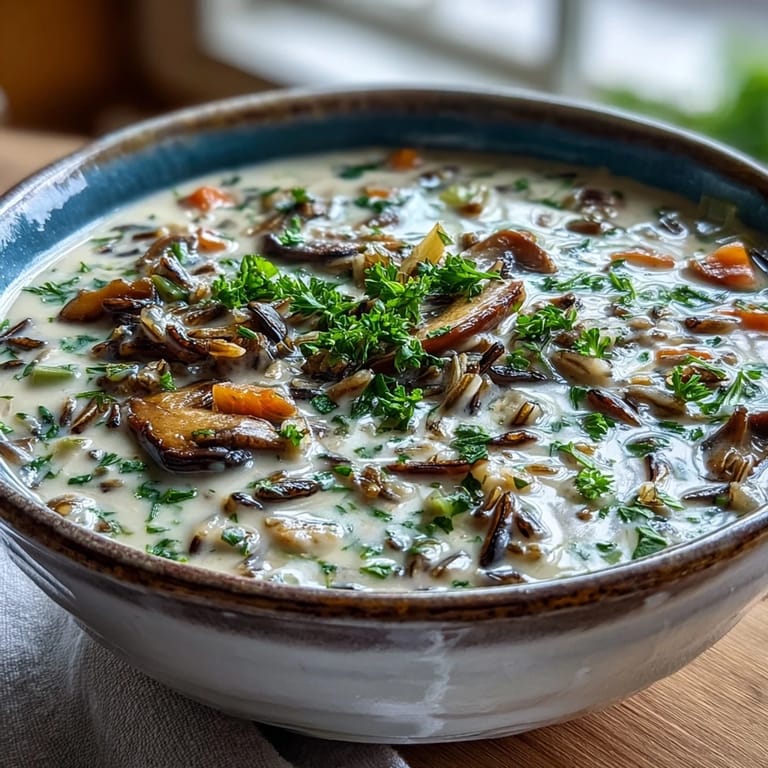
Wild rice isn't technically rice at all, which blew my mind when I learned it. It's a grass seed with a chestnut-brown exterior and an almost crunchy interior that gives this soup its personality. When it cooks, it opens up slightly and releases a subtle nuttiness that pairs perfectly with mushrooms. I used to overcook it, thinking softer was better, but that slight chew is what makes it special—it keeps your mouth engaged instead of turning everything to mush.
The Mushroom Question
The mix of mushroom varieties matters more than using the fanciest single type. Cremini mushrooms give earthiness, shiitake brings umami depth, and oyster mushrooms add a delicate sweetness that balances everything. If you can only find regular button mushrooms, they'll work, but you'll lose some of that layered flavor. The real trick is cleaning them properly—I use a damp paper towel instead of running water, which prevents them from absorbing liquid they'll release back into the soup anyway.
Making It Your Own
This soup is forgiving enough to bend without breaking. Some people swear by adding a splash of dry sherry or white wine along with the mushrooms, which adds an unexpected sophistication. Others stir in fresh thyme just at the end for a brighter herb note. For a vegan version, cashew cream works beautifully if you blend soaked cashews with vegetable broth—it's richer than coconut cream and won't compete with the earthy flavors.
- If you have fresh sage or tarragon, substitute half of the thyme with either one for a completely different personality.
- Leftover soup keeps for three days in the refrigerator and actually tastes better the next day as flavors meld together.
- A crispy slice of sourdough bread or a sharp cheddar cheese on the side transforms this into something people remember.
 Save
Save This soup has become my answer to almost every kitchen question: what to do with mushrooms, how to make something special in under two hours, what tastes like home. Make it once, and you'll understand why.
Recipe FAQ
- → Can I make this soup vegan?
Yes, simply substitute the heavy cream with plant-based alternatives like cashew cream, coconut cream, or almond milk. Use gluten-free flour and ensure your soy sauce is certified gluten-free if needed.
- → Can I use regular rice instead of wild rice?
While possible, wild rice provides a unique nutty flavor and chewy texture that's essential to this dish. Brown rice can work as a substitute, but adjust cooking time as it cooks faster than wild rice.
- → How long does this soup keep?
The soup stores well in the refrigerator for 3-4 days in an airtight container. The rice may absorb more liquid over time, so you may need to add extra broth when reheating. It also freezes well for up to 3 months.
- → What mushrooms work best?
Mixed wild mushrooms like cremini, shiitake, and oyster provide the best flavor profile. Button mushrooms can work but offer less depth. Dried porcini mushrooms rehydrated and added can intensify the earthy flavor.
- → How can I make this soup thicker?
The flour helps thicken the broth naturally. For extra body, mash some of the cooked rice against the side of the pot or puree a portion of the soup. You can also simmer longer uncovered to reduce and concentrate.
- → Can I add protein to this soup?
Yes, shredded chicken or white beans make excellent additions. Add cooked chicken during the last 5 minutes of heating, or add canned beans with the broth to simmer together.