 Save
Save The first time the scent of cumin and paprika mingled with sautéing onions in my kitchen, I knew something special was about to happen. I wasn’t aiming to impress anyone—just improvising with ingredients found on a sleepy Sunday morning. There was a playful chaos as spinach wilted at the edge of my favorite skillet and crumbles of feta waited beside the stove. When I finally cracked the eggs into their nests of simmering tomato, my old wooden spoon wobbled on the countertop, almost as if it wanted in on the action. That sizzling, savory anticipation was its own reward before the first bite.
One rainy Tuesday, I hurried this shakshuka together for my partner between meetings, and we ended up just eating straight from the skillet with hunks of bread, laughing about how the kitchen fogged up the windows. It’s impossible to look serious when you’ve got tomato on your sleeves and yolk running down your toast. That meal turned an otherwise ordinary day into a cozy memory I didn’t expect to keep.
Ingredients
- Olive oil: Sweating the onions in good olive oil sets a deep, lovely base for the sauce—don’t rush it.
- Yellow onion: I find that finely chopped onion melts beautifully into the sauce for a subtle sweetness.
- Garlic: Add the garlic just after onions to keep it from burning and bring out its warm aroma.
- Red bell pepper: Bright, sweet peppers give a cheerful crunch and color—dice them evenly for the best texture.
- Baby spinach: I add spinach in handfuls, letting it wilt gently so it keeps that vibrant green look.
- Diced tomatoes: Use a can with juices—don’t drain them, they help form a saucy base.
- Ground cumin: This brings a warm, earthy background flavor; toast it a little in the pan for a boost.
- Smoked paprika: Essential for a smoky depth—go for the smoked version if you can.
- Ground coriander: Its hint of citrus ties the whole spice mix together.
- Crushed red pepper flakes: If you like a little kick, use a pinch; it’s easy to add more but hard to take away.
- Salt and freshly ground black pepper: I season at the end, tasting as I go.
- Feta cheese: Crumble it with your fingers and scatter just before serving—its creaminess balances the sauce.
- Eggs: Each one becomes a molten center in its own saucy well, cook to your liking.
- Fresh cilantro or parsley: A fresh herb finish lifts everything—snip them right over the pan.
- Crusty bread: Completely optional, but nothing sops up sauce and yolk quite like it.
Tired of Takeout? 🥡
Get 10 meals you can make faster than delivery arrives. Seriously.
One email. No spam. Unsubscribe anytime.
Instructions
- Start with the aromatics:
- Heat olive oil in a big skillet over medium, then add the diced onion and swoosh it around until soft and glossy, about 3 minutes.
- Add color and aroma:
- Tumble in the garlic and red pepper, and cook while stirring—listen for that subtle sizzle and soak up the aroma for 3 to 4 minutes, until vegetables are tender.
- Spice it up:
- Scatter in cumin, smoked paprika, coriander, and optional red pepper flakes. Stir for a minute until the air fills with spice, and everything smells just a bit smokier.
- Simmer the sauce:
- Pour in the diced tomatoes with all their juices. Stir, then let the sauce bubble quietly for 5–7 minutes, thickening slightly.
- Wilt the spinach:
- Add the spinach a handful at a time; it’ll shrink quickly so keep stirring until it’s all bright green and tender. Season to taste with salt and pepper.
- Nest the eggs:
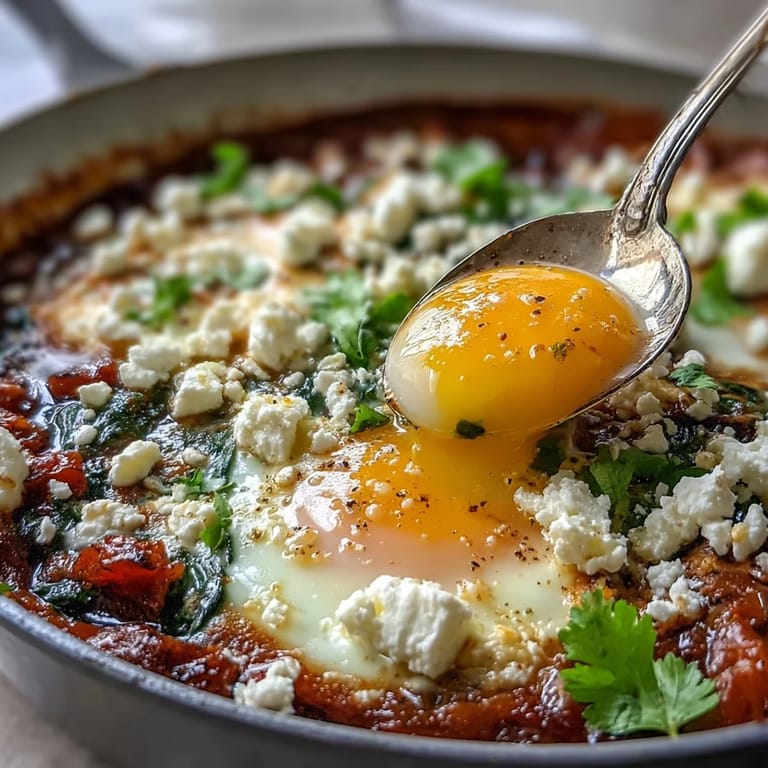
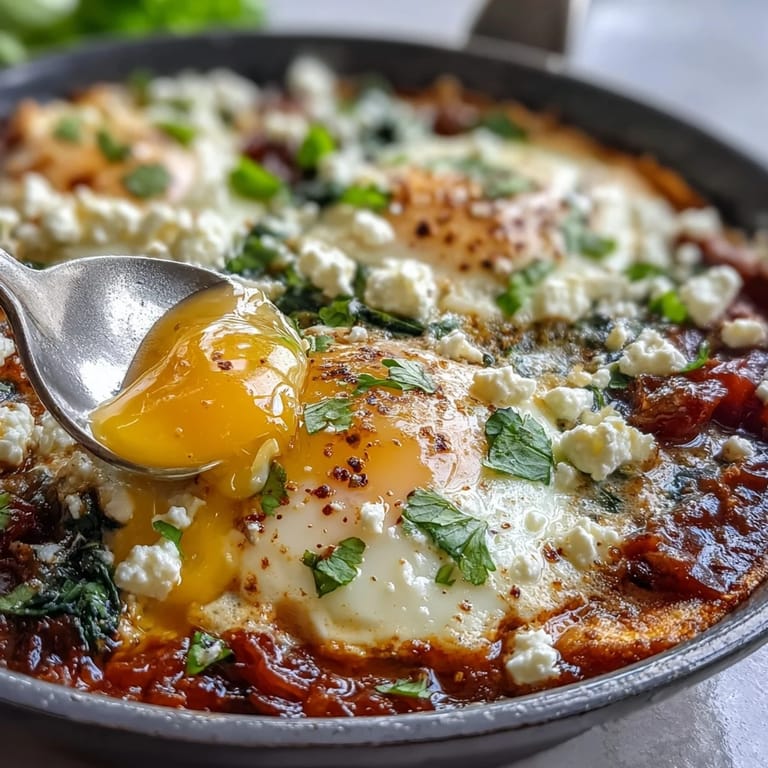
- Use your spoon to create four little wells in the sauce and crack an egg into each. Cover the skillet and let them cook over low heat for about 6–8 minutes—watch for just-set whites and runny yolks.
- Feta and finish:
- Sprinkle crumbled feta over the hot sauce, letting it melt slightly. Add fresh herbs at the last moment for a pop of color and freshness.
- Serve and enjoy:
- Spoon portions onto plates or share straight from the pan with crusty bread for scooping up every last bit.
 Save
Save I go back to the morning when a friend wandered in, lured by the sound of the bubbling sauce and the tang of feta hanging in the air. We ended up stretching breakfast into lunch, chatting over coffee and carving off more bread than either of us meant to. It felt like a little celebration hiding in an ordinary day.
How to Customize for Your Cravings
The beauty of shakshuka is that it welcomes whatever’s lingering in the fridge—swap in kale or chard if spinach is out, or toss in roasted sweet potato for a heartier twist. I once added a pinch of cinnamon on a whim and it brought a subtle warmth that played well with the feta. Let your taste buds steer, and don’t hesitate to improvise—there’s plenty of room for personality in this pan.
Make-Ahead Tips and Leftovers
If you’re planning ahead, prep the sauce the night before and simply reheat it before dropping in the eggs. I like stashing leftovers in a container, then sliding the cooled sauce and eggs onto a slice of toasted bread the next morning—shakshuka tartine, if you will. It’s still delicious even when you’re racing out the door or eating straight from the fridge.
Serving Suggestions Worth Sharing
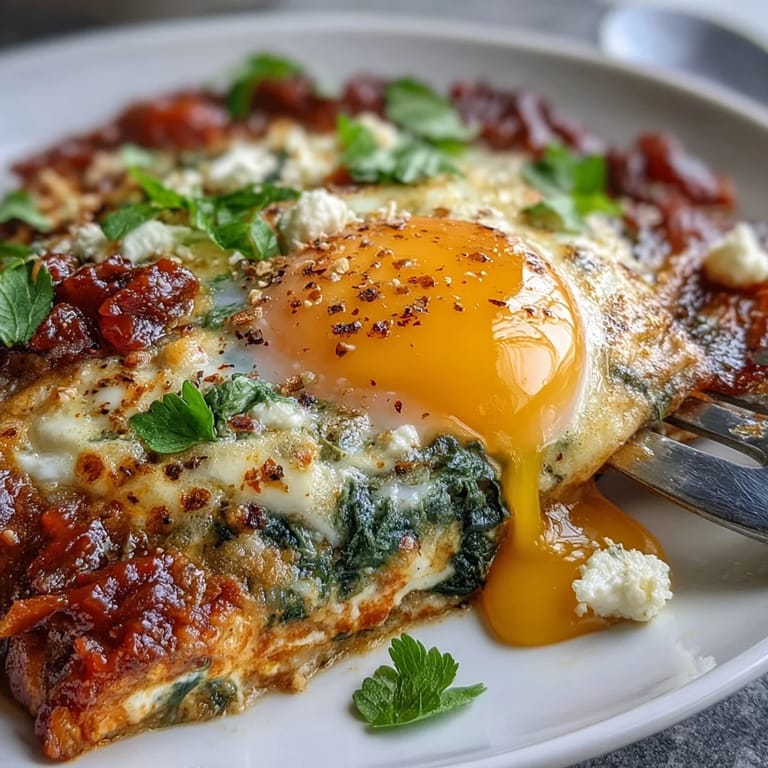
There’s just something about serving shakshuka straight from the skillet that turns breakfast into a happy, low-key gathering. Offer bite-sized pieces of warm, crusty bread or toasted pita on the side and let everyone scoop up their own eggs and sauce. Big bowls of citrusy salad or crunchy radishes go beautifully alongside, cutting through the richness and brightening up the table.
- For a splash of color, try a sprinkle of pomegranate seeds at the end.
- Keep a second skillet handy if you’re cooking for a crowd.
- Don’t forget—shakshuka is just as magical for dinner as it is for brunch.
 Save
Save Whatever time of day you make it, shakshuka fills the kitchen with warmth and the promise of good company. Here’s to the moments you build around the skillet.
Recipe FAQ
- → How do I get runny yolks without overcooking the whites?
After cracking eggs into wells, cover the skillet and cook on low heat for 6–8 minutes. The lid traps steam and cooks whites through while keeping yolks soft; check at 6 minutes and extend a minute or two if needed.
- → Can I substitute the spinach with other greens?
Yes. Kale or Swiss chard work well; add them a bit earlier and cook until tender since they take longer to wilt than baby spinach. Chop larger leaves for even cooking.
- → How can I adjust the spice level?
Increase crushed red pepper flakes or add a spoonful of harissa for more heat. For milder flavor, omit the flakes and use sweet paprika instead of smoked paprika.
- → What’s the best way to store and reheat leftovers?
Refrigerate in an airtight container for up to 2–3 days. Reheat gently in a skillet over low heat; eggs can be delicate, so you may prefer to reheat the sauce and add fresh eggs to finish on the stove.
- → What can I use instead of feta?
Crumbled goat cheese or ricotta salata add a similar tang and creaminess. For a firmer finish, small cubes of halloumi can be warmed in the sauce before serving.
- → Any tips for serving to keep it gluten-free?
Serve with gluten-free bread, flatbreads, or simply alongside roasted potatoes. Double-check store-bought cheese for additives if strict gluten-free is required.