 Save
Save The smell of garlic hitting hot olive oil always pulls me back into the moment, no matter how chaotic the day has been. I started making this pasta on a Tuesday evening when my fridge was overflowing with vegetables from the farmers market and I had no plan. I grabbed whatever looked brightest, boiled some pasta, and tossed it all together with lemon and herbs. It turned out better than half the recipes I'd been overthinking all week.
I made this for friends one spring evening when we ate on the porch with the windows open and the breeze coming through. Everyone kept reaching for seconds, and one friend said it tasted like the kind of meal that makes you feel good about eating. That stuck with me because it's exactly what I want from weeknight cooking—something nourishing that doesn't require a nap afterward.
Ingredients
- Bow-tie pasta: The shape catches bits of vegetables and sauce in its folds, making every forkful balanced and satisfying.
- Cherry tomatoes: They burst just enough when warmed to release their sweetness without turning the dish into a tomato sauce.
- Asparagus: Cut them into one-inch pieces so they cook evenly and stay tender with a slight snap.
- Red bell pepper: Adds a mild sweetness and a pop of color that makes the whole dish look alive.
- Yellow squash: Sliced into half-moons, it cooks quickly and soaks up the garlic and lemon beautifully.
- Broccoli florets: They bring a slight bitterness that balances the sweetness of the other vegetables.
- Carrots: Julienned carrots add crunch and a touch of earthiness that grounds the dish.
- Red onion: Thinly sliced so it softens without overpowering, adding just a hint of sharpness.
- Frozen peas: They thaw in seconds and add little bursts of sweetness throughout the pasta.
- Extra-virgin olive oil: Use a good one here because it's the base of your sauce and you'll taste it in every bite.
- Garlic: Minced fresh garlic blooms in the oil and perfumes the entire dish with warmth.
- Crushed red pepper flakes: Optional, but a small pinch adds a gentle heat that wakes up the other flavors.
- Lemon zest and juice: The zest gives brightness, the juice adds tang, together they make everything taste more vivid.
- Parmesan cheese: A little grated on top adds a salty, nutty finish that ties everything together.
- Fresh basil and parsley: Chopped herbs at the end bring a green, aromatic freshness that makes the dish feel just-made.
Tired of Takeout? 🥡
Get 10 meals you can make faster than delivery arrives. Seriously.
One email. No spam. Unsubscribe anytime.
Instructions
- Boil the pasta:
- Bring a large pot of salted water to a rolling boil and cook the bow-tie pasta until al dente, following the package timing. Before draining, scoop out half a cup of the starchy pasta water and set it aside.
- Start the sauce:
- Heat two tablespoons of olive oil in a large skillet over medium heat, then add the garlic and red pepper flakes. Let them sizzle for about a minute until the garlic smells sweet and toasted but hasn't turned brown.
- Cook the hearty vegetables:
- Toss in the carrots, broccoli, and asparagus first since they take the longest. Sauté for three to four minutes, stirring occasionally, until they start to soften but still have some bite.
- Add the softer vegetables:
- Stir in the red onion, bell pepper, yellow squash, and a pinch of salt. Continue cooking for another three to four minutes until everything is tender but still vibrant and colorful.
- Warm the tomatoes and peas:
- Add the cherry tomatoes and frozen peas to the skillet and cook for just two minutes. You want the tomatoes to soften slightly and the peas to thaw without losing their brightness.
- Toss with pasta:
- Add the drained pasta to the skillet along with the remaining tablespoon of olive oil, lemon zest, and lemon juice. Toss everything together, adding splashes of reserved pasta water to create a light, silky coating that clings to the pasta and vegetables.
- Season and finish:
- Taste and add more salt and black pepper as needed. Remove the skillet from the heat and toss in the Parmesan, fresh basil, and parsley, stirring gently to distribute the herbs.
- Serve:
- Plate the pasta immediately while it's hot and glossy. Garnish with extra herbs and a sprinkle of Parmesan if you like.
 Save
Save This dish became my go-to when I wanted to feel like I was taking care of myself without spending an hour in the kitchen. It's the kind of meal that makes you sit down, take a breath, and actually taste your food. I've served it to picky eaters and vegetable skeptics, and somehow the combination of pasta, lemon, and a little Parmesan wins them over every time.
Choosing Your Vegetables
You don't need to follow the vegetable list exactly—use what you have or what looks good at the store. Zucchini, snap peas, green beans, and even thinly sliced fennel work beautifully here. The key is to pick a variety of colors and textures so every bite feels different. I've made this with whatever was about to go bad in my fridge and it's never been disappointing.
Making It a Complete Meal
If you want to add protein, grilled chicken, sautéed shrimp, or even white beans work without changing the character of the dish. I sometimes toss in a can of drained chickpeas at the end for extra heft. A crisp white wine like Sauvignon Blanc or Pinot Grigio pairs perfectly, but so does sparkling water with a lemon wedge if you're keeping it simple.
Storing and Reheating
Leftovers keep well in the fridge for up to three days, though the pasta will absorb some of the sauce as it sits. When reheating, add a splash of water or olive oil and warm it gently in a skillet over low heat to bring back the glossy texture. You can also eat it cold as a pasta salad—just toss it with a little extra lemon juice and olive oil to refresh the flavors.
- Store in an airtight container and keep the Parmesan separate if possible so it doesn't get gummy.
- If meal prepping, undercook the vegetables slightly so they don't turn mushy when reheated.
- This recipe doubles easily, so make extra if you're feeding a crowd or want lunches for the week.
 Save
Save This is the kind of recipe that grows with you, changing with the seasons and whatever you have on hand. It's never the same twice, and that's exactly what makes it worth keeping in your rotation.
Recipe FAQ
- → What makes this pasta dish visually appealing?
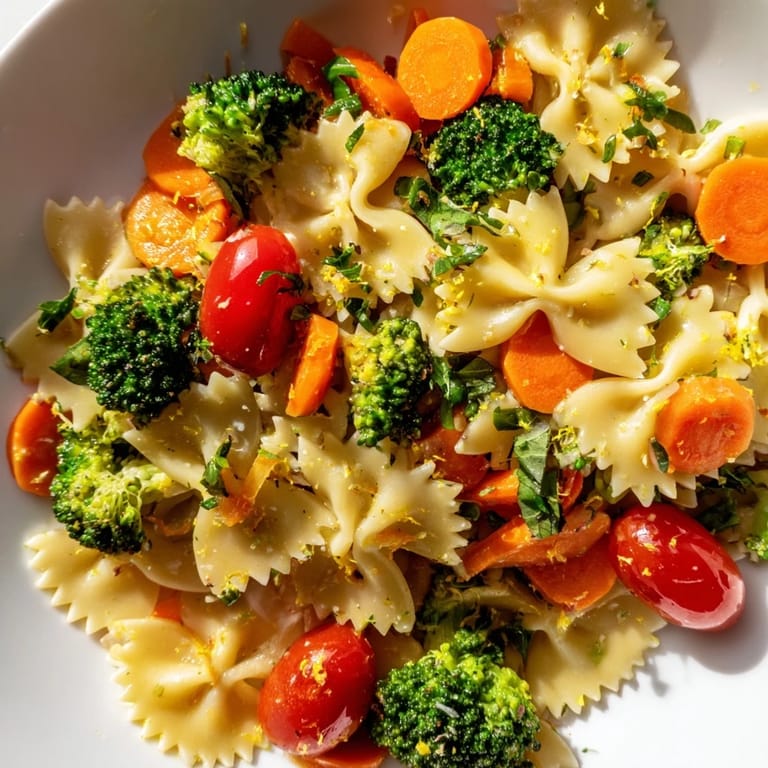
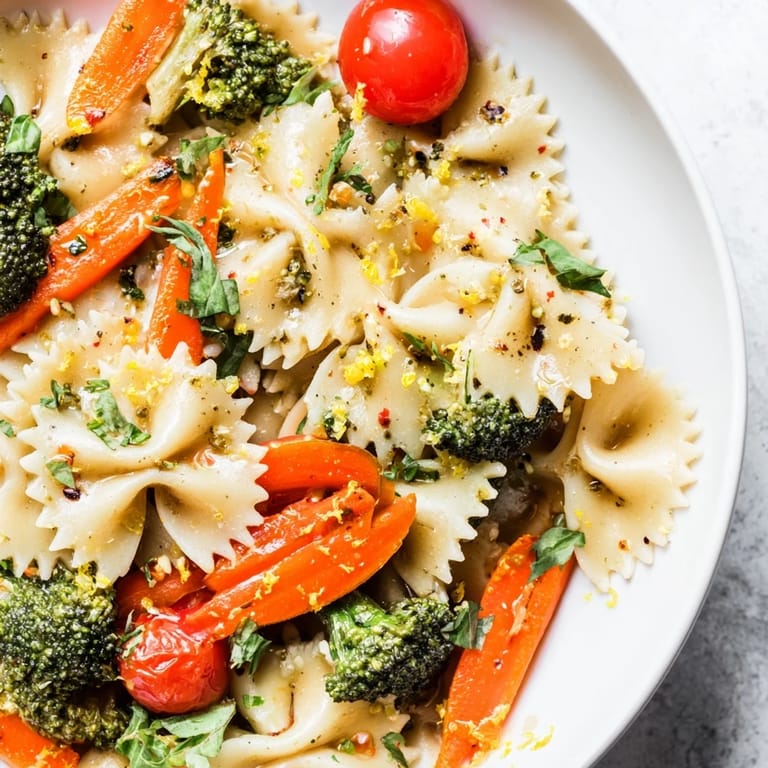
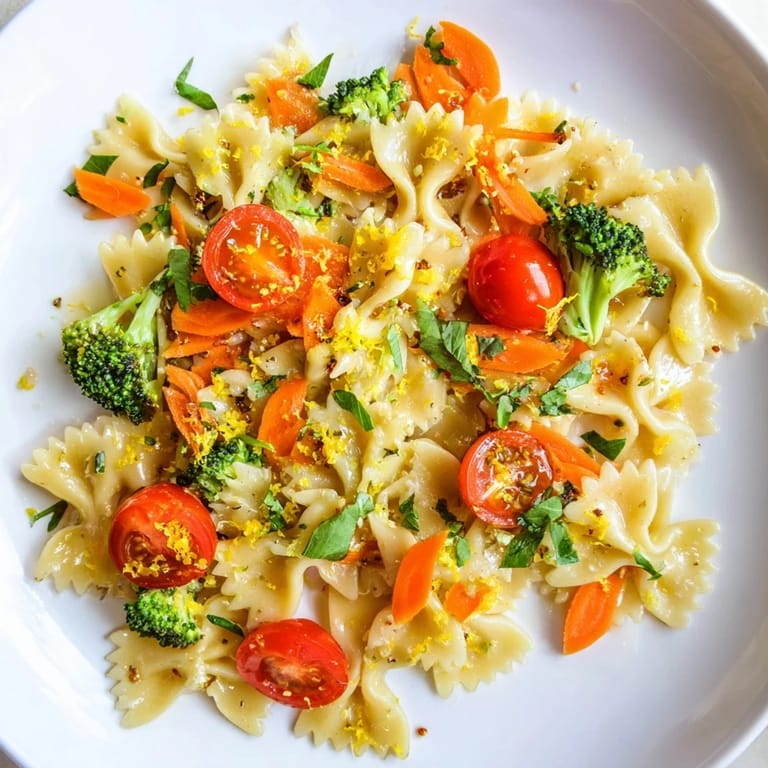
The combination of multiple colorful vegetables—red bell peppers, yellow squash, bright green broccoli and asparagus, orange carrots, and red onions—creates a naturally vibrant presentation. The bow-tie pasta shape complements the vegetable pieces beautifully, while fresh herbs add final visual contrast.
- → Can I prepare this dish ahead of time?
While best served immediately, you can prep all vegetables in advance and store them separately. Cook the pasta and vegetables just before serving to maintain the vegetables' vibrant color and crisp-tender texture. Store leftovers in an airtight container for up to three days.
- → How do I keep the vegetables from becoming mushy?
Cook each vegetable group by texture—harder vegetables like carrots and broccoli first, then medium-textured ones, finishing with delicate items like cherry tomatoes and peas. This staggered approach ensures each vegetable reaches the perfect tender-crisp consistency simultaneously.
- → What protein additions work well with this dish?
Grilled chicken breast, seared shrimp, white beans, or crumbled tofu are excellent protein options. Add cooked proteins during the final tossing step to warm through without overcooking, maintaining their texture and flavor.
- → How do I make this dairy-free?
Simply omit the Parmesan cheese entirely—the bright lemon, garlic, and olive oil provide abundant flavor without it. For a vegan version, use certified vegan pasta and skip dairy products. Plant-based Parmesan alternatives are also available if desired.
- → What vegetables can I substitute or add?
Try zucchini, snap peas, green beans, sun-dried tomatoes, artichoke hearts, or mushrooms. Adjust cooking times based on vegetable firmness. Use seasonal produce for best flavor and texture, varying your selections throughout the year for different seasonal celebrations.