 Save
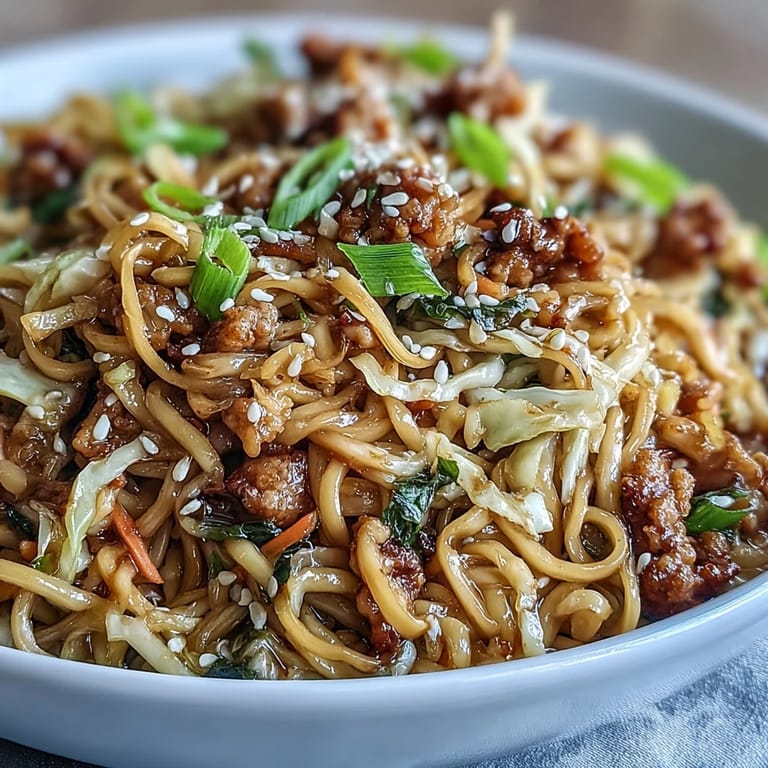
Save The rain was coming down sideways when my friend Jenny dropped by unexpectedly, takeout bags in hand. We ended up with a spread of dumplings from that place downtown, and something about that savory filling with those chewy wrappers sparked an idea. What if you could skip the folding entirely and get all those potsticker flavors in a bowl? I spent the next weekend tinkering with ratios, realizing the trick was treating the ground meat exactly like dumpling filling before tossing it with noodles.
My roommate walked in while I was testing this recipe, nose twitching like a bloodhound. She stood over the wok watching the meat develop that golden crust and asked what restaurant Id ordered from. When I told her it was just ground pork and rice noodles, she looked at me like Id revealed a magic trick. Now she requests it whenever shes had a rough day at work, claiming it tastes like a hug in a bowl.
Ingredients
- 8 oz dried rice noodles or lo mein noodles: Rice noodles soak up that potsticker sauce beautifully while wheat noodles have more chew and texture
- 1 lb ground pork or chicken: Pork has that classic dumpling flavor but chicken works perfectly and stays wonderfully tender
- 1 tbsp soy sauce: The base of our meat seasoning adds umami right into the pork before it hits the heat
- 1 tsp toasted sesame oil: A tiny amount goes such a long way and gives that unmistakable nutty aroma
- 1 tsp cornstarch: This little trick keeps the meat silky and tender, just like inside restaurant dumplings
- 1/4 tsp white pepper: White pepper is traditional in dumpling fillings for its warm, earthy kick without visible specks
- 1/2 tsp sugar: Just enough to balance the soy and bring out the meats natural sweetness
- 1/2 tsp kosher salt: Use slightly less if your soy sauce is already on the salty side
- 2 tbsp neutral oil divided: Canola, vegetable, or peanut oil gives us a high smoke point for proper wok cooking
- 3 cloves garlic minced: Fresh garlic is nonnegotiable here for that aromatic foundation
- 1 tbsp fresh ginger grated: The ginger should be finely grated so it almost dissolves into the dish
- 4 green onions thinly sliced: Keep the white and green parts separate and use both for different layers of flavor
- 2 cups shredded green cabbage: Adds that satisfying crunch and cooks down to sweet, tender ribbons
- 1 cup shredded carrots: Matchstick carrots work great, or just shred them yourself on a box grater
- 1 cup sliced shiitake or cremini mushrooms: Shiitakes have more of that meaty, umami character but button mushrooms work too
- 1 cup bean sprouts optional: Toss these in at the very end for fresh snap and texture contrast
- 1/2 cup fresh cilantro chopped: The brightness of cilantro cuts through all those rich, savory flavors
- 2 tsp toasted sesame seeds: Toast them yourself in a dry pan for about 30 seconds until fragrant and golden
- 1/3 cup low-sodium soy sauce: Low sodium lets you control the salt level while still getting all that depth
- 2 tbsp rice vinegar: Adds just the right amount of acid to brighten up the sauce
- 1 tbsp oyster sauce: Hoisin makes a sweeter substitute if you prefer or cannot find oyster sauce
- 1 tbsp chili-garlic sauce: Start with less if you are sensitive to heat; you can always add more at the table
- 2 tsp toasted sesame oil: This aromatic finish is what makes it taste restaurant quality
- 1 tbsp brown sugar or honey: Honey gives a slightly cleaner sweetness while brown sugar adds deeper molasses notes
- 1/2 cup chicken broth or water: Broth obviously adds more depth but water works fine in a pinch
Tired of Takeout? 🥡
Get 10 meals you can make faster than delivery arrives. Seriously.
One email. No spam. Unsubscribe anytime.
Instructions
- Get your noodles ready first:
- Bring a large pot of water to a boil and cook noodles until just tender, about 4 to 6 minutes for rice noodles or 6 to 8 for wheat noodles. Drain and rinse quickly with cold water, then toss with a few drops of sesame or neutral oil so they do not clump together.
- Season the meat like dumpling filling:
- Whisk together the soy sauce, sesame oil, cornstarch, white pepper, sugar, and salt in a small bowl. Pour this over the ground pork and mix gently with your hand or a spoon until combined and slightly sticky. Let it sit while you prep everything else.
- Whisk together your sauce:
- Combine the soy sauce, rice vinegar, oyster sauce, chili-garlic sauce, sesame oil, brown sugar or honey, and chicken broth or water in a bowl. Whisk until the sugar completely dissolves, then taste and adjust if you want more heat or sweetness.
- Prep all your vegetables:
- Shred the cabbage and carrots, slice the mushrooms, and thinly slice the green onions. Keep the white and green parts separate. Rinse and drain your bean sprouts if using them and chop your cilantro so you are ready to move fast.
- Crisp the meat with patience:
- Heat 1 tablespoon of oil in a large nonstick skillet or wok over medium-high heat. Add the seasoned meat in an even layer and let it cook undisturbed for 2 to 3 minutes so it develops browned, crispy edges. Break it up and continue cooking for 3 to 4 more minutes until golden and cooked through, then spoon off excess fat if needed.
- Bloom your aromatics:
- Push the meat to one side of the pan and add the remaining tablespoon of oil to the empty space. Toss in the garlic, ginger, and white parts of the green onions, stirring for 30 to 60 seconds until fragrant but not burned. Mix everything together.
- Cook the vegetables in stages:
- Add the mushrooms and sauté for 2 to 3 minutes until softened. Throw in the shredded cabbage and carrots and stir-fry for 3 to 4 minutes until the cabbage is wilted but still has some crunch. Add a splash of water if the pan gets too dry.
- Add the sauce and let it bubble:
- Pour your prepared sauce over the meat and vegetables and toss well to coat everything evenly. Let it simmer for 1 to 2 minutes until the sauce thickens slightly and clings to the ingredients.
- Toss in the noodles:
- Add the cooked noodles to the skillet and toss gently but thoroughly to combine. If the mixture seems too dry, add 2 to 4 tablespoons of water or broth. Add bean sprouts during the last minute of tossing if you are using them.
- Finish with bright touches:
- Taste the dish and adjust seasoning with extra soy sauce, chili-garlic sauce, or a squeeze of lime. Stir in half of the green onion tops, then divide between bowls. Garnish with the remaining green onions, cilantro, and toasted sesame seeds.
 Save
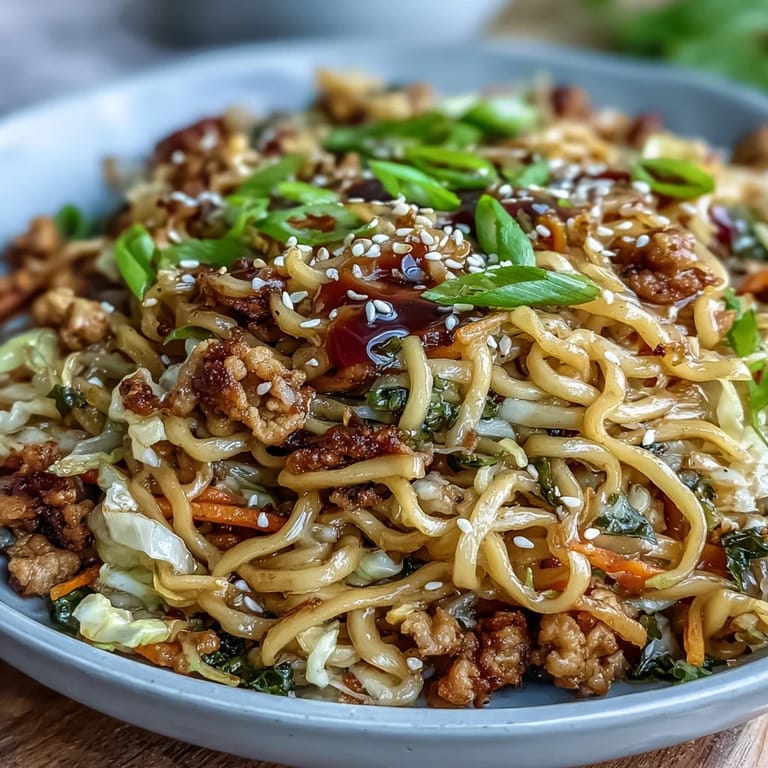
Save Last winter my sister came over after a terrible breakup and I made this for dinner without really thinking about it. She took one bite and started crying, not from sadness but because it tasted exactly like the dumplings our grandmother used to make for us when we were little. Food has this way of reaching places words cannot.
Make It Your Own
Ground turkey or beef work beautifully in place of pork, and plant-based meat crumbles actually absorb all those dumpling flavors surprisingly well. I have also used napa cabbage, baby bok choy, or even finely chopped kale when that is what I had in the fridge, and each version brings something slightly different to the table.
The Noodle Game
Rice noodles soak up more sauce and become silkier, while wheat noodles have more chew and hold their shape better through the tossing. Fresh noodles are fantastic if you can find them, but dried noodles work perfectly as long as you do not overcook them in the boiling stage.
Saucing Strategy
The consistency of your sauce should be thin enough to coat everything easily but thick enough to cling to the noodles. If it seems too loose, let it simmer an extra minute to reduce, and if it is too thick, splash in a bit more broth or water.
- Make a double batch of the sauce and keep it in the fridge for quick weeknight meals
- Top with a soft boiled or fried egg for extra richness and protein
- Leftovers actually taste better the next day as the flavors continue to develop
 Save
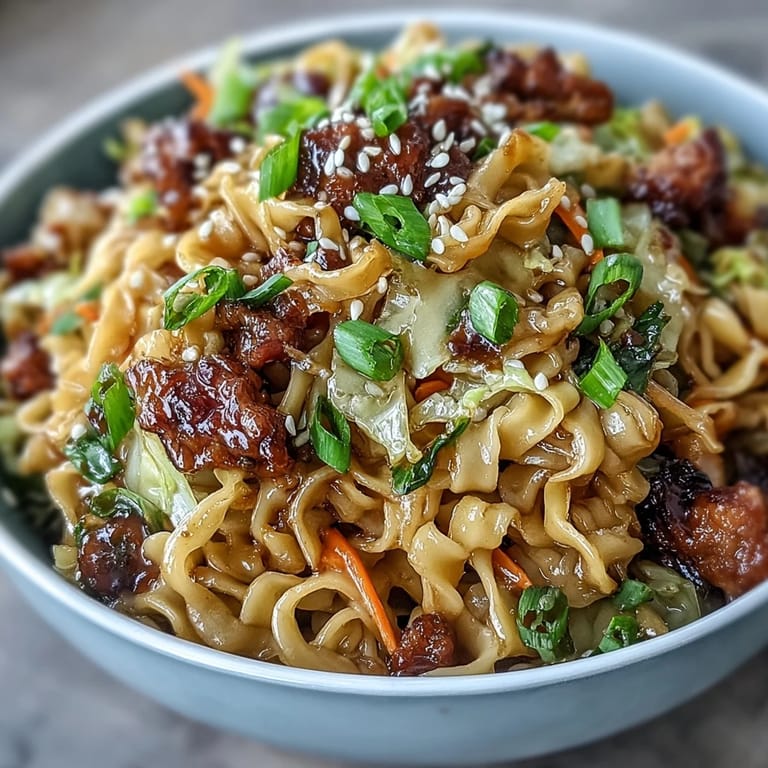
Save This recipe has become my go-to for comfort food that does not take all day, hitting those same satisfaction buttons as a steamer full of homemade dumplings with a fraction of the effort. Hope it finds its way into your regular rotation too.
Recipe FAQ
- → Can I make this gluten-free?
Yes, absolutely! To make this dish gluten-free, ensure you use gluten-free tamari instead of regular soy sauce and opt for a gluten-free oyster sauce. Always choose rice noodles, as wheat noodles contain gluten. Double-check all ingredient labels to confirm they are certified gluten-free.
- → What kind of noodles work best?
Rice noodles are recommended for their tender texture and ability to soak up the sauce, similar to traditional potstickers. Lo mein noodles or other Asian-style wheat noodles can also be used if you prefer a different chewiness; just adjust cooking times as per package instructions.
- → Can I use a different protein?
Definitely! While ground pork or chicken is suggested, you can easily substitute with ground turkey, ground beef, or a plant-based ground alternative. Adjust cooking times as needed to ensure the protein is thoroughly cooked and browned for best flavor.
- → How can I make this spicier?
For extra heat, increase the amount of chili-garlic sauce or sambal oelek in the potsticker-style sauce. You can also add a pinch of red pepper flakes during the stir-frying process or drizzle with sriracha or chili oil when serving.
- → Can I prepare any components ahead of time?
Yes, several steps can be done in advance. You can pre-chop all your vegetables and whisk together the sauce components. The meat can be seasoned and marinated a few hours ahead. Cooked noodles can be prepared and lightly oiled to prevent sticking, then stored in the fridge. This makes assembly much quicker at mealtime.
- → What other vegetables can I add?
Feel free to customize your vegetable selection. Thinly sliced bell peppers, snow peas, bok choy, or broccoli florets would all be excellent additions. Add heartier vegetables earlier in the stir-frying process to ensure they cook through.