 Save
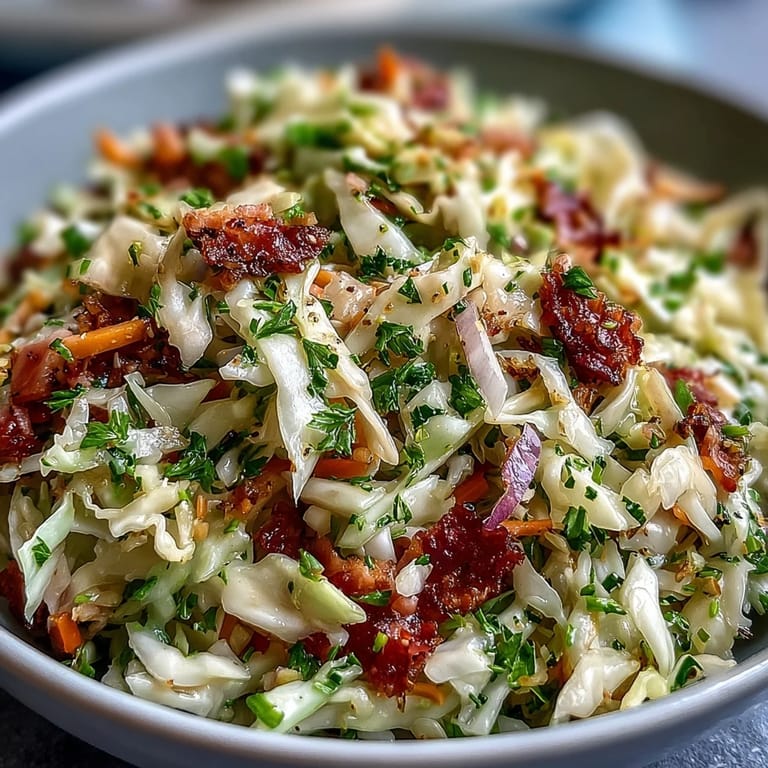
Save My neighbor Hans invited me over on a crisp fall evening, and what arrived at the table was this glorious German coleslaw—tangy, smoky, and somehow both light and deeply satisfying. The cabbage gleamed with a golden dressing, ribbons of ham catching the kitchen light as he tossed it one more time before serving. I watched him work with quiet confidence, and realized this wasn't a fancy dish at all, just the kind of thing that tastes like home because it's built on honest flavors and simple technique. That night, I finally understood why German cooks have been making this for generations.
I made this for a casual supper club last winter, and something unexpected happened—people started lingering at the table long after the main course, just picking at the coleslaw. One friend asked if I'd add caraway seeds next time, and another suddenly remembered her grandmother's version from childhood. That's when I realized this dish does more than nourish; it opens conversations and brings back memories for everyone who tastes it.
Ingredients
- Green cabbage, finely shredded (4 cups): The backbone of this slaw, providing a crisp texture and mild sweetness that balances the vinegar beautifully.
- Red cabbage, finely shredded (1 cup): Adds visual drama and a slightly earthier note that rounds out the flavor profile.
- Carrot, peeled and grated (1 large): Brings natural sweetness and keeps the slaw feeling fresh and not too heavy.
- Red onion, thinly sliced (1 small): Sharp and bright, it cuts through the richness of the ham and dressing with a gentle bite.
- Smoked ham, shredded (1 cup): The star that transforms this from side dish to something substantial—look for quality smoked ham with real flavor.
- Apple cider vinegar (1/3 cup): The acid that makes everything sing, giving the slaw its characteristic tangy punch.
- Dijon mustard (2 tablespoons): This isn't just flavor; it's an emulsifier that helps the dressing cling to every strand of cabbage.
- Honey (1 tablespoon): Just enough sweetness to balance the vinegar without making it taste like dessert.
- Sunflower or neutral oil (1/3 cup): Creates the silky body of the dressing so it coats rather than pools at the bottom of the bowl.
- Caraway seeds, optional (1 teaspoon): If you want that authentic German flavor, don't skip these—they add a subtle warmth and complexity.
- Salt and freshly ground black pepper, to taste: Season aggressively; this dish needs bold seasoning to shine.
- Fresh parsley, chopped (2 tablespoons): A gentle garnish that adds color and freshness without overpowering the other flavors.
Tired of Takeout? 🥡
Get 10 meals you can make faster than delivery arrives. Seriously.
One email. No spam. Unsubscribe anytime.
Instructions
- Gather your vegetables and get them ready:
- Shred the green and red cabbage as finely as you can manage—a sharp knife or mandoline works best, and the finer you go, the better the dressing will coat everything. Grate the carrot on the large holes of your grater, slice the red onion thin enough to see light through it, and shred the ham into bite-sized pieces.
- Combine everything in one big bowl:
- Toss the cabbage, carrot, red onion, and ham together until they're evenly distributed, so no one bite is ham-heavy and the next is all cabbage. This step takes just a minute but makes a real difference in every forkful.
- Make the dressing in a separate bowl:
- Whisk the apple cider vinegar, Dijon mustard, and honey together first, then slowly drizzle in the oil while whisking so it emulsifies into something silky rather than separating. Add the caraway seeds if you're using them, then season with salt and pepper—taste as you go, because you'll probably need more than you think.
- Dress and toss with confidence:
- Pour the dressing over the cabbage mixture and toss everything together with your hands or two spoons, making sure every piece gets coated and the dressing reaches all the way to the bottom of the bowl. Don't be shy; this is where the magic happens.
- Let it rest before serving:
- Give it at least 10 minutes to sit, during which the cabbage will soften slightly and all the flavors will start getting acquainted. You can make this a few hours ahead if you like—it actually tastes better the next day as the flavors deepen.
- Finish with a flourish:
- Scatter the fresh parsley over the top just before serving, giving it a final gentle toss so the green flecks are distributed throughout.
 Save
Save Years ago, I brought this to a potluck where someone's elderly German relative was attending, and she tasted it, then asked me in broken English if I had a grandmother from Hamburg. I didn't, but that moment taught me that food carries stories deeper than recipes—it carries belonging. Every time I make it now, I think of her smile.
The Smoky Ham Factor
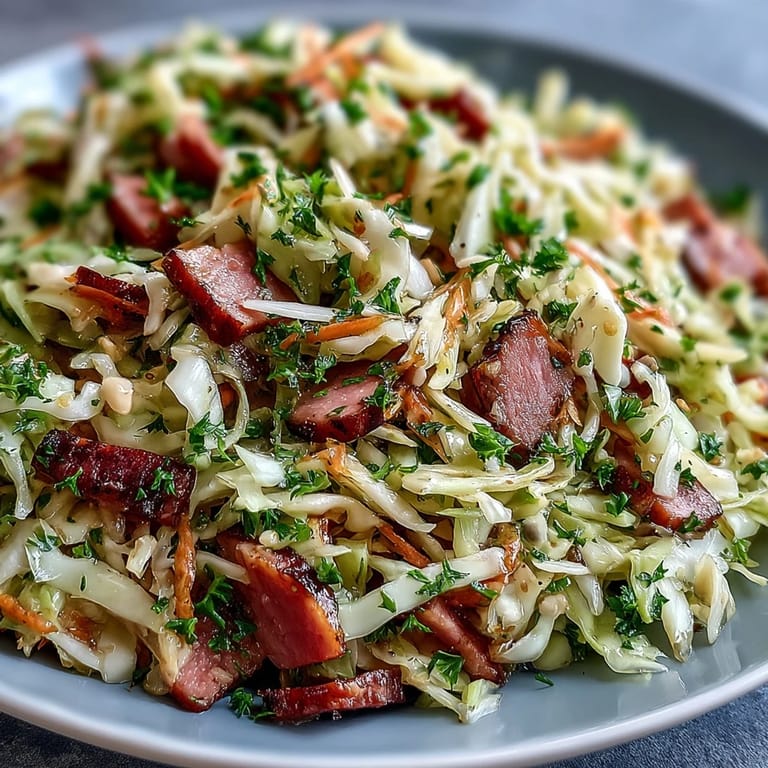
The ham isn't just protein here; it's the ingredient that elevates this from a simple vegetable side to something with real presence on the plate. I learned this the hard way when I tried making it with regular deli ham once, and the whole dish felt flat and forgettable. Smoked ham—or even better, double-smoked ham—brings a savory depth that the vinegar and mustard build on, creating layers rather than just tang. The smokiness also bridges the gap between this salad and heavier German mains like schnitzel or bratwurst, making it feel like they were meant to be together.
Playing With the Dressing
The dressing is where you can make this recipe your own while still honoring what makes it German. I've made it with whole grain mustard for more texture, swapped some of the oil for Greek yogurt to make it lighter, and once added a splash of apple juice when someone in my kitchen mentioned they wanted it sweeter. Each version worked because the core balance—acid, fat, mustard, and a whisper of honey—stayed intact. The caraway seeds are optional, but if you want that authentic German beer hall flavor, they're worth hunting down in the spice aisle.
Serving Suggestions & Storage
This slaw shines alongside grilled sausages or schnitzel, but I've also served it with roasted chicken and found it equally at home. It makes an excellent addition to a charcuterie board, adds crunch to a sandwich, and even tastes wonderful as part of a grain bowl. For storage, keep it in an airtight container in the refrigerator for up to three days—it actually improves overnight as the flavors meld even more.
- For extra crunch and a hint of tartness, dice and toss in a crisp apple just before serving.
- If you're serving this at a warm meal, let it come up to room temperature for 15 minutes before serving so the flavors open up.
- Leftover coleslaw makes an outstanding lunch the next day, and it pairs beautifully with cold cuts or cheese.
 Save
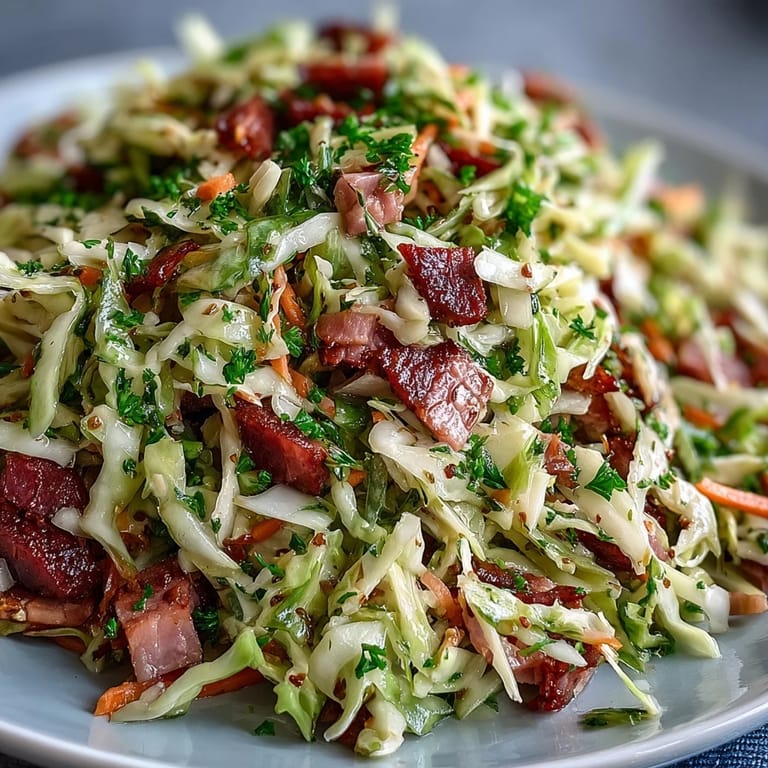
Save This coleslaw has become one of those dishes I make without thinking, reaching for the ingredients with the confidence of muscle memory. Every time someone asks for the recipe, I smile because I know they're about to discover what I did that evening at Hans's kitchen table.
Recipe FAQ
- → Can I make this coleslaw ahead of time?
Yes, you can prepare this up to 24 hours in advance. The cabbage will soften slightly and absorb more flavor as it sits in the refrigerator. Store it in an airtight container and give it a good toss before serving.
- → What can I substitute for smoked ham?
You can use smoked turkey, cooked bacon, or smoked pork shoulder. For a vegetarian version, omit the meat entirely or add smoked tofu for a similar smoky flavor profile.
- → Are caraway seeds essential to this dish?
While optional, caraway seeds add an authentic German flavor that complements the cabbage beautifully. If you don't have them, the coleslaw will still be delicious with just the tangy dressing.
- → How do I prevent the coleslaw from becoming watery?
Shred the cabbage finely and avoid rinsing it after cutting. If making ahead, you can lightly salt the cabbage and let it drain for 15 minutes before adding the dressing to remove excess moisture.
- → What are the best dishes to serve this with?
This coleslaw pairs wonderfully with German classics like schnitzel, bratwurst, grilled sausages, or roasted pork. It also complements barbecue dishes and makes an excellent addition to picnics and potlucks.
- → Can I adjust the sweetness of the dressing?
Absolutely. Start with the tablespoon of honey and taste the dressing. You can add more honey for sweetness or increase the vinegar for extra tanginess to suit your personal preference.